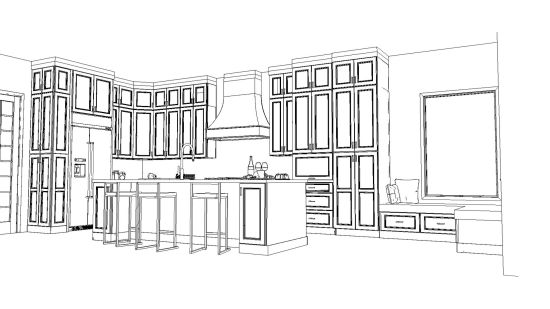
Many homeowners wait longer than they need to before meeting with a kitchen designer.
They think they need finished plans. They think every appliance needs to be selected. They think every finish, countertop, cabinet color, and hardware detail needs to be figured out before the first conversation.
The good news is that you do not need to have every answer before you begin.
A first kitchen design consultation is not about showing up with a perfect plan. It is about starting the conversation with the right information so your designer can understand your home, your goals, and the way your kitchen needs to function.
At Cabinet IQ of Bridgewater, we believe the best kitchens begin with listening. Before cabinet lines, countertops, door styles, or finishes are selected, we want to understand how the space is used, what is working, what is frustrating, and what matters most to the homeowner.
Here are a few things that can make your first kitchen design consultation more productive.
Photos of Your Existing Kitchen
Photos are one of the most helpful things you can bring to a first design conversation.
They help show the current layout, appliance locations, ceiling height, windows, doorways, lighting, traffic flow, and storage challenges. They also help your designer understand what you see every day.
Take wide shots of the full kitchen from different corners of the room. Then take closer photos of the areas that bother you most, such as a crowded cooking zone, hard-to-reach corner cabinet, undersized pantry, awkward island, limited counter space, or a walkway that always feels tight.
You do not need professional photography. Simple phone photos are enough to start.
Rough Measurements or Existing Plans
If you have rough measurements, bring them. If you have architectural plans, builder drawings, or a real estate floor plan, bring those too.
They do not need to be perfect. Professional measurements and site verification happen later in the process. At the beginning, rough dimensions simply help frame the conversation and give your designer a sense of the room.
Even basic information can be useful, such as wall lengths, ceiling height, window locations, door openings, appliance locations, and the approximate size of an existing island or peninsula.
A helpful tip: if you are measuring on your own, do not worry about creating a polished drawing. A simple sketch with approximate wall lengths and notes is often enough for an initial conversation.
The goal is not to finalize the design during the first meeting. The goal is to understand what may be possible.
Inspiration Images
Inspiration images are helpful, but not because your new kitchen should copy someone else’s.
They help reveal patterns.
Homeowners often bring ideas from Pinterest, Houzz, Instagram, Google Images, magazines, designer websites, and now even AI-generated kitchen concepts. All of those can be useful starting points. The most helpful part is not just the image itself, but the reason behind it.
Maybe you are drawn to warm wood cabinetry, soft painted finishes, a large island, glass doors, hidden storage, natural stone, clean lines, or a more traditional furniture-style look. Maybe you dislike stark white kitchens, busy countertops, open shelving, or heavy ornamentation.
Both reactions are useful.
When you bring inspiration images, try to explain what you like about each one. Is it the color? The mood? The cabinet style? The storage? The lighting? The countertop? The way the kitchen connects to the rest of the home?
It is also helpful to bring a few “not this” images. Sometimes the clearest design direction comes from understanding what a homeowner does not want.
That conversation helps move the design from “I like this picture” to “this is how I want my kitchen to feel.”
Appliance and Sink Ideas
Appliances and sinks have a major impact on kitchen design.
A range, wall oven, cooktop, microwave drawer, panel-ready refrigerator, farmhouse sink, workstation sink, or undercounter beverage center can all affect cabinet sizing, clearances, layout, panels, and overall flow.
You do not always need every final model number at the very first meeting, but it helps to know your direction. Are you hoping to keep the appliance layout where it is? Are you considering a larger refrigerator? Do you want a range instead of a cooktop and wall oven? Are you interested in a microwave drawer? Do you want a larger sink or a specialty sink?
These choices matter earlier than many homeowners realize.
At later stages, appliance and sink specifications become especially important because cabinetry is built around those details. The more accurate the information, the smoother the design and ordering process can be.
Your Investment Range
An honest investment conversation is one of the most useful parts of the early design process.
This is not about pushing a homeowner toward the most expensive option. It is about helping your designer recommend the right path.
The right cabinet line, countertop direction, storage features, finish level, and design scope all depend on the project investment. A kitchen can often be designed several different ways, and each version may carry a different level of customization, lead time, and detail.
For some homeowners, a more streamlined cabinet line with fewer customization options may make the most sense. For others, a more tailored cabinetry solution may be worth the investment because of the home, the design goals, or the level of detail required.
The earlier this conversation happens, the easier it is to guide decisions responsibly.
Timeline and Decision-Makers
It also helps to be clear about timing.
Are you hoping to complete the project before a holiday, family event, move-in date, or larger renovation timeline? Are you working with a contractor, builder, architect, or interior designer? Are there other trades involved? Are there multiple decision-makers who need to be part of the process?
Kitchen projects involve many connected decisions. When the right people are included early, it helps avoid confusion later.
For couples or families, it is helpful when all key decision-makers are present for important design meetings. That keeps conversations aligned and helps the project move forward with confidence.
Questions You Should Ask
A first consultation is also your opportunity to ask questions.
You may want to ask about cabinet lines, lead times, countertop options, installation coordination, design steps, product selections, and what happens after the initial meeting.
You should also ask what is included and what is not included.
Cabinet IQ of Bridgewater focuses on kitchen and bath design guidance, cabinetry, countertops, and installation coordination for cabinetry and countertops. Broader general contracting work, such as plumbing, electrical, demolition, flooring, tile installation, drywall, and painting, is typically handled separately unless specifically included through the appropriate trade partner.
Understanding that scope early helps everyone plan more clearly.
The Cabinet IQ Perspective
A kitchen design consultation should not feel intimidating. It should feel like the beginning of a guided conversation.
You do not need to arrive with every answer. You need to arrive with your goals, your questions, your photos, and a willingness to talk honestly about how you want the kitchen to work.
At Cabinet IQ of Bridgewater, our role is to help homeowners move from ideas to direction. We help clarify what matters most, explain the tradeoffs, and guide decisions around cabinetry, countertops, storage, finishes, and installation coordination.
For trade professionals, that same clarity matters. Contractors, builders, architects, and interior designers benefit when the cabinetry and countertop portion of a project begins with clear expectations, accurate information, and a thoughtful process.
A beautiful kitchen does not start with a cabinet catalog. It starts with understanding the home and the people who live there.
Ready to Start the Conversation?
For homeowners planning a kitchen or bath remodel, and for trade professionals looking for a dependable cabinet and countertop partner, Michael Bruno, President of Cabinet IQ of Bridgewater, welcomes the opportunity to help guide your next project with clarity, care, and thoughtful design.
Cabinet IQ of Bridgewater
Shaping the Heart of Your Home
908-638-1567
cabinetiq.com/bridgewater
NJ HIC Lic. #13VH13586800