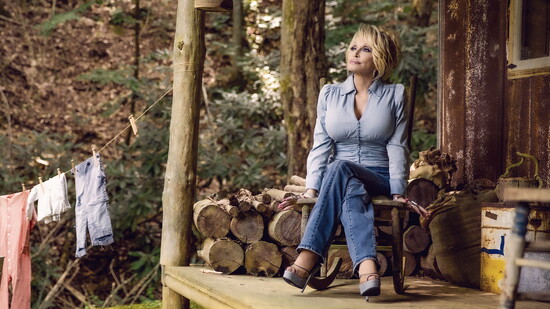
What would Dolly do? It’s a question that could apply to almost anything. But when it comes to gratitude and giving back, Dolly Parton left us plenty of answers.
For starters, remember where you came from.
Parton grew up one of 12 children in a poor family in Tennessee’s Smoky Mountains. Fame took her far from that one-room cabin, but she never left those roots behind. In 1988, she created the Dollywood Foundation to help children in her home county succeed in school. Its early Buddy Program offered students $500 if they graduated from high school, helping participating classes cut their dropout rate from 35% to 6%.
Then she turned something painful into something useful.
Parton’s father couldn’t read or write, something she said caused him embarrassment. In his honor, she launched the Imagination Library in 1995, mailing free books to children from birth to age 5. What began in Sevier County grew around the world, passing 300 million books in 2025.
In Dolly’s hands, gratitude didn’t stop at appreciating what she had. It became something she could give somebody else.
And when she saw a need, she acted.
After wildfires devastated her home region in 2016, her My People Fund distributed more than $12 million to families who lost their homes. When Hurricane Helene struck in 2024, Dolly and her businesses contributed more than $2 million to recovery efforts.
Her generosity extended to medical research. In 2017, she donated $1 million to pediatric infectious disease research at Vanderbilt University Medical Center, where her niece had been treated for leukemia. In 2020 came another $1 million for COVID-19 research, helping fund early work connected to the Moderna vaccine.
But perhaps one of Dolly’s greatest examples had nothing to do with money.
Somehow, she managed to be almost universally beloved while remaining unmistakably herself. The rhinestones. The big hair. The mountain accent. The humor. Even songs that tackled subjects that country radio wasn’t ready for.
She didn’t become more like everybody else to be accepted by everybody else.
And Dolly used whatever she had to give, money, certainly, but also her time, voice, fame, ideas and ability to bring people together.
Most of us can’t give away millions or send books to children around the world. But we can notice. Share. Help without judgment. Remember where we came from. Give somebody a hand up.
And when the opportunity comes to make someone’s life a little better?
Ask yourself: What would Dolly do?
Then do a little bit of it.