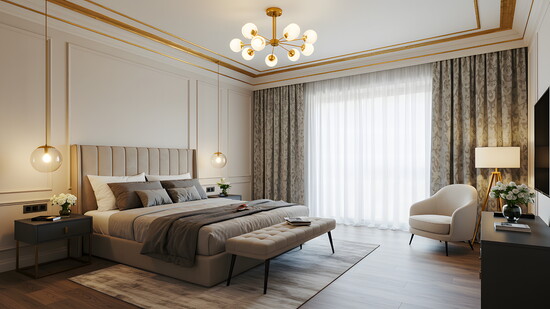
We have a couch at the foot of our bed. My kids have been flopping onto it for years—sometimes to talk about nothing, sometimes to talk about everything. I didn’t plan it that way. But that couch has become one of the most important pieces of furniture in our house.
Every design choice—where you put the furniture, what’s on the walls, where you linger and where you pass through—shapes how your family connects. Your home is always saying something. The question is whether it’s saying what you actually mean.
On creating space for real conversation
That couch works because it’s where I already am. (Guilty—my bed is my favorite place.) Kids wander in, flop down, and talk. Sometimes it’s nothing: what happened at school, a random complaint, a question about dinner. Sometimes it’s everything: the friendship drama, the anxiety, the thing they’ve been holding onto for weeks.
For you this might be the kitchen counter since you love to cook, your office where they can come in and sit for a minute, even the garage—wherever you spend lots of time, make space for them too.
When I was a teenager, I visited a family friend in Northern California. In their kitchen was a built-in reading nook with a clawfoot tub brimming with down pillows. Saybrook Sage curtains that matched the cabinets (it was the mid-90s) hung down, so you could either close yourself into this reading oasis and look out at the apricot orchard (they sold a lot of dried fruit) or be part of the kitchen convo—an invitation to join and a chance to be quiet.
That couch at the foot of my bed? It protects their rooms as their space. I knock before I enter their rooms, every time. Not because I think they’re hiding something, but because I want them to know their space belongs to them. Boundaries aren’t distance—they’re how you show someone their limits matter.
The couch says: You’re always welcome here. The knock says: Your space is yours. The clawfoot tub says: You can disappear for a bit, and still feel close. Kids need all three messages.
On photos that tell the truth
I still remember a photo I saw at a friend’s house in high school—her mom was in the school's fashion show (BIG deal) walking the runway in a yellow leather jacket, popping the collar. It was with other mismatched frames on top of their tube TV.
I’d never seen a photo of “just a mom” before. Not her graduation, not her wedding, not holding a baby. Just her. It said: I’m a person too. My kids are not my whole identity.
Put up candid photos. Silly ones. Your partner before you knew them. Yourself before kids. Moments that say we’re individuals who chose this life together—not just a family unit performing for a holiday card.
On being the house where kids want to hang out
Be the house your kids want to bring their friends home to. Not because it’s the biggest or has the nicest stuff—but because nothing feels too precious. There’s a firepit outside with enough chairs for a few friends to sit and laugh. There’s a snack drawer that’s fair game. There’s a parent who waves hello and then disappears.
You want your home to be the place where your kid can walk in, slump off their backpack, and sink into feeling like themselves. That’s it. That’s the whole thing.
A home that supports healthy family dynamics isn’t about perfection. It’s about intention—small choices, repeated over time, that tell the people you love: You’re safe here. You matter here. You can be yourself here.