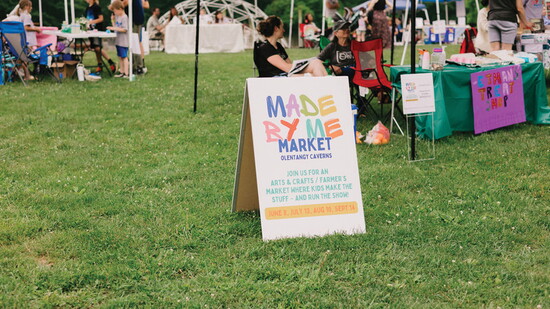
When most kids think about summer, they think about swimming pools, vacations, and sleeping in. At Olentangy Caverns' Kids Makers Mart, they're thinking about inventory, pricing, customer service, and sales.
Held the second Sunday of each month from June through October, the market gives young entrepreneurs the opportunity to create a product, build a business, and sell directly to customers. From handmade jewelry and crochet creations to lemonade, artwork, and dog treats, every booth is run by kids eager to share something they've made—and discover what happens when someone chooses to buy it.
The idea for the Kids Makers Mart started with a simple lemonade stand. Katie Meyerdirk, who oversees marketing and events at Olentangy Caverns, watched her own children become fascinated by selling lemonade in their Worthington Hills neighborhood.
"I saw how excited they were when someone wanted something they had made," says Meyerdirk. "They felt like they had done something very grown-up."
That small observation sparked an experiment.
Last summer, Meyerdirk launched the first Kids Makers Mart, unsure whether families would sign up. Instead, the response exceeded expectations. The markets quickly filled, waitlists formed, and the concept has grown to more than 25 young vendors.
"Our family was planning a trip to the caverns when we discovered the Kids Makers Mart," says Lori Pringle, a parent of a young entrepreneur. "Sara and her friend were already making earrings, so they were extremely excited to sign up."
What makes the event special isn't simply that kids sell products. It's everything they learn along the way. Young entrepreneurs develop ideas, create products, build displays, set prices, manage inventory, and interact with customers. Some even borrow startup money from their parents, gaining an early understanding of investment, budgeting, and financial responsibility. The businesses may be small, but the lessons are anything but.
Sara and her friend Josi launched Stones and Jewels, transforming colorful building bricks into one-of-a-kind jewelry. After realizing many younger shoppers didn't have pierced ears, they expanded into bracelets—a lesson in listening to customers and adapting to demand. "My favorite thing is talking to the customers and helping them figure out what they want," Sara says.
Kids also learn by watching one another. As they explore neighboring booths, they notice creative displays, unique products, and successful sales techniques that inspire new ideas for their own businesses.
Meyerdirk is equally impressed by the confidence the market builds. Many adults worry today's children spend too much time behind screens and not enough time interacting face-to-face. Yet young vendors routinely greet customers, answer questions, make change, and conduct transactions with surprising ease.
Parents play an important role, too. Rather than stepping in, they encourage their children to take the lead. "We got them started, but they really ran the booth and talked to customers," says Sara's mother, Lori Pringle. "It was a great learning experience, and they had a blast."
For a few hours each month, children become creators, marketers, salespeople, problem-solvers, and business owners. While many leave with money in their pockets, the most valuable thing they take home is confidence—real world skills, and the belief that they can build something all their own.