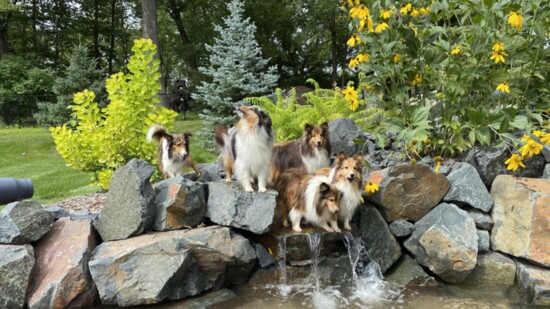
As a former Vice President of Marriott Lodging, Jean’s work demanded constant travel. Usually, her dogs would have a dog sitter while she was away for work, but it wasn’t until her regular sitter canceled that she found inspiration to create Top Dog Country Club. This year, Jean Stelten-Beuning, owner of Top Dog Country Club, celebrates 24 years as the top vacation spot for a man’s best friend.
Top Dog Country Club was the first of its kind and has earned international recognition on Discovery Channel’s Animal Planet, The New York Times, and NBC’s Today Show. “My ‘club med’ style vacation for dogs, combined with the service model I learned at Marriott Lodging, sparked an explosion in the industry,” says Jean. After being in business for over two decades, Top Dog is still that one-of-a-kind gem.
The vacation club is nestled on 39 acres just 20 minutes west of Lake Minnetonka. Jean’s team cares for guests between eight weeks and 19 years old, providing them with plenty of fresh air, exercise, socialization with other dogs, and mental stimulation. “It always has been and still is all about the dogs, where they are the number one criteria in every decision we make. That unbreakable promise makes business decisions simple,” says Jean.
Top Dog Country Club offers a variety of services, from boarding to daycare, with a heavy focus on what dogs need most . . . lots of exercise. “Our days are jam-packed with fun. Dogs are in outdoor group play, with 24,000 square feet of artificial turf for up to six hours every day,” says Jean. “The younger dogs learn social skills, and the senior dogs benefit from moving, mingling, and mental stimulation, and all dogs enjoy lots of exercise and fresh air.” The club also offers cuddle time, private training, swimming lessons, private nature walks, spa services like bathing, dental care, and massages, as well as ‘yappy’ hour with freshly baked biscuits and bedtime stories.
The team at Top Dog focuses on socializing the dogs, as it is critical for them to live happy, healthy lives. Too often, dogs that are not well socialized end up in shelters, where their future is grim. They develop abandonment issues, and the cycle continues.
“I am still as passionate today as I was when I opened Top Dog 24 years ago. I love that we are able to provide dog parents peace of mind when they travel, knowing that their dogs are safe, happy, and having the vacation of their lives. That makes it all so worth it.”
Tips to Train Your Dog to Be Around Other Dogs and Children
Jean reveals her tips on how to socialize your dog and be around others:
-
Proper socialization begins with the puppy’s mom in the litter, so breeding is an important consideration.
-
It’s important to expose them to lots of sights, sounds, and people early on and often. Dogs have a fear imprint period between eight and 11 weeks and again at six to 12 months as part of their cognitive development.
-
Use positive reinforcement to motivate the behavior you want and to desensitize dogs to situations that have made them timid or fearful.
-
Find a well-run daycare for your puppies so they can develop positive interactions with other dogs and build confidence. This will also help them learn to read other dogs’ body language and learn how to play appropriately.
-
Find a vacation club for dogs that focuses on lots of playtime and offers social training for continued socialization through various life stages.
-
Expose dogs to children at a young age, as children can be unpredictable and awkward in their movements, which can be scary for dogs.
-
When a new human baby joins the family, try not to ignore your dog. This new family member can be seen as a welcomed sibling or competition for attention, depending on how the introduction is handled. Keep your dog’s routine and make time for their favorite activities (daily walks, cuddle time) without baby distractions.
-
Teach children to respect dogs and be gentle. This is the most neglected action in socializing dogs and children. Kids tend to want to pull on ears and whiskers, pounce, and hit rather than pet. That can lead to disaster, particularly in fearful or older dogs that may be less tolerant or are in pain.
https://www.topdogcountryclub.com/