Romance isn’t always dramatic. Often, it’s quiet.
It’s the feeling of stepping into your bedroom at the end of a long day and sensing the shift almost immediately - your shoulders soften and the world outside feels just a little further away.
In many homes, especially here in The Woodlands where life moves quickly and beautifully full, the bedroom becomes a place we land rather than a space we intentionally design. Kitchens and living areas often take priority. Bedrooms are furnished, but not always thoughtfully finished.
Yet the bedroom is one of the most personal rooms in your home. And when designed with intention, it becomes more than a place to sleep, it becomes a haven.
A Bedroom Should Feel Settled
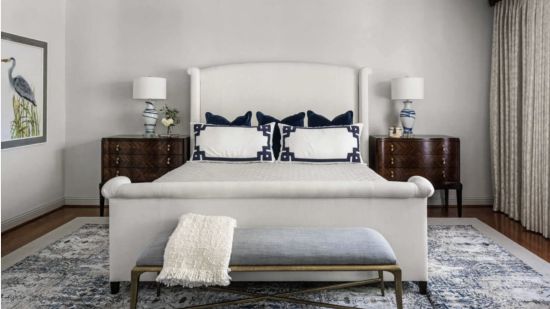
The most restful bedrooms share a common quality: they feel settled. Not sparse. Not overly styled. Simply cohesive.
When furnishings relate to one another, when finishes feel layered rather than random, and when every element has purpose, the room stops asking for attention. Instead, it gives you quiet support.
This doesn’t mean a bedroom must be neutral from floor to ceiling. It means the design is balanced. Nothing feels accidental. Nothing feels visually chaotic.
That sense of order is often what allows a space to feel peaceful.
Color Can Be Intimate, Not Just Soft
There’s a common belief that calming bedrooms must be pale and muted. In reality, rest comes from harmony - not from avoiding color.
A soft, neutral foundation often creates ease, but deeper tones can be just as grounding. Navy walls, charcoal accents, forest greens, or jewel-toned textiles can bring warmth and intimacy to a bedroom, especially when layered with natural textures and warm lighting.
In fact, richer colors can create a sense of enclosure that feels comforting, almost protective, at the end of the day.
The key is thoughtful composition. When color is balanced and intentional, it invites rest rather than disrupts it.
Layering Creates Comfort
Beyond color, the most inviting bedrooms engage the senses gently.
Upholstered headboards. Tailored bedding. Drapery that softens the edges of a room. Lighting that transitions easily from evening glow to morning light. These details may seem subtle, but they shape how a space feels.
A well-designed bedroom rarely relies on a single statement. Instead, it’s the layering - of texture, tone, and proportion - that creates depth without overwhelm.
And depth is what gives a room presence without noise.
Rest as an Expression of Care
We often treat rest as something we earn after everything else is done. But the way we design our bedrooms sends a quiet message about how much we value our own rest and peace.
When a bedroom is thoughtfully designed, sleep stops feeling like an afterthought. It becomes part of the rhythm of a well-lived in home.
A romantic bedroom, in the truest sense, isn’t about florals or candles. It’s about creating a space that holds you gently at the end of the day and prepares you for what comes next.
In a community like The Woodlands - where careers are demanding, families are active, and schedules are full - that kind of retreat matters.
The most romantic bedroom is not the one that impresses guests.
It’s the one that lets you exhale.