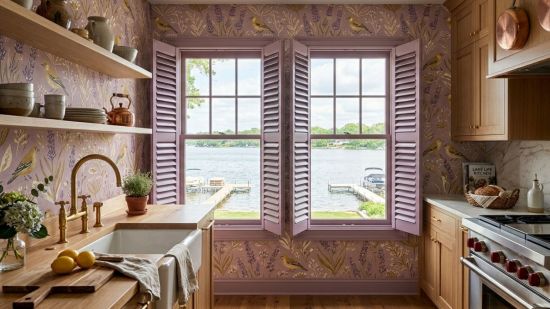
You know the feeling.
You've put real thought into a room. The furniture is good. The paint color finally works. The rug ties it together. And yet — something is slightly off. The space doesn't feel finished. It doesn't feel like the version of itself you had in mind when you started.
More often than not, the answer is at the windows.
The Most Overlooked Surface in Any Room
Windows are everywhere in a home, and somehow they're the thing most people think about last. Curtains feel optional. Blinds feel functional. Shades feel like a decision you make in twenty minutes at a big-box store because you need privacy and the light is coming in at a bad angle.
But here's what that thinking costs you: windows are the single surface in a room that affects everything else — the light, the proportions, the sense of enclosure, the way the furniture reads at different times of day. Get them right and the whole room shifts. Leave them as an afterthought and you'll always feel, somewhere in the back of your mind, that the space isn't quite there.
This isn't about spending more. It's about thinking about windows the same way a designer does — as a design decision, not a utility decision.
What a Designer Actually Sees at Your Windows
When a design consultant walks into a room, the windows are one of the first things they look at. Not because window treatments are the most important thing in the space, but because they reveal so much about what the room needs.
They notice the light. Which direction does the room face? Is the afternoon sun washing out the west wall? Is there a view worth preserving, or one worth obscuring? Light isn't just brightness — it's warmth, shadow, and the way a room feels at 7am versus 7pm.
They notice the architecture. How high are the ceilings? Where does the window trim land? Is there room to hang drapery panels that make the windows feel taller and the room feel larger? Or does the window placement call for something cleaner — a shade that disappears when it's open and controls the room when it's closed?
They notice what's already there. The sofa fabric. The wood tones. The hardware on the cabinetry. Window treatments don't exist in isolation — they're in conversation with every other finish decision in the room, and a good specialist reads all of it before making a recommendation.
This is the difference between buying window treatments and designing them.
Why It Matters to Get It Right the First Time
Window treatments are one of those purchases where doing it twice costs nearly as much as doing it well once. Custom fabrication, professional installation, the hardware — these aren't decisions you want to revisit in two years because the first round didn't land.
More than that, the right window treatment is one of the highest-return investments you can make in a room. It adds warmth, dimension, and a layer of intentionality that elevates everything around it. The furniture you already own looks better. The paint color reads truer. The room feels like someone thought about it — because someone did.
What It Looks Like to Work with a Specialist
At Little Blind Spot, we've spent over 40 years helping Twin Cities homeowners find the thing their rooms were missing. Our design consultants come to you — to your home, your room, your actual windows in your actual light — and work through the decision with you rather than handing you a binder of samples and walking away.
We ask about how you use the space. Whether you want motorization or prefer the ritual of adjusting things by hand. Whether you want something that recedes into the room or something that makes a statement. We work across the full Hunter Douglas line and bring that knowledge to every conversation.
The goal is always the same: a room that finally feels complete. The version of it you had in your head when you started.
---
Little Blind Spot is a design-led window treatment studio with four showroom locations across the Twin Cities — Hopkins, Woodbury, Burnsville, and Maple Grove. Whether you're furnishing a new space or revisiting one that's never quite come together, we'd love to help. Schedule a design consultation and we'll come to you.