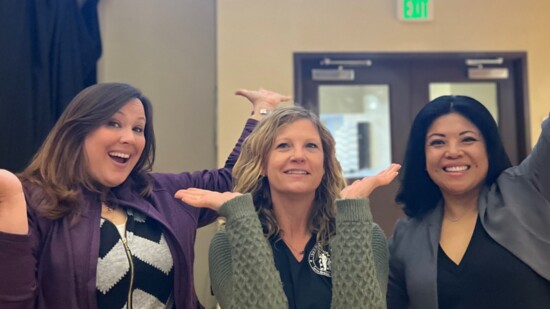
In February 2024, more than a dozen people from the Gem State visited Washington D.C. for the second time. They are in the middle of a two-year initiative that will hopefully spearhead work in the field for the next several decades. This group of devoted people spent the better part of a week discussing suicide and prevention methods, specifically for veterans, service members, and their families. They are part of a larger conglomerate known as the Governor’s Challenge to Prevent Suicide Among Service Members, Veterans, and their Families (SMVF). This team, affectionately named “Team Tater,” works alongside other states to discuss methods for identifying SMVF, fostering a sense of connection, community, and resources, and developing lethal means safety protocols.
Each person on this team is essential and their unique, individual stories of what draws them to this work could fill novels. But in honor of Mental Health Awareness Month and the Lifestyle Magazine Women’s Issue, meet a small handful of the dedicated women of Team Tater.
No matter what our hands are in life, we all face challenges. It is people like these that remind us that there is help, there is support, and there is life beyond pain.
Christina Cernansky
A member of the Integrative Primary Prevention Workforce for the Army National Guard and priest-in-progress, Christina has been in the mental health space for many years. Before the Guard, she worked for the National Alliance on Mental Illness (NAMI) Idaho in the Wood River Valley in outreach and as their Executive Director. “After losing my best friend to suicide, I decided that I wanted to do more to understand the challenges we face as a community and learn how to address those needs,” Christina shared. “What I learned is that life is hard, for most of us, every now and then, sometimes I need to be brave and ask for support.”
Melissa Volkers
After Melissa lost her son, Tanner Volkers, in 2013, she decided that she had two paths in front of her. It was either she give up and succumb to her pain or get involved and help prevent suicides in other families. Tanner served in the U.S. Air Force and Melissa has since served as his voice for veterans, service members, and their families, to reach out and get the help they need. Melissa has worked in the field of emergency services for many years. She has experience as an emergency medical tech for the Middleton Fire Department, she’s worked for the St. Lukes Medical System, and as a Veterans Service Representative for the U.S. Department of Veteran Affairs. One of the most important lessons she has gathered from her experience is “Learning the things that you should or not say to people when they are struggling. And then, when you have the opportunity, take it! Do not walk away, ask the questions, make a plan, and a promise for safety. Get them the help that they need.”
Chaplain Christa Trinchera
“As a Chaplain, I am often the one delivering the devastating news of a loved one's death by suicide or I am present on scene to witness the despair and devastation families go through. I will do whatever it takes to ensure that we continue to work towards a reduction of suicide through education and resources.” Christa became a Chaplain after medically retiring from her career in law enforcement where she served as Administrator for Elk Grove Police Department’s Project Lifesaver Program. “I was recovering from a car accident when my dear friend, Officer Kevin Tonn, was killed in the line of duty,” Christa explained. “I saw the Chaplains come alongside his family and began to feel the tug on my heart to enter into Chaplain service. I serve and wear Officer Tonn's badge number in honor of his sacrifice and service.”
Fallon Baraga
Fallon is the Suicide Prevention Program Manager for the St. Luke's Health System in Twin Falls and the daughter of a Vietnam Marine Corps Veteran. “I am involved in this work because it means saving and enriching the lives of others,” she shares. “I can’t think of a better way to spend my time.” Fallon is passionate about mental health advocacy and “improving the health and well-being of communities through the prevention of problematic physical and behavioral health outcomes.” She encourages everyone to get involved in Idaho’s regional suicide prevention programs and to take the free, virtual Question, Persuade, Refer (QPR) training available through the Speedy Foundation.
Virginia Holmgren
Virginia is a U.S. Air Force Veteran, Respiratory Therapist and nurse. She is currently going to school to be a Psychiatric Mental Health Nurse Practitioner. “When I was younger I thought ‘happiness was a choice,’” Virginia explained. “But if too many things happen that aren’t processed, they can build up. Our brains are fascinating. Depression is a compounding condition, meaning it can get worse as time goes on if there is no intervention. Due to personal struggles that have taken me to dark places, I recognize the importance of mental health to whole health and want to help educate and be an example of hope and health.”
If you are in crisis or concerned about someone you know, call or text 988. If you are a veteran or service member, dial 988 and press 1. The Idaho Crisis and Suicide Hotline (988) provides free, confidential crisis intervention, emotional support, problem solving, and referrals to local resources. You do not have to be suicidal to call. You are not alone.
"No matter what our hands are in life, we all face challenges. It is people like these that remind us that there is help, there is support, and there is life beyond pain."
"Ask the questions, make a plan and a promise for safety. Get them the help that they need."