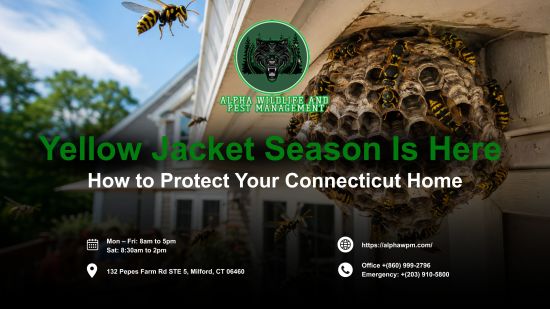
Yellow Jacket Season Is Here: How to Protect Your Connecticut Home
If you live in Connecticut, you know that late summer comes with a few familiar things: hot days, backyard barbecues, ripe fruit, and more time outside.
It also comes with yellow jackets.
You might notice one or two around your patio at the beginning of summer and think nothing of it. Then August rolls around, and suddenly there seem to be yellow jackets everywhere. They are hovering around your garbage cans, buzzing around your outdoor table, getting into your soda, and flying in and out of a small opening near the roofline.
That increase in activity is not your imagination.
By late summer, yellow jacket colonies have grown significantly, and workers are actively searching for food. At the same time, the colony becomes more defensive, especially when people or pets get too close to the nest.
For Connecticut homeowners, this is one of the most important times of year to pay attention to yellow jacket activity.
Understanding where yellow jackets build nests, what attracts them, and when to call for professional yellow jacket control in Connecticut can help you avoid painful stings and prevent a small pest problem from becoming a much bigger one.
Why Yellow Jackets Become More Noticeable in Late Summer
Yellow jacket activity follows a seasonal pattern.
In spring, a queen emerges from her winter shelter and begins looking for a suitable location to establish a nest. At first, the colony is relatively small. As summer progresses the queen continues producing workers, and the colony expands.
By late summer, there may be hundreds or even thousands of yellow jackets working within a single colony.
That means there are simply more yellow jackets out looking for food.
You may start noticing increased activity around:
Patios and decks
Outdoor kitchens
Garbage cans
Gardens and fruit trees
Pools and play areas
Rooflines and eaves
Sheds and garages
Wall voids and attics
This is also why yellow jacket infestations can seem to appear overnight. In reality, the colony has likely been growing for weeks or months. You are simply seeing more evidence of it now.
Why Yellow Jackets Are Attracted to Your Property
Yellow jackets are opportunistic feeders. They are not particularly picky when it comes to finding food, especially later in the summer.
Outdoor meals are a major attraction. Meat, fruit, desserts, sugary drinks, and even small food spills can draw workers to your patio or deck.
Garbage is another big attraction. If your trash cans are not tightly sealed, the smell of food can bring yellow jackets from nearby nests.
Other common attractants include:
Fallen fruit
Open beverage cans
Pet food
Compost
Outdoor grills
Food scraps
Sugary drinks
Uncovered garbage
This does not mean you have to stop enjoying your backyard. It simply means that keeping outdoor areas clean can make your property less attractive to foraging yellow jackets.
Where Do Yellow Jackets Build Nests?
One of the tricky things about yellow jackets is that their nests are not always obvious.
Some species build nests underground, while others build nests in protected areas above ground. A nest can be located somewhere you rarely look, which allows the colony to grow unnoticed.
Common nesting locations around Connecticut homes include:
Underground holes
Wall voids
Attics
Soffits
Rooflines
Eaves
Decks
Porches
Sheds
Garages
Tree cavities
Landscaping areas
If you see yellow jackets repeatedly flying into the same hole, crack, or opening, there is a good chance that an active nest is nearby.
The same applies if you notice a steady stream of yellow jackets entering and exiting a wall, soffit, roofline, or other part of your home.
That is a situation where professional yellow jacket nest removal may be necessary.
Signs You May Have a Yellow Jacket Nest
Seeing an occasional yellow jacket does not automatically mean you have a nest on your property. Yellow jackets can travel considerable distances while searching for food.
The bigger concern is consistent activity in one particular location.
Watch for signs such as:
Numerous yellow jackets entering and exiting the same opening
Yellow jackets repeatedly flying around a specific section of your roof
Increased activity around soffits or siding
Wasps entering a hole in the ground
Yellow jackets coming from underneath a deck
Increased activity near a shed or garage
Yellow jackets appearing inside your home
Buzzing sounds coming from a wall or ceiling
If the activity is concentrated in one area, avoid disturbing it.
The nest may be much larger than it appears from the outside.
Why You Shouldn't Disturb a Yellow Jacket Nest
This is where yellow jackets are very different from the occasional harmless insect you might find around your property.
Yellow jackets can sting repeatedly, and they can become highly defensive when their nest is threatened.
Trying to knock down, block, or spray an active nest can cause the colony to respond aggressively.
That is especially concerning when the nest is located near:
A front or back door
A children's play area
A swimming pool
A patio
A walkway
A driveway
A dog run
A frequently used part of the yard
Homeowners should also avoid using ladders near suspected nests. If yellow jackets are active around a roofline or high section of the home, attempting to reach the nest can create an unnecessary safety risk.
Professional yellow jacket removal in Connecticut is a safer option when a nest is established near areas your family uses regularly.
How to Reduce Yellow Jacket Activity Around Your Home
While you cannot completely eliminate yellow jackets from your property, there are several things you can do to reduce the attractions around your home.
1. Keep Outdoor Food Covered
If you are hosting a barbecue or eating outside, keep food covered whenever possible.
Yellow jackets are particularly attracted to meat and sugary foods, so leaving plates uncovered for long periods can quickly turn your patio into a feeding station.
2. Keep Garbage Containers Sealed
Make sure garbage cans have secure lids. Clean up food residue around the outside of the container as well.
A garbage can that smells like an all-you-can-eat buffet is going to attract more than just your neighborhood raccoon.
3. Clean Up After Outdoor Meals
Wipe down tables, chairs, counters, and outdoor cooking areas after meals.
Pay particular attention to spilled soda, juice, beer, and other sugary beverages.
4. Pick Up Fallen Fruit
If you have fruit trees, regularly remove fallen fruit from the ground.
Overripe or fermenting fruit can become a major food source for yellow jackets during late summer.
5. Inspect Around Your Home
Take a quick look around decks, sheds, rooflines, soffits, porches, and other areas where yellow jackets may establish nests.
You do not need to go poking around in suspicious holes. The goal is simply to notice unusual activity.
What Should You Do If You Find a Yellow Jacket Nest?
If you discover an active nest, give it space.
Do not kick it, hit it, seal the entrance, or attempt to remove it yourself.
Keep children and pets away from the area and contact a professional pest control company in Connecticut.
A trained technician can identify the insect, determine where the nest is located, and develop an appropriate yellow jacket treatment plan.
This is especially important when the nest is hidden inside a wall, underground, inside an attic, or somewhere difficult to access.
Why Professional Yellow Jacket Control Is Different
Professional pest management is about more than spraying the insects you can see.
The goal is to identify the source of the activity and address the nest appropriately.
A professional inspection can help determine:
Where yellow jackets are entering and exiting
Whether a nest is underground or inside a structure
How close the nest is to occupied areas
Potential entry points around the home
Conditions that may attract additional pest activity
Effective yellow jacket control should address the active colony while also considering how to reduce the chances of future problems.
This is particularly important for homes in Milford and surrounding Connecticut communities, where properties often have a mix of wooded areas, mature landscaping, decks, sheds, and older structures that can provide plenty of nesting opportunities.
When Should You Call a Professional?
The best time to call is before the situation becomes a safety issue.
Consider scheduling an inspection if you notice:
Increasing yellow jacket activity
A steady stream of insects entering one location
A visible nest
Yellow jackets inside your home
Yellow jackets around a child's play area
Activity near your patio or outdoor kitchen
Yellow jackets coming from a wall or roofline
You do not need to wait until someone gets stung.
In fact, recognizing the problem early can make it easier to manage.
Protect Your Connecticut Home This Yellow Jacket Season
Yellow jackets are a normal part of Connecticut's summer ecosystem. They play a role in controlling other insects and contribute to the environment.
The problem starts when a colony establishes itself next to your home, particularly in an area where your family spends time.
Late summer is when yellow jacket activity can really take off. By this point in the season colonies may be large, workers are actively searching for food, and nests can become increasingly defensive.
If you are seeing yellow jackets around your deck, patio, roofline, yard, or home, do not assume they will simply disappear.
A few insects flying around may be nothing more than normal seasonal activity. Repeated activity in one area, however, could be a sign of an active nest.
Alpha Wildlife & Pest Management provides professional pest control in Milford CT and surrounding Connecticut communities, including yellow jacket control, wasp control, wildlife services, inspections, and preventive pest management.
Our goal is simple: identify the problem, deal with it safely, and help keep it from becoming a bigger headache.
Seeing yellow jackets around your home? Don't wait until someone gets stung. Contact Alpha Wildlife & Pest Management to schedule an inspection and take care of the problem before the colony gets any bigger.