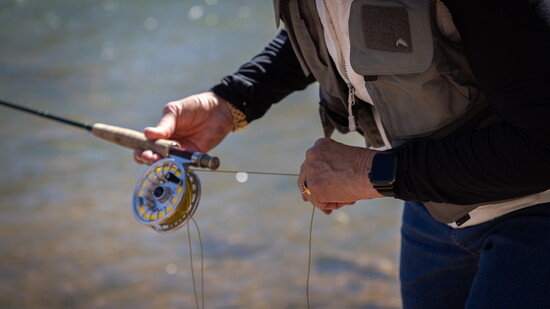
On any given morning in Durango, women runners slip into the high country before the sun crests the San Juans. Female anglers wade gingerly into the river’s cold currents. On courts across town, the soft pop of a pickleball struck between ladies’ teams punctuates birdsongs. Here, it is easy to take for granted the sight of women moving with strength, purpose, and unapologetic focus. Nationally, it was not always so.
For centuries, women’s bodies were treated as fragile instruments, incapable of exertion. Athletic ambition was coded as unfeminine and inappropriate for public display. Medical myths warned that physical strain could deplete a woman’s limited reserves of energy. And yet, even as these constraints held, women labored in textile mills, bore children, and daily tested the boundaries of endurance.
A decisive shift came in 1972 with Title IX—a subsection of a landmark education rights act—which mandated women’s equal access to sports. The law’s legacy has been astounding. Girls’ participation in high school sports swelled from a few hundred thousand in 1971 to 2.8 million by 2003. Collegiate sports participation boomed from 15% in 1972 to 43% by 2001. And, that legacy also echoes through the miraculously athletic lives of Shelley Walchak, Laura Lynne Ehlers, and Becca Bramley.
She’s So Fly
Shelley Walchak did not discover fly fishing until very late in life. “I fell in love with the sport,” she says, “like you do when you’re a teenager, and you meet your first love.” She was nearly 60 at the time, working a demanding statewide role overseeing Colorado’s public libraries, when a trip to Montana’s Bighorn River altered the course of her life.
After falling head-over-heals for angling, Walchak left her job and embarked on an ambitious project: fishing a different river each week for a year across the Rocky Mountain West, later chronicled in her memoir, 52 Rivers. The undertaking demanded more than romantic wanderlust. Fly fishing, she insists, is both art and science. “There’s so many different aspects that you have to learn…where the fish are in the river, what different stages of flies. The art of it—just learning how to cast so that you can put your fly down in a place that literally fools the fish.”
At 76, Walchak remains active—walking, biking, and of course, fishing. Her life is enlarged rather than narrowed by age. “It’s a gift that keeps on giving.”
A Fated Courtship
Where Walchak’s story is one of late discovery, Ehlers' traces a lifelong, evolving relationship with movement. Growing up in Ohio in the 1960s, just before the passage of Title IX, she learned to play by necessity.
“I grew up with boys,” she recalls, “and I think I had to play…pretty much like a guy.”
Ehlers captained her high school tennis team. Years later, after stepping away from a corporate career, she found herself at a local YMCA, first taking fitness classes before being asked to teach them. That decision launched a second career in fitness instruction, and eventually, a return to tennis, which would profoundly reshape her sense of self. After hitting with the club’s pro trainer, she was offered a spot on the league team. “That was super inspiring…It was life-changing,” Ehlers says.
Now, she coaches and—perhaps most importantly—connects. “I resonate with women as a coach. I feel like I can empower them.”
Ehlers sees her role as corrective and catalyst. “Getting that connection and igniting that for someone else—that’s really rewarding.” On the court, she encourages fierceness—a quality women have long been discouraged from claiming. “We don’t necessarily get that opportunity to be fierce without feeling bad about it.”
In the Long Run
For Becca Bramley, athleticism is neither rediscovered nor reclaimed, but inherited. The daughter of an elite runner, she came to the sport through grief. After her father’s death when she was 13, running became a means of connection. “That was my motive…for a really long time,” she says. “Just being connected to my dad.”
At first, the sport was punishing. “Running isn’t that fun…when you have to get into shape.” But it offered structure and a place to channel loss. Her trajectory since has been marked by both grit and evolution. Bramley initially walked away from collegiate competition, only to return months later, drawn by an unshakable need to move. Over time, she pushed into ultrarunning—50Ks, then 100Ks, and eventually a 100-mile race.
Where once she ran to hold on—to memory, to identity—she now practices letting go, or, as a philosophical concept, non-attachment. Bramley polishes her non-attachment skills through her longtime yoga practice, but she finds that running puts them to the ultimate test.
For instance, in a recent competition, she fell and broke her arm mid-race. “I was like, is there any way I can keep going? Can we just put my arm in a sling?” she recalls. The answer, ultimately, was no. Only by letting go of her attachment to winning could she evolve into a better athlete with greater mental fortitude.
Settling the Score
Across generations and disciplines, these women converge in their patience learned through repetition, in confidence forged through effort, in the stubborn, sustaining belief that the body is not a limitation but a terrain to be explored.
Half a century after Title IX, the level playing field it promised is still unfolding—not just in numbers or access, but in the interior lives of women who cast, run, and rally their way into fuller versions of themselves.
On the Shelf: 52 Rivers
After discovering fly fishing later in life, Shelley Walchak set out to fish a new river every week for a year. Her memoir captures the discipline, wonder, and deep connection found along the way—revealing how curiosity can open the door to an entirely new chapter.