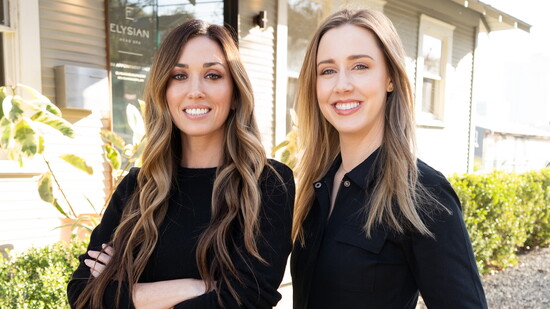
Head spas have been popping up with more regularity in the last year or so, and with good reason. In this article, Katie Wills, an acute care nurse practitioner, clinical trichologist and co-founder of Elysian Head Spa shares why our hair and scalp deserve the same attention we give to our skin
***
I’ve spent nt my career in medicine, where the body rarely lies. It signals. It adapts. It responds – especially when something is off. The most prominent lesson we've learned since opening Elysian Head Spa just over a year ago isn’t how many people struggle with hair concerns, but how disconnected we’ve been from understanding why.
We live in an era of optimization. We track our sleep, regulate our nervous systems, invest in our skin, and talk openly about longevity. Yet when it comes to hair, most people are still searching for a product – a serum, a supplement, a shortcut – to fix what feels like a sudden problem. But, hair doesn’t change suddenly. And it doesn’t exist in isolation. The scalp is living skin, deeply influenced by circulation, inflammation, hormones, stress, and the consistency of care it receives. When shedding increases or density changes, it’s rarely random. It’s information. And for years, the hair industry has trained us to ignore that information in favor of quick cosmetic solutions.
What I’ve seen, both clinically and in practice, is that healthy hair always begins with a healthy scalp. This isn’t a philosophy – it’s physiology. Hair follicles are complex, living structures embedded within the skin. When the scalp is congested, inflamed, under-circulated, or chronically stressed, hair growth is compromised. No product or single intervention can override an unhealthy environment. This realization is part of a larger shift happening in hair care – one that reframes hair and scalp health as a practice, not a fix. Much like modern skin health or physical rehabilitation, meaningful change requires assessment, personalization, and consistency. Progress is subtle. Results are cumulative. The work happens over months, not moments.
Medical insight plays an important role here, especially when addressing hormonal shifts, autoimmune conditions, inflammatory scalp disorders, or genetic predispositions. Skin science matters too – understanding barrier function, the scalp microbiome, and how topical or procedural treatments interact with living tissue. But one of the most overlooked contributors to hair health is the nervous system. Chronic stress alters circulation, increases inflammation, and disrupts the hair growth cycle. In our work, we've seen how intentionally designed head spa treatments – when rooted in anatomy and physiology – can do far more than relax. Manual scalp techniques support blood flow and lymphatic movement. Parasympathetic activation encourages regulation and repair. Over time, the scalp begins to recalibrate.
Hair restoration fits naturally within this model, but it is no longer viewed as a standalone treatment. When approached thoughtfully, restoration becomes an extension of overall scalp health – supporting the body’s own regenerative capacity rather than attempting to override it. Advanced, naturally based therapies that work with physiology, inflammation pathways, and circulation are most effective when the scalp has been properly prepared and supported. In this context, restoration is not about forcing growth, but about creating the conditions in which hair can respond, strengthen, and regenerate over time.
Elysian Head Spa was created from the intersection of medicine, skin science, nervous system regulation, and ritual-based consistency. The intention was never to open “another spa,” but to establish a new category of scalp experts, known as Treatment Specialists - ones trained to observe patterns, educate clients, and guide long-term scalp and hair health in a way that doesn’t fully exist elsewhere. What we've learned in this first year is that people are ready for this shift. They want care that feels intelligent, intentional, and grounded in reality – not louder promises or faster fixes. The future of hair care won’t be about what you buy next. It will be about how you care, consistently and thoughtfully, over time, because hair and scalp health isn’t something you correct. It’s something you cultivate.