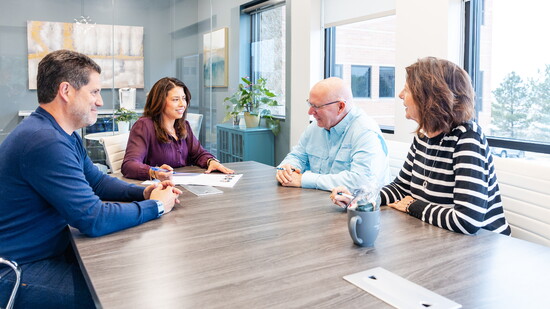
In Centennial, people are not leaving. They are staying. With home values rising and longtime residents choosing to remain in place, the conversation is no longer just about real estate. It is about what comes next.
Reverse mortgages have long been one of the most misunderstood financial tools available to retirees. For Tim Oddo, from the Oddo Group - Luminate Bank, that misunderstanding is exactly why he does what he does.
With more than two decades in the mortgage industry, Tim has built his career on one principle: put people first and find solutions that improve their lives. Over the years, he noticed a common challenge among homeowners nearing retirement. Many had built substantial wealth in their homes but did not fully understand how to access it. That realization led him to specialize in reverse mortgages, helping seniors unlock the value of what is often their largest asset.
“We are seeing a shift,” Tim says. “People want to stay in their homes longer, maintain their lifestyle, and have more control over their finances. Reverse mortgages can help bridge that gap.”
When asked about the biggest misconception he hears, Tim answers immediately.
“People think the bank owns your home. That is simply not true. You retain ownership just like with any other mortgage. Modern reverse mortgages are highly regulated and designed with strong consumer protections. When used correctly, they are a planning tool, not a last resort.”
Reverse lending, Tim explains, has evolved into a more strategic option for retirees. A reverse mortgage allows homeowners age 62 and older to access a portion of the equity in their primary residence as tax-free cash, without taking on a monthly mortgage payment. Funds can be structured as a lump sum, a line of credit, or monthly payments and can be used however the homeowner chooses. Some use the funds to pay off an existing mortgage, cover healthcare costs, or simply create more financial flexibility. Property taxes, insurance, and maintenance remain the homeowner’s responsibility.
For Tim, the real impact goes beyond the numbers.
“What I see most is peace of mind,” he says. “When that monthly pressure is gone, everything changes. It creates financial ease while allowing people to remain in the home they love.”
Families often ask what happens to the home when the homeowner passes away. Tim says this is where education matters most. Heirs have options. They can sell the home, refinance the balance, or pay it off with other assets. Federally insured reverse mortgages also ensure that neither the homeowner nor their heirs owe more than the home is worth.
“For many families, it actually creates flexibility,” Tim says. “It gives children time and options rather than pressure.”
This structure can also ease the financial burden many adult children quietly carry. Without a required monthly mortgage payment during retirement, parents are often less likely to rely on family support later in life, allowing both generations to plan with greater independence.
At its core, Tim says the conversation is about more than finances.
“This is not about getting by. It is about living well, with intention. It is about creating options.”
For Centennial homeowners, the opportunity can be significant. Home values across the area have appreciated considerably, meaning many longtime residents are sitting on substantial untapped equity. A reverse mortgage offers a way to access that value without selling, downsizing, or leaving the neighborhood they love.
The first step, Tim says, is simply a conversation, one that brings clarity not only for homeowners, but for the families planning alongside them.