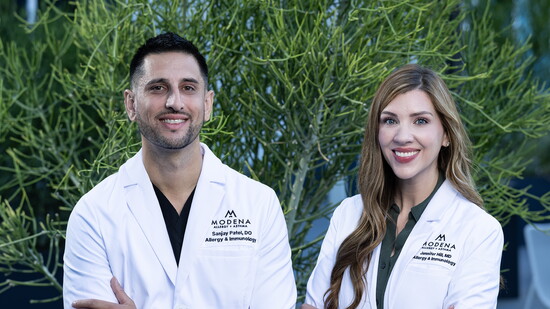
Back-to-school season brings excitement, fresh routines, and new opportunities. For families managing food allergies, however, it can also bring renewed anxiety.
Will teachers recognize symptoms? Does the school have an emergency plan? Will my child speak up if something feels wrong?
Food allergies affect an estimated 1 in 13 children in the United States, meaning most classrooms now include at least one or two students navigating the realities of food allergy management. Yet despite increased awareness, many misconceptions persist.
Perhaps the biggest misconception is that food allergy care looks the same today as it did a decade ago. It doesn't.
Advances in diagnostic testing, emerging therapies such as Oral Immunotherapy (OIT) and biologic medications, and a deeper understanding of the emotional impact food allergies have on children and families are changing the way we approach care. In many cases, the conversation has shifted from simply avoiding allergens to reducing risk, building confidence, and improving quality of life.
As another school year begins, we're addressing some of the most common allergy myths we hear from families and sharing the facts every parent should know.
Myth #1: Peanut-free schools keep my child safe.
Fact: School preparedness is the real protection.
Many parents feel reassured when a school advertises itself as peanut-free. While allergen-aware policies can help reduce risk, no school can completely eliminate exposure.
Preparedness matters more than prohibition. The safest schools are those with trained staff, clear emergency protocols, and immediate access to epinephrine.
Before the first day of school, parents should ensure their child's epinephrine is current, a Food Allergy Action Plan is on file, and school staff know how to respond in an emergency.
Myth #2: Epinephrine is a last resort.
Fact: Epinephrine is the first-line treatment for anaphylaxis.
One of the most dangerous food allergy myths is that parents should wait until symptoms become severe before administering epinephrine.
In reality, delayed treatment is associated with worse outcomes. Many allergists worry far more about hesitation than giving epinephrine unnecessarily.
Treatment options continue to evolve, including newer delivery methods such as nasal epinephrine for certain patients.
As the school year begins, take time to review administration techniques with teachers, coaches, babysitters, and caregivers.
Myth #3: My child will always know something is wrong.
Fact: Early symptoms are often subtle and easy to miss.
Adults often imagine allergic reactions as dramatic and obvious. In reality, early symptoms can be subtle.
A child may report an itchy mouth, throat discomfort, stomach pain, coughing, or simply say they feel "funny." Younger children often lack the vocabulary to describe what they're experiencing.
Teaching children to speak up immediately, even when symptoms seem minor, is one of the most important safety lessons parents can reinforce.
Myth #4: Past reactions predict future reactions.
Fact: Reaction severity can change unexpectedly.
This is one of the most important concepts in food allergy care: reactions are not predictable.
A child who previously developed mild hives could experience a much more serious reaction during a future exposure, while someone with a history of severe reactions may not react the same way every time.
Every exposure should be taken seriously, regardless of what happened in the past. That's why allergists recommend reviewing emergency plans, medications, and school procedures at the start of every school year.
Myth #5: Airborne peanut exposure is the biggest school risk.
Fact: Most severe reactions occur when a food is eaten.
Parents often worry about a peanut butter sandwich across the cafeteria. In reality, most severe allergic reactions occur because a food is consumed, not because it is nearby.
The most effective prevention strategies remain simple: no food sharing, careful label reading, handwashing, and clean eating surfaces. Hidden ingredients often pose a greater risk than visible foods.
Myth #6: A positive allergy test equals a food allergy.
Fact: Testing shows sensitization, not necessarily a true allergy.
This is one of the most misunderstood concepts in allergy medicine.
Many parents assume allergy testing provides a simple yes-or-no answer. In reality, a positive test shows that the immune system recognizes a food, not necessarily that a child will react when eating it.
Diagnosis requires both testing and clinical context. At Modena Allergy + Asthma, evaluation may include skin testing, allergen-specific IgE blood work, and Oral Food Challenges, the gold standard for food allergy diagnosis.
One of the most rewarding moments in allergy medicine is helping a family learn that a food they feared for years may no longer need to be avoided. Accurate diagnosis matters because unnecessary food restrictions can affect nutrition, increase anxiety, and diminish quality of life.
Myth #7: Avoidance is the only option.
Fact: Food allergy treatment has evolved dramatically.
For decades, food allergy care focused largely on avoidance and emergency preparedness. Today, the conversation is changing.
One of the most significant advances is Oral Immunotherapy (OIT), which gradually exposes the immune system to carefully measured amounts of an allergenic food under close medical supervision. At Modena Allergy + Asthma, OIT is available for children as young as four and may be considered for allergies including peanut, tree nut, milk, egg, wheat, soy, and shellfish.
The goal is often misunderstood. For many families, success is not eating unlimited amounts of a food. It's reducing the risk of a severe reaction after an accidental exposure.
That shift from fear to confidence can be life changing. Additional therapies, including biologic medications such as Xolair (omalizumab), are expanding treatment options and helping families gain greater peace of mind.
Myth #8: Food allergies mean missing out.
Fact: Most children can safely participate in the activities they love.
Food allergies should not automatically exclude children from sports, field trips, camps, birthday parties, or school activities.
Today, the focus is increasingly on inclusion rather than restriction. The question is not whether a child can participate, but how to help them participate safely.
The goal is confidence, not exclusion.
Myth #9: Food allergies only affect physical health.
Fact: They can impact confidence, mental health, and family life.
Some of the greatest challenges associated with food allergies have nothing to do with food.
Children may worry about feeling different, sitting alone at lunch, using epinephrine in front of friends, or being excluded from social activities. Parents often carry the burden of planning around vacations, restaurants, parties, sleepovers, and school events.
As a result, many allergists now discuss mental health as part of routine care.
Sometimes the most important question a parent can ask is not, "What did you eat today?" but, "What worries you most about your allergy?"
Myth #10: Safety means eliminating all allergens.
Fact: Safety starts with preparation and response.
There is no such thing as a completely allergen-free school.
The safest schools are not the most restrictive. They are the most prepared. An anaphylaxis-ready school is one where students, families, teachers, coaches, and staff know how to prevent, recognize, and respond to allergic reactions.
Food allergy preparedness is a lot like fire safety. We hope an emergency never happens, but we prepare for one anyway.
modena-health.com/scottsdale
"The biggest misconception is that food allergy care looks the same today as it did a decade ago. It doesn't. The safest schools are not the most restrictive. They are the most prepared, and the focus has shifted from avoidance alone to confidence, protection, and participation."