Staying balanced in the new year (literally and figuratively) can feel like a challenge. But for New Lenox resident and unicyclist Alex Gorusch, balance is a daily practice.
Alex’s unicycling story began long before he realized it. For his 11th birthday, his maternal grandfather surprised him with his first unicycle—an unexpected gift sparked by a moment of curiosity after Alex saw someone riding one on his way to school. Only later did he learn that unicycling actually ran in the family: several uncles rode when they were younger, and his paternal grandfather once delivered newspapers on a unicycle along his paper route.
Still, getting started wasn’t easy. “It took me about a year to get the hang of it,” Alex says. Neighbors grew used to the sight of him clinging to his mailbox or fence, wobbling, falling, and trying again as he inched his way from the driveway to the street. For the next decade, unicycling remained more of a quirky hobby than anything serious—a fun party trick, but nothing more defined.
Everything changed after college. Settling into life in the suburbs, Alex found himself searching for connection and stumbled into an entirely new world of mountain unicycling, road riding, and niche disciplines he never knew existed. He discovered a riding community at Palos and other local preserves, which eventually led him to the Unicycling Society of America and its national event, the North American Unicycling Championships and Convention (NAUCC). Since attending his first NAUCC in 2021, he hasn’t missed a year—traveling to Madison, Cleveland, Minneapolis, and Rochester Hills. Along the way, he’s also tackled mountain unicycling weekends in northern Alabama, Copper Harbor in Michigan’s Upper Peninsula, and Moab, Utah.
But while those trips were energizing, most of his day-to-day riding still happened alone. Wanting to recreate the camaraderie he felt at larger gatherings, Alex founded the Chicagoland Unicycle Club, organizing group rides and coordinating the club’s annual appearance in the Chicago Thanksgiving Parade.
The pandemic became a turning point. With remote work eliminating his commute, Alex suddenly had “bonus hours” in his day that he funneled into riding. He hit the trails at Old Plank Road and Hickory Creek daily, finding solace in nature, easy outdoor socializing, and the rhythm of the ride. The new routine brought mental clarity, friendships across the country, and even a 30-pound weight loss that first year. “My daily rides became my meditation,” he says.
Today, as a new father, Alex is navigating a different kind of balance. He’s not riding every day, but unicycling remains a grounding force—one fully supported by his partner, who shares his belief in making space for the activities that recharge them. Looking back, Alex says unicycling has given him far more than a skill: it’s given him community, resilience, presence, and a constant reminder to slow down and enjoy the journey.
Unicycling isn’t just a novelty; it’s a demanding, full-body balance sport that engages the legs, core, and upper body with every movement. And because there’s no such thing as coasting on a unicycle, riders pedal 100% of the time, making it a surprisingly efficient and endurance-building workout. For winter riders like Alex, the difficulty only increases: lower tire pressure, slick surfaces, and hundreds of micro-corrections per minute make cold-weather unicycling one of the sport’s most technical and mentally focused forms.
That discipline echoes the way many of us approach January. Each year, 30% to 45% of Americans make at least one New Year’s resolution, yet nearly 23% give up within the first week, and up to 64% quit by the end of the month. It’s no wonder the second Friday in January has become known as “Quitters’ Day.” But finding balance, whether on a unicycle or in daily life, doesn’t have to be so elusive.
Inspired by Alex’s commitment and the steady focus required to stay upright on one wheel, Lincolnway City Lifestyle gathered insights from several of our local wellness partners to help you maintain your momentum in 2026.
Welcome to our Health & Wellness Q&A: a guide to keeping your balance in the year ahead.
Raven Fisher, MA, LCPC
Owner of Nave Wellness Center
Why is mental health just as important as physical health when creating a wellness routine?
We take a holistic approach to health and wellbeing. All parts of the human body make up the whole self, including the internal world of the mind. When we focus on physical health alone, we can be eating well, moving the body, and checking all the boxes while still feeling overwhelmed or disconnected. The way we think and feel impacts every part of our daily lives. Internal challenges like stress, burnout, and unprocessed experiences can show up physically – think fatigue, muscle tension, appetite changes, etc. But when we intentionally care for our mental health, we strengthen our capacity to handle whatever life brings. Prioritizing mental health empowers us to build a holistic wellness routine that honors the fullness of our humanity.
What’s inspiring you most about the year ahead for Nave Wellness Center?
I’m most excited to deepen the ways Nave Wellness Center shows up for our community. We’ve always believed that healing doesn’t just happen in the therapy room – it also happens through connection, shared stories, and spaces where people feel seen and supported. This year, we’re looking forward to hosting more workshops, groups, and community conversations that make mental health education accessible and meaningful. I’m excited about collaborating with local partners, schools, churches, and organizations to bring mental wellness into everyday spaces where people already gather. Most of all, I’m excited to keep building a practice that feels like a resource – a place where people can learn, heal, and feel part of something larger than themselves.
How do you help clients find balance between emotional health, relationships, and daily responsibilities?
We help clients find balance by honoring their real-life experiences – what they’re carrying, what they’ve survived, and what they hope for. Balance isn’t about perfection; it’s about alignment. We guide clients in slowing down enough to recognize their emotional needs, reconnect with their values, and notice the patterns that keep them overwhelmed or stretched thin. Therapy becomes a space where clients learn to show up for themselves without guilt and show up for others without losing their sense of self.
Dr. Scott Sumrall, AuD
Owner of Freedom Hearing and Speech
How do hearing and communication skills influence a person’s overall sense
of wellbeing?
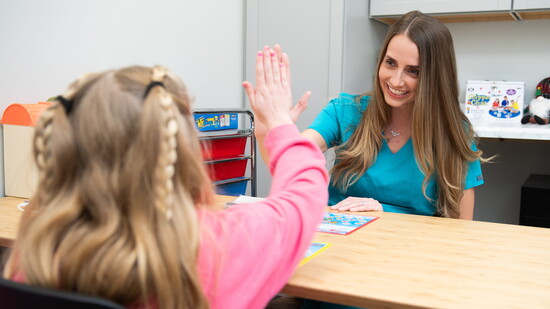
Hearing and communication are foundational to how we connect with the world. When someone can hear conversations clearly, participate socially, and communicate confidently, it supports emotional health, reduces stress, and improves relationships. Untreated hearing loss can lead to frustration, withdrawal from activities, reduced cognitive stimulation, and heightened feelings of loneliness or fatigue. Supporting hearing and communication skills helps people stay engaged, independent, and connected, directly improving overall wellbeing and quality of life.
Looking ahead to 2026, what are you most looking forward to at Freedom Hearing & Speech?
We’re excited to bring Lenire, a groundbreaking non-invasive tinnitus treatment, to our practice. It offers new hope to individuals who have tried traditional methods without success. We’re also expanding into diagnostic balance and vestibular services, an area that audiologist, Scott Sumrall, AuD, is especially passionate about. The office will offer advanced vestibular evaluations, diagnostics, and individualized treatment plans to support patients experiencing balance-related challenges. These additions reflect our dedication to offering cutting-edge, patient-centered hearing and balance care for our community.
Dr. Lauren Mansell, DPT
Owner of AcuRehabMed
How does specialty physical therapy support whole-person wellness?
When people think about physical therapy, they usually think of doing exercises in a gym-like setting after a joint surgery or maybe working with someone after a stroke. That is not the only type of physical therapy. In our specialty clinic, we treat patients individually in a private room addressing issues such as bladder issues, bowel issues, chronic pain, lymphatic dysfunction and issues relating to childbirth, menopause, and cancers (like prostate cancer treatment for men). We are the only type of physical therapy that addresses wellness issues of bowel and bladder health.
How does your clinic help patients balance the physical, emotional, and functional aspects of wellness?
We teach that human function is a combination of what we do, how we feel and how we think. This can include what we are drinking and eating, the activities they are doing (or not doing but want to do), what we think and feel about our bodies and our social supports or deterrents.
What’s inspiring you most about the year ahead for AcuRehabMed?
We are teaching the country of Guyana on how to provide pelvic therapy. We are honored to not only be a community resource but to be a leader nationally (and to developing countries) in this important work. Our staff has the highest training possible and whether it's myself, Allison Sivak, Jess Boblak, or Yulissa Moreno- our patients are literally in the best hands.
Dr. Shannon McMahon, DACM
Owner of Ancient Roots Acupuncture
What’s on the horizon for Ancient Roots in 2026 that excites you most?
I’m excited to be expanding my practice to offer massage therapy and welcome a part-time clinic assistant, Adam, who handles a lot of client communication. As for massage therapy, Paul provides Swedish and deep tissue massage, as well as a unique traditional Chinese medicine bodywork called Tui Na. Unlike typical spa-style massage, Tui Na combines acupressure with a structured, rhythmic technique that is more clinical in nature. It’s a distinctive service not widely available in the area, offering patients a truly unique approach to healing and wellness.
How does Traditional Chinese Medicine support balance across mind, body, and
spirit?
Traditional Chinese Medicine supports mind, body, and spirit by restoring the smooth flow of Qi—the vital energy connecting all aspects of health. Through acupuncture, herbal medicine, tui na, and mindful practices like tai chi or qi gong, TCM harmonizes organ systems that influence physical function and emotional well-being. By calming the spirit, easing stress, improving circulation, and aligning habits with natural rhythms, TCM helps people feel grounded, clear, and resilient, creating a holistic sense of whole-person wellness.
Supporting hearing and communication helps people stay engaged, independent, and connected, directly improving overall wellbeing and quality of life.
Traditional Chinese Medicine helps people feel grounded, clear, and resilient, creating a holistic sense of whole-person wellness.