Osteoporosis is often called a silent disease. For many women, the first sign is not a warning but a fracture. By the time a routine bone scan confirms significant bone loss at age 65, years of rapid decline may have already occurred.
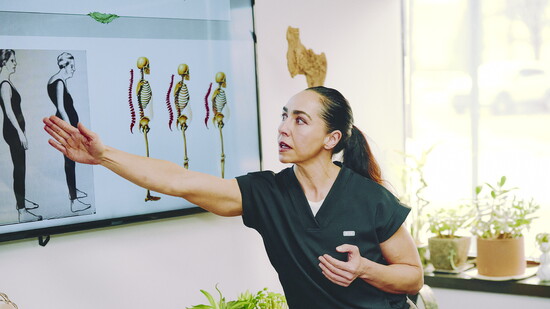
For Claudia Tamas, PT, DPT, RN, BSN, CSCS, director of women’s health at Natural Medicine and Rehabilitation in Bridgewater, that reality is what drives her work.
“My commitment to women’s health began during my clinical rotations in long-term care,” she says. “I saw firsthand how frailty and loss of independence affect quality of life. That experience solidified my belief that the most meaningful impact happens in prevention, long before functional decline.”
Why Timing Matters
National guidelines typically recommend DXA bone density screening beginning at age 65. But biologically, bone loss accelerates much earlier.
Women lose about 15% of their bone mass during the menopausal transition and the decade that follows due to declining estrogen levels. For women who enter menopause with already low bone reserves, the rapid loss can significantly increase fracture risk.
“The timing of screening does not align with the biology of bone loss,” Tamas shares. “If DXA were used as a true preventive tool, it would need to be recommended and reimbursed much earlier.”
Without early identification, many women remain unaware of their risk until osteoporosis is already present.
Who Is Most at Risk
Risk factors for osteoporosis begin accumulating decades before a diagnosis. Nutritional deficiencies, a history of eating disorders, menstrual dysfunction, certain medications, hormonal imbalances and a sedentary lifestyle all influence peak bone mass and long-term skeletal resilience.
Strength training plays a critical role.
“Many women believe walking improves bone density,” Tamas notes. “While walking has cardiovascular benefits, it does not provide the mechanical load necessary to stimulate new bone formation.”
Research consistently shows that high-intensity resistance and impact training are required to meaningfully influence bone density. Muscle strength, balance and power are equally important in reducing fracture risk.
Strong muscles stabilize joints, lower fall risk and help absorb forces that would otherwise be transmitted to bone. Women with greater muscle mass and strength also recover more quickly after fractures and maintain higher levels of independence.
A Shift in Treatment
Osteoporosis care has evolved significantly in recent years. Evidence-based exercise interventions are now recognized as therapeutic tools rather than optional recommendations.
Tamas was among the first in the United States to implement the ONERO model, a program based on high-intensity resistance and impact training supported by clinical research. The approach has demonstrated improvements in bone density, strength, balance and overall functional capacity.
The field is also increasingly recognizing the role of menopausal hormone therapy in preventing and reversing bone loss for appropriate candidates. At the same time, clinicians are expanding beyond a one-size-fits-all model.
At Natural Medicine and Rehabilitation, Tamas works within an interdisciplinary framework that evaluates bone health across three domains: nutritional and metabolic, mechanical and stress-related.
Patients undergo comprehensive assessments that include strength and balance testing, evaluation of hormonal and inflammatory markers, micronutrient analysis and lifestyle review. The goal is to identify root contributors to bone loss and design personalized interventions.
“Osteoporosis is not just about bone density,” Tamas explains. “It is about muscle preservation, metabolic health, hormonal balance and long-term functional resilience.”
Warning Signs Women Should Not Ignore
Subtle musculoskeletal changes may signal declining bone and muscle integrity. A slumped posture, difficulty climbing stairs, relying on hands to rise from a chair, decreased grip strength or inability to balance on one leg for 10 seconds can all indicate increased fracture risk.
“These are not just age-related inconveniences,” Tamas emphasizes. “They are clinically meaningful indicators of muscle weakness and impaired stability.”
Early recognition allows for intervention before a fracture occurs.
One Powerful Action
If there is one action Tamas wishes more women would take earlier, it is strength training.
“Strength training is arguably the most powerful lifestyle intervention for preserving lifelong bone and muscle health,” she shares.
It prevents sarcopenia, enhances spinal stability, improves balance and supports metabolic function. Ideally, women should begin strength training in adolescence and continue throughout adulthood.
“If we treated strength training as a standard preventive practice, like dental care, we would dramatically reduce rates of osteoporosis and frailty,” she says.
Looking Ahead
Emerging osteoporosis care is moving toward earlier identification, targeted high-intensity exercise and whole-person evaluation rather than relying solely on medication or late-stage screening. The growing emphasis on muscle health reflects a broader understanding that fracture prevention extends beyond bone density alone.
For women navigating midlife and beyond, the message is clear: bone health is not something to address after a diagnosis. It is something to build long before.
Somerset, NJ
To learn more or schedule an evaluation with Dr. Tamas and the team at Natural Medicine and Rehabilitation, visit NMRNJ.com or call 908-252-0242.