“Dad?”
“Yeah?”
“Ya know, you’re on the phone when I go to sleep, you’re on the phone when I wake up, and you’re on the phone whenever we’re in the car together. It’s like you’re never not on the phone.”
That’s where it started.
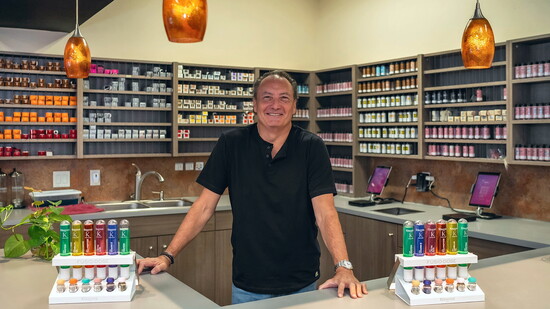
Phil Devin, owner of the Yacht Club Salon in Westminster, decided to leave corporate sales and buy a business that would keep him home more and on the phone less.
What kind?
He had no clue.
“I made a list of the things I wanted: not a ton of inventory, long-term customer relationships, cash business with no outstanding invoices, high staff retention, in business over 10 years, option to purchase real estate, too. It didn’t matter if I could do it or not – it’s still sales.”
After investigating over 25 businesses, he found the Yacht Club Salon. “I liked [the owner’s] style. The business had been around over 30 years and had a great reputation.”
They signed the deal in May 2025. He bought another salon, twice as big, that October. As of this writing he has four (Westminster, Loveland, Denver, and DTC) and is actively looking for more.
His approach could work for anyone. Being dispassionate about what the “thing” will be – bakery, salon, boutique – allowed him to focus on what makes a small business successful.
Ninety percent of small businesses fail before their 10th anniversary, and about half of them don’t even get to five years. Those that survive have strong retention rates among both staff and customers.
In addition to spending more time with his son, who will not be 16 forever, Phil said this business, “is making me a softer person. I’m reevaluating what I thought was important.”
He’s been surprised by – and it’s taken him a minute to get comfortable with – the tactile nature of this industry. Prior to The Yacht Club, he knew nothing about the non-work lives of his colleagues. Here, everyone knows everyone, and they hug each other.
All the time.
Phil had never hugged anyone at work in his life, and he wasn’t crazy about the idea. But it’s grown on him.
In terms of the product, “As a man, when I started, I used whatever was around. Now I use the fancy stuff we sell [Redken, Kerastase, and Pureology – all L’Oreal product lines], and there’s really a difference.”
Small businesses need creative problem solving, the owner’s ability to delegate and make quick decisions, and continuous learning to thrive.
Talking about an upcoming class for stylists, Phil said, “I had no idea there were so many different types of curls. Tight, loose, this, that – and you really have to be able to educate clients about caring for them. It’s not just about selling products; it’s about education.”
Shaking his head and smiling, Phil said, “Sometimes I can’t believe I’m having these conversations.”
Typically, salon owners are stylists with opinions about the craft. Phil has none. “It took a while for them to get that I was seriously asking for their opinions, relying on their expertise.”
As he got to know people’s abilities and interests, he began offering expanded responsibilities. Someone took over inventory, someone else runs the in-house education program and another handles the associates’ program, which pairs fresh-out-of-school new hires with established stylists for training.
With four locations and 110 stylists, Phil can “do things like give my staff health care, 401(K)s, PTO. Things most small businesses cannot do. Economy of scale makes all the difference.”
So does pragmatism. “It’s standard to lose 10 to 15% of customers each year to death, moving or just wanting another experience. Some can go to another location with a different vibe, so we don’t actually lose them.”
Same with stylists. “I can let them go to another salon. I don’t have to lose them. Each salon has different clientele and that affects the overall vibe. Here the atmosphere is a little more suburban. The downtown Denver location has an entirely different feel.”
He said, “Now I understand the plight of the small businessperson, so I use them whenever I can.” No more Starbucks for him. Local coffee only. While setting up a recent customer appreciation event, he noticed a liquor store next to the venue – easy decision. “I used local caterers and brought in local food trucks. It was a great experience, and it was all local to each salon.”
In the same spirit, the Yacht Club Salon supports the St. Baldrick's Foundation’s annual haircutting event. Volunteers get their long hair cut for wigs for cancer patients. “It doesn’t take too much to make people feel good – nobody gets super excited over a new cloud license.”
His advice to anyone thinking about buying a small business? Worry about the stability of the business, not what it does; trust your staff and let them teach you; and once you have the first one up and running, go out and buy another.
“This business is making me a softer person. I’m reevaluating what I thought was important.”- Phil Devin
“It took a while for them to get that I was seriously asking for their opinions, relying on their expertise.” - Phil Devin