There is a certain kind of hunting that requires no equipment, no camouflage, no map, and no particular idea of what you're looking for. The object of the hunt is not known until it is found. It might be something left behind centuries ago, something passing through for only a moment, or something so ordinary that you have somehow never noticed it before. Sometimes it can be held in your hand. Sometimes it leaves only an impression. The pleasure is in the discovery.
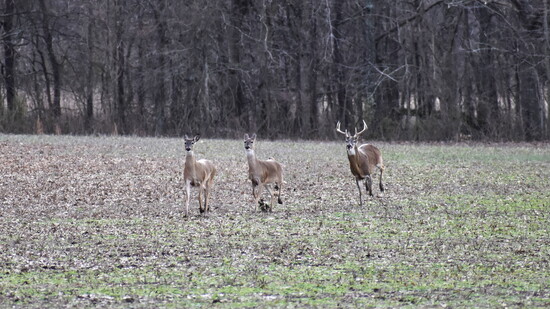
Walk not too far down a Delta turnrow and you might find an arrowhead perched right on top of the soil, like it was watching you before you saw it, untouched for hundreds or thousands of years, ready for its next appreciative owner. A little farther on, a deer antler shed watches your approach, equally as eager to be held as the arrowhead. A peculiar feather caught in an emerging cotton seedling, touched by the sunny gentle breeze. Tracks of several species of small semi-aquatic mammals, who similarly identified a path of least resistance to some unknown destination. Sometimes the quarry is carried home; sometimes it simply leaves an intangible impression on the observer.
It is the unmistakable flute-song of a wood duck disturbing the resting slough before daylight. The call of a bird you have never heard before. Some guttural bellow of swine, or a shriek from a small predator. The way the setting sun turns a flooded rice field into a sheet of patinated copper. The reflection of cypress limbs adorned with needles and berries in a muddy puddle of concentric tractor tire ruts.
You begin to realize that the Delta is full of things like this. The problem is that most of us are moving too fast to see them. We hunt for deer. We hunt for ducks. We hunt for turkeys. We hunt for fish. We hunt for property, for business, for the next vacation. But there is another kind of hunting, one with no season, no limit and no requirement that you bring anything to or from the outdoors. It is the hunt for details. And once you start looking, the landscape changes.
If you are fortunate to visit a historical farm office, you might find old maps. Some of these maps were drawn at times when homes dotted old dirt or gravel roads, and the fields were labeled with affectionate names like “pea patch,” “blue-eyes,” “old man,” “hard-face,” some undoubtedly in remembrance of venerable personalities who still exist in oral history, if you find the right orator. Walk to the location of those little unassuming dots on the map and there will be treasure waiting for you on what will be sandy dirt, as structures were most often set on well-draining soil.
There will be broken glass and small rusted shrapnel, bolts and screws, tractor-trailer pins. Upon closer inspection, you will notice some of the glass is blue, green, and a translucent purple. You might find a complete cola bottle, some brand bottled in Greenwood or Cleveland, as imprinted on the bottom or side of maybe a spiral or other antiquated design. Good chance a blue, ceramic or even transparent, ornate marble will present itself accompanied by a coin that you will slide in your pocket and forget about, until you get the pants out of the wash and rediscover the penny with a bushel of rice, Indian chief’s profile, or some nefarious design on a German coin found at a POW camp.
There's something compelling about the idea that the Delta is a landscape layered with evidence of everything that has passed through it. A balloon deflates and lands in the field. Pull-tab beer cans. Brown snuff bottles. Old barbed wire absorbed deep into the growing tree it was once nailed to. A tiny porcelain arm or leg, detached from the cloth that held the doll together. A rusted mule bit lying near an old cotton spindle demonstrates the mechanization of agriculture. The emergent Native American artifacts, and to continue farther, below millions of years of sediment, old evidence of the once-shallow sea, crinoid fossils, shells and other remnants of that ancient submarine world, still part of the story beneath the soil. There is a history behind all of these objects; some of it is obvious, some of it esoteric.
Like anything else, the more you know, the more interesting it becomes, and a lot of times seeking fundamental answers leads to more complex questions. The Delta is constantly becoming something else. Dry woods become flooded timber. The field goes from bare dirt to green to brown stalks and back to bare. Shallow wetlands freeze, thaw, fill, recede. The same trees are unrecognizable from January to August. The morning fog hides something you could see yesterday. The river moves, taking some things with it and leaving others behind. You can walk the same stretch of woods a hundred times and have never walked the same woods twice.
Louis Holbrook is a land broker and conservationist based in Memphis. He enjoys his family, wildlife, photography and time spent outdoors.
Sometimes it can be held in your hand. Sometimes it leaves only an impression. The pleasure is in the discovery.