Long before Ardie Pearce opened Mint Decor, design was already part of her language. Her mother was an interior designer, her father was a builder, and Ardie jokes that she crawled across wallpaper books as a baby. Still, she never assumed she would follow the same path. “I always thought that was my mom’s thing,” she says. Her own entry into design arrived gradually, first through decorating work in California and later through helping people along the Gulf Coast.
In Gulf Shores and Orange Beach, Ardie recognized a need that went far beyond selecting furniture. Many clients were buying investment properties while living somewhere else. They might arrive for one weekend hoping to accomplish everything, yet they needed flooring, window treatments, furnishings, contractors and bids. Most of all, they needed one person who could see the property in their absence and whom they could trust. “They needed somebody who could handle everything,” she says. Ardie became that person. “I became the one-stop shop because I was saying yes to everything,” she says. She found contractors, walked properties, gathered bids and coordinated the details clients could not manage from another city. Her philosophy was straightforward: say yes, then determine how to make it happen. A friend’s medical office became a turning point. Vendors and customers saw the completed space, and calls for more design work followed. What began organically was becoming a business. The decision to create Mint was also a decision about how that business would operate. After working through two companies that did not treat customers properly, Ardie told her husband they could build something different—something grounded in integrity. They cashed in his 401(k), committed their savings and took the risk of opening Mint. Trust was not a marketing phrase added later. It was the reason the company existed.
That promise was tested almost immediately. A former store owner closed his business and left town with customers’ money. Although Ardie had already separated herself from him and Mint had no responsibility for his transactions, she and her husband set aside the last $5,000 they had. They contacted the fraud detective in Orange Beach and offered to honor customers’ purchases until the money was gone. If someone had paid for a chair that never arrived, Mint reordered it. “We spent our last dime helping people who had been conned by somebody who had nothing to do with us,” Ardie says. Then something remarkable happened. A replacement chair became an entire living room. Another customer returned for a bedroom. People shared what Mint had done and sent their friends. By choosing the right thing when it was financially difficult, Ardie established the reputation that would carry the company forward. The business grew because customers understood that her word meant something.
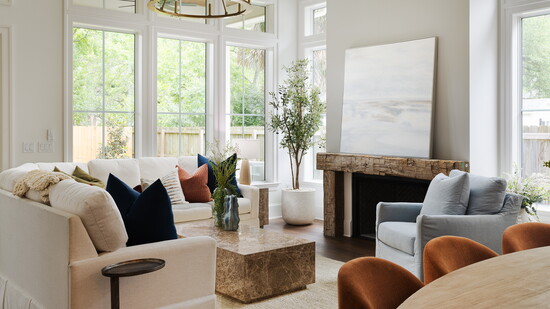
Today, Mint works with approximately 300 vendors and can design across an expansive range of aesthetics. Ardie may describe the look as “elevated coastal,” but quickly widens the definition: “Any lifestyle elevated.” She does not believe a designer’s role is to press every client into one recognizable style. Instead, a home should be a reflection of the people living inside it. The designer’s job is to listen closely enough to discover what makes those people feel at home. For Ardie, access matters because it allows the design to begin with the client rather than a limited inventory. The question is never what is available. It is what belongs in this particular person’s home and life.
That belief also shapes how Ardie approaches budgets. Rather than attempting to transform every room at once, she asks, “Where do you gather with your family?” The answer identifies the place where an investment will have the most meaning. Beauty does not depend upon decorating an entire house or following every trend. It begins by creating one space that supports the way a family actually lives. Ardie loves wallpaper and art, but she understands that personal style cannot be reduced to a designer’s preferences or the latest passing design trend. Even then, her personal taste does not become a rule for someone else. When clients worry that something they love may eventually go out of style, she asks whether it still excites them and feels true to who they are. If it does, then it is not out of style for that home. “It’s wherever that person finds peace within their home,” she says. Pensacola has brought another creative evolution. “Pensacola has forced me to elevate even my own style,” Ardie says. Entering a new market has asked her to stretch, refine her eye, and continue growing without abandoning the principles that built Mint. The setting may change, and the aesthetic may shift, but the foundation remains the same: understand the client, honor the trust being placed in her and create a space that feels personal.
That willingness to grow extends beyond design. Ardie is embracing sailing with the same all-in energy she brings to her work. “I’m going big,” she says. “I’m getting certified.” The statement sounds like Ardie: decisive, optimistic, and ready to learn what comes next. For Ardie, a room is never simply a collection of beautiful objects. It is an expression of identity. Style is not about copying a showroom or surrendering to a passing trend. It is the personal imprint that makes a house unmistakably yours. “Style is what sets you apart,” she says. “It’s your calling card. It’s how you introduce yourself to the world.”
“Style is your calling card. It always sets you apart.”