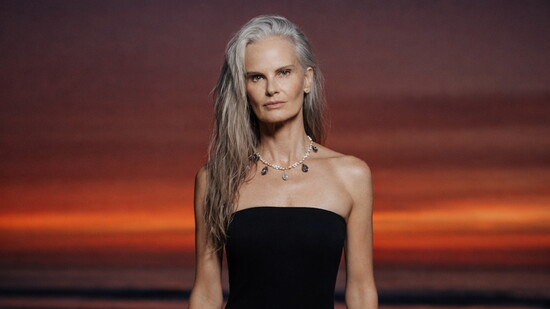
From the Editor: A Legacy of Courage
In this month’s Ladies Issue, we turn our lens toward a neighbor whose name is etched in history, but whose heart is firmly planted in our future. Denise Brown has spent thirty years transforming a private tragedy into a public shield for others.
As she prepares to release her most personal work yet, For My Sister Nicole: Love Shouldn’t Hurt - What to Know About Domestic Violence, Denise sits down with us in Naples to discuss the hindsight that has taught her so much, and the mission that continues to save others. From her modeling days around the world throughout the late 1970s and 1980s to the quiet, vital work of local shelters nationwide, hers is a story of how grace, when tested, becomes an unbreakable force for change.
We invite you to go behind the headlines with a woman who refused to stay silent, ensuring that for the next generation, love truly doesn't hurt.
Denise Brown’s Thirty-Year War on Silence
The nation remembers the infamous 1994 Bronco chase and the following "Trial of the Century," which included a haunting image of a woman cloaked in grief on the witness stand, testifying against a man people knew as a superstar, but whom she knew as a "master manipulator." Denise Brown remembers a sister, also her best friend, who skipped the fourth grade because she was so smart, and who would go on to become a wife and mother who wanted the idyllic, American white picket fence life.
For thirty years, Denise has lived in the shadow of a tragedy that redefined American culture. Yet, speaking to us under the Naples' sunlight, Denise isn’t interested in dwelling on the sensationalism of the past. She is focused on the future—specifically, her upcoming book, For My Sister Nicole: Love Shouldn’t Hurt, set for release in October this year to coincide with Domestic Violence Awareness Month.
With her upcoming book, Denise is moving past the "Trial of the Century" labels to provide a clinical and deeply personal autopsy of domestic violence. Her goal is simple but monumental: to provide the education she and her family never had.
The Bubble and the Burst
To understand Denise’s advocacy, one must understand the "bubble" she grew up in. Born in Germany and moved to California at ages six and four respectively, Denise and Nicole were sponges, quickly shedding their German mother tongue for the golden lingo of Southern California. Their father, an American pilot who flew in World War II and later co-founded the Stars and Stripes newspaper in Germany, was a man of quiet strength, and their mother was a German beauty and the ultimate homemaker.
"We didn’t know 'bad' people," Denise reflects. "It was a happy-go-lucky life. My mom was so relaxed and welcoming, a great cook; her house was the place where all the kids wanted to be." This blissful upbringing in Garden Grove and later Laguna Beach created a sense of security that, in hindsight, perhaps acted as a veil.
While Denise pursued a modeling career at 18 that took her from shoots in Paris and Tokyo to the strobe lights of Studio 54, Nicole met O.J. Simpson two years later at just 18 herself. At the time, Denise too saw the charm and the celebrity glow. She visited her sister and O.J. at his home in Buffalo and took a memorable trip to Niagara Falls with them. What she didn’t see, or didn't have the understanding to name then, was the slow, methodical chipping away of a woman’s soul.
The Anatomy of an Abuser
"Abusers don’t walk up to your door and punch you in the face on the first date," Denise says. "They are charming. They bring flowers to your parents and befriend them. They promise to have your daughter home on time and give her a good life."
Through the lens of 2026, Denise identifies the Cycle of Violence that she witnessed but failed to recognize during her sister's relationship with her abuser. The cycle of violence is a pattern of behaviors which keeps survivors locked in the abusive relationship. Understanding the cycle of violence is crucial in stopping relationship violence as well as in answering the most common questions regarding battering.
There are essentially three stages to the cycle of violence:
- First is the tension building phase. In this phase, the abuser gets edgy and tension begins to build up. This is where the abused person may feel like they are walking on eggshells.
- Second is the actual explosion phase where the actual abuse occurs.
- Third is the honeymoon phase. The perpetrator may express sorrow or act like nothing happened; but is still interested in making up and may even promise never to do it again. However, the tension almost always starts to build again, thus continuing the cycle.
A survivor of domestic abuse does not need to experience physical abuse to be abused. Often, psychological abuse can leave someone feeling fearful, helpless and powerless to act on their own behalf. People affected by domestic violence are rich, poor, married, divorced or single, from all ethnic backgrounds and economic levels.
Denise recounts chilling anecdotes of Simpson’s control: derogatory comments about Nicole's fashion choices, such as her favorite green skirt; shaming her weight gain during pregnancy.
She recalls taking photos of Nicole’s bruised face in 1989, not realizing that these were not isolated incidents, but milestones in a terminal timeline. "Nicole was trying to protect her friends and her family," Denise explains. "Abusers go after the family. They threaten. They manipulate." One of the most heartbreaking revelations Denise shares is how Simpson allegedly often tried to manipulate their mother, calling her to rant about Nicole being "out of hand" or "acting crazy," successfully playing the role of the concerned partner while the victim remained silent.
The Verdict that Launched a Mission
The acquittal of O.J. Simpson in 1995 remains a pivot point in American history, but for Denise, it was a call to arms. She recalls a phone call from a shelter in Texas shortly after the verdict. The director told her that almost every woman in the 90-room facility had packed their bags to leave. Their logic was devastating: If a man with that much evidence against him can walk free, what hope do I have?
"That’s when I realized: this is not about me and my grief anymore. It now has to be about saving lives," Denise says.
She threw herself into the work, traveling for three years straight alongside her friend Shakti. Despite her self-professed hatred for public speaking, Denise found her voice. She realized that the "Trial of the Century" had finally put domestic violence on the map, but the map was still missing vital coordinates.
One major victory was legislative, and based on Nicole's diaries Denise and family found after her death, hidden underneath her kitchen sink. "Before Nicole’s death, diaries were not admissible in court—they were considered hearsay," Denise explains. "After her death, people ran to their legislators. Now, those voices—the truth—can be heard."
Collier County and a New Frontier
Now a proud Naples resident and Board Trustee for The Shelter for Abused Women & Children, Denise Brown is shedding light on domestic violence as a challenge that touches every corner of our community. In our beautiful coastal neighborhoods, Denise works to ensure that every person regardless of their address has the support and resources they need to live a life of safety and dignity.
By addressing these issues together, we strengthen the places where we live, work, and worship. Our community’s proactive approach to safety not only protects individuals but fosters a healthier, more vibrant Collier County for everyone.
Investing in Our Future
To better serve our neighbors, The Shelter collaborated with local leaders, law enforcement, and healthcare officials to understand the full scope of our community’s needs. While the financial impact of domestic violence is significant and serves as a powerful roadmap for where our collective support can make the biggest difference.
By investing in advocacy and prevention we are building a safer public life for every resident. "This is a community-wide mission," Denise notes, highlighting that by recognizing the signs of financial and emotional control, we can empower survivors from all walks of life to find their way home.
The Shelter for Abused Women & Children: A Lifeline in Collier
In her adopted home of Naples, Denise has found a partner in The Shelter for Abused Women & Children. This organization serves as a national model for how a community can wrap its arms around survivors. The Shelter’s impact in the most recent reporting cycle (2024-2025) highlights the depth of the need in Collier County:
-
Nights of Shelter: Over 49,000 nights of safe housing provided.
-
Crisis Calls: 1,098 calls to the local crisis line, a lifeline for those in immediate danger.
-
Safety Planning: Over 12,000 tailored safety plans were created for survivors, a 50% increase from previous years.
-
Youth Impact: More than 60% of those served in emergency shelters are children, highlighting the generational cycle Denise is desperate to break.
Denise is also championing the Safe Haven Society, a group of dedicated donors whose multi-year pledges fund the Shelter's capital projects and endowment.
The Legacy of Future Generations
When looking back at her family’s journey, Denise’s focus remains steadfastly on the well-being of the next generation. Her family’s story is one of incredible resilience—always putting the children first and surrounding them with love and privacy.
This commitment to protecting the vulnerable is what drives Denise’s advocacy today. By working closely with local police and judicial systems, she is helping to ensure that our community’s "safety net" is stronger than ever for the children of today and tomorrow.
For My Sister Nicole: A Vision for Healthy Relationships
This October, Denise shares a message of empowerment with the release of For My Sister Nicole. Rather than just a memoir, this book serves as a helpful guide for the community to recognize and foster healthy relationships.
Using Nicole’s own voice and journals, Denise provides tactical insights to help friends, family, and neighbors look out for one another. The book highlights:
- Understanding the Signs: Recognizing isolation tactics early on.
- Advocacy & Awareness: Learning the critical red flags that can save a life.
- Breaking the Cycle: Understanding how learned behaviors impact home life and how to choose a different path.
"The courage I see in the women and children at the shelters is what inspires me every day," Denise says. "They are my greatest teachers, and together, we are making 'Love Shouldn't Hurt' a reality for our community."
Conclusion: A Sentinel’s Vow
Denise Brown may have started as a model, but she has become a sentinel. She is the living proof that grief can be transformed into a blueprint for survival. Her message for the future is clear: Don't alienate the victims. Don't ask "Why didn't she leave?" Instead, ask "How can I help her stay safe until she’s ready?"
"I realize I can't bring Nicole back," Denise says. "But if I can work myself out of a job—if we can get to a point where we don't need shelters, where lives are saved—then perhaps I’ve helped to accomplish what I was put here to do."
"Education is the only weapon we have. I can't bring Nicole back, but if I can help save one person's life, learning from hers, I feel I have purpose."
Timeline: Three Decades of Advocacy
1977: The Beginning - Nicole meets O.J. Simpson.
1994: The Tragedy - Deaths of Nicole Brown Simpson and Ron Goldman.
1994: Legislative Action - Denise testifies for the Violence Against Women Act (VAWA).
1995: The Trial - Denise gives pivotal testimony.
2005: A Decade of Work - Denise expands her mission, visiting shelters in all 50 states.
2024: 30th Anniversary - Denise refocuses on strangulation and financial abuse education.
2025: A Move to Florida - Denise relocates to Naples and begins her work with The Shelter, serving on its Board of Trustees and more.
2026: The Book - Official release (scheduled for October) 'For My Sister Nicole: Love Shouldn't Hurt'.