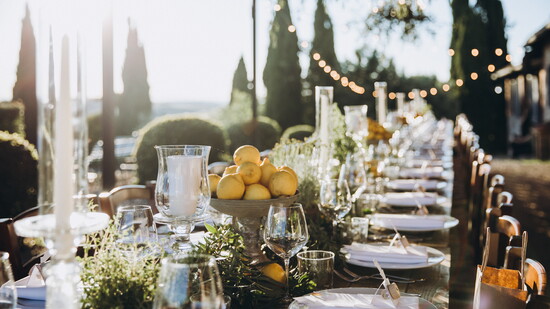
This May, a private Paradise Valley estate becomes the most coveted dining room in Arizona.
Six courses.
A curated lineup of acclaimed chefs.
One night at Villa Noir.
With special performers woven into the evening.
Chef J Perry is bringing the restaurant world behind the gates.
For the past eight years, Chef J Perry has built his reputation quietly as a private chef serving some of the Valley’s most refined homes.
“I was once a restaurant chef that strived for stars, likes, awards and reviews as well as putting together entertaining events and experiences,” Chef J Perry says.
Over time, his perspective shifted.
“I realized that what I do does not allow for reviews, photographers, foodies, trends but focuses solely on serving high level dishes, creating exceptional experiences, and engaging with some of the best people in the Valley,” Chef J Perry says.
This dinner feels like a collision of both chapters.
“Sometimes the hottest seat at a table is not only happening in the Valley’s growing restaurant industry with top level chefs, but behind closed doors in some of the most beautiful private kitchens and tables that most people do not get a chance to experience.”
When he approached homeowner Hillary Leto about hosting the event at Villa Noir, it was bold.
“It's also a big ask. Something a private chef would never do,” Chef J Perry says.
Her response was immediate.
“When Chef Perry came to me with the idea of an amazing dining experience with multiple chefs and courses, I immediately thought YES!” Hillary says. “I love eating and love hosting, so why not make it a beautiful unforgettable experience all while staying home.”
Villa Noir becomes part of the design.
“The Leto home reminds me of a French Villa or estate with an amazing design,” Chef J Perry says.
There is no overarching theme for the six courses.
“Six courses. No theme,” Chef J Perry says. “It's not about who is the better chef. It’s simply about cooking great food and connection.”
The evening will also include special guest performers, adding another layer to the experience. It will serve as a platform to spread awareness for Alice Cooper’s Solid Rock Teen Centers, a mission close to many involved.
And yes, the creative gene runs deep. Chef J Perry is the brother of legendary songwriter and producer Linda Perry. Storytelling, it seems, is simply expressed differently in this family.
We spoke with the chefs about the mindset and leadership they bring to their craft.
Mark Tarbell
Founder, Tarbell’s Hospitality
When you look at restaurants that endure versus those that didn’t, what separates them?
The places that last understand they're building community. Food brings people together, but it’s service, consistency, and genuine hospitality that turn a meal into a relationship. When guests feel known and cared for, they come back, not just for the food, but for how the place makes them feel.
What do younger operators most misunderstand about building something that actually lasts?
I think the biggest lesson is that longevity comes from patience. Success isn’t just about momentum and tenacity, it’s about creating rhythms that hold up over time, the kind guests can count on. The chefs and operators who endure tend to focus on fundamentals: taking care of their teams, honoring their guests, and staying curious. When you enjoy the process, the results tend to follow.
At some point, cooking stops being about you and that’s when it really gets good.
For this private evening at Villa Noir, how are you thinking about flavor and restraint?
My foundation is classic French training and service, where balance is central. The goal is clarity, letting great ingredients speak without unnecessary noise. Cooking alongside peers like this feels less like performance and more like conversation. There’s a shared respect at the table, and that allows the evening to feel relaxed, thoughtful, and genuinely celebratory, the kind of meal you linger over.
Chef Jason Santos
Esteemed Chef
Your career spans restaurants, television, and publishing, but restaurants remain the most unforgiving business. What did TV visibility never prepare you for as an operator?
Haha, good question! TV never prepares you for payroll. Ever. Cameras don’t show you the real day to day whether it's arguing with linen companies, getting a call a walk in went down over night and you lost a ton of product, staring at a P&L in January wondering how the h*** it swung that hard. On TV, it’s entertainment and drama. In real life, it’s systems, margins, and making sure 180 people get paid on Friday. Restaurants are brutal because they don’t care how many seasons you did, they care if your numbers work.
What did authorship teach you about leadership that the kitchen never did?
Writing forces you to slow down and explain why you do things. In kitchens, I may or may not bark orders and move on. In a book, you have to articulate philosophy. It made me realize leadership isn’t about being the loudest in the room, it’s about being honest and clear. If your team understands the “why,” they’ll run through walls for you. If they don’t, they’re just punching in.
When you cook in an intimate setting like Villa Noir, how do you think about execution differently than in a restaurant environment?
In a restaurant, you’re cranking out food for numbers, consistency and obviously quality goes without saying but when it’s something intimate like Villa Noir, it’s a different game, tighter, and more dialed in. You can take bigger swings because you are personally in control. At the end of the day though, it always comes back to the plate. If the food delivers, everything else takes care of itself.
Chef Peter McQuaid
Valley Chef
With national exposure through Food Network and years spent working in Valley restaurants, how has your perspective on this market evolved compared to others you’ve experienced?
Being on Food Network gave me a national lens and exposure to share my story and food, but Phoenix is different in the best way. The food culture here has grown tremendously. There’s real talent, diversity, and a tight knit chef community that genuinely supports each other. It feels more personal than other markets I’ve experienced. Chefs here want to share their stories, highlight local ingredients, and build something meaningful for the city, not just for headlines. Arizona has a unique voice, and I think we’re just getting started.
There’s a moment when recognition turns into responsibility. When did that shift happen for you?
When I realized people were watching how I lead, not just what I cook. Recognition brings responsibility, to mentor younger chefs, to stay humble, and to uphold a standard every single night. Running restaurants taught me that accolades don’t carry a service. Your team does. You have to build culture, consistency, and trust, because without that, recognition doesn’t mean much.
As you look ahead, what does “next” mean for you right now?
Right now, next is an open book for me. I made a big career shift and I’m building my private chef business, which has been incredibly rewarding and supported by this community. There are conversations happening about future restaurant projects, possibly something of my own, but at the moment I’m excited about delivering high level dining experiences in people’s homes. For a lot of guests, the best seat at a restaurant is their own table at home.
In this collaboration at Villa Noir, how are you approaching flavor?
Cooking alongside strong chefs pushes all of us to elevate our game. I think the beauty of a night like this is that every plate reflects the chef behind it, real personality, real philosophy, real intention. The dishes will complement each other, but each one will stand on its own. It’s not just a coursed dinner. It’s a collection of individual stories told through food.
Adrianne Calvo
Esteemed Chef
You transformed “Maximum Flavor” from an instinct into a recognizable brand. When did you realize it was something that could scale beyond you personally?
“Maximum Flavor” started as rebellion.
I was 18, frustrated that so much food played it safe. I didn’t want safe. I wanted bold. I wanted the kind of flavor that makes you close your eyes and forget where you are for a second.
At first, it was instinct. Just how I cooked. But the shift happened when I began hearing guests use the words back to me. They’d say, “This is maximum flavor.” That’s when I realized it wasn’t just my style, it was a language.
Opening at 22 during a recession was a risk. What did it teach you that still guides you today?
People think risk is about bravery.
It’s not. It’s about clarity.
When I opened my first restaurant at 22, the economy was collapsing. I had zero hedge fund backing; just grit, family belief, and a refusal to shrink.
That period taught me that fear is loud, but numbers are honest. I learned to read a P and L like a survival manual. I learned that risk without discipline is gambling, but risk with preparation is strategy.
I also learned that the market rewards conviction. In uncertain times, people crave certainty. They gravitate toward leaders who aren’t apologizing for their vision.
The recession didn’t make me cautious. It made me sharp.
For this collaborative dinner at Villa Noir, what flavors or ideas feel most representative of where you are today?
Right now, I’m drawn to contrast.
Power and restraint. Smoke and citrus. Heat softened by elegance.
At Villa Noir, you’ll feel that tension. Bold proteins layered with bright acidity. Luxurious textures cut with precision. It’s Maximum Flavor, yes. But refined. Intentional. Composed.
Christiaan Röllich
Author, BARCHEF (W.W. Norton)
Owner, Golden Eagle Spirits
When you’re curating cocktails for presidents, former presidents, or luxury houses like Chanel and Prada, what are you actually designing?
Every client is different. Presidents, luxury houses, celebrities. But once they decide to work with me, they know what they’ll receive: farm-to-table cocktails that speak through color, flavor, and texture, always aligned with the food or the theme of the event. With political figures, the cocktail should never become the focal point. It supports the event rather than becoming it. Fashion houses are more visually driven. They work with themes and colors, sometimes even matching a lipstick or nail polish launch. It’s never just about the drink. It’s about the overall experience.
How different is the energy behind the bar when you’re serving someone like George Lucas versus a fashion house or political leader?
Every event carries a different energy. At celebrity events, you’re invited into their homes, which requires respect and awareness. It becomes personal, often one-on-one. With fashion houses, you become part of the brand. You wear their clothes, their jewelry. It’s about precision and detail. Political leaders bring a different level of structure. Security, background checks, controlled access. Once you’re inside, you’re inside. You can’t leave to grab a forgotten ingredient. Preparation and checklists are everything.
In James Beard-recognized restaurants like Lucques, AOC, and Tavern, what separates a technically strong cocktail from a culturally relevant one?
Guests in these restaurants have high expectations. Trends come and go. The restaurant has a strong vision, and the cocktails must align with it. They complement the food while standing confidently on their own.
For more information: nadine.bubeck@citylifestyle.com