You can taste the difference between a menu and a place. Most menus at five-star resorts could exist anywhere. Swap the tablecloth, swap the view, and half of what passes for luxury dining would land the same in Dubai as it does in Madrid. The wine list changes, but the kitchen doesn't. That's fine, mostly.
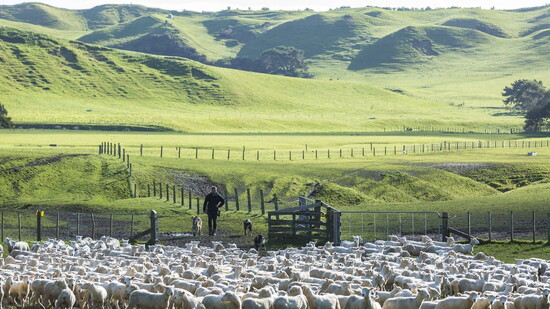
But there's a smaller category of dining rooms where the opposite is true. Where what's on the plate exists because of what's outside the window, not despite it. Rosewood Cape Kidnappers, set above the cliffs of Hawke's Bay on New Zealand's North Island, belongs to that second category. Not by design, by geography.
The kitchen keeps its own garden, growing vegetables, herbs, and eggs, and the nightly menu highlights whatever came out of the garden that day. Some nights it carries most of the plate. Other nights it shows up in the details instead: the herbs, the eggs, the garnish that's more than a garnish.
The rest of the plate comes from named growers rather than an anonymous supply chain. Strawberries from Havelock North orchards, a short drive inland. Seafood from Wairarapa waters. Figs from Te Mata, thirty varieties grown a few kilometers away. One signature dish is a lamb shank cooked with horopito, a native pepper tree that grows almost nowhere outside New Zealand. None of this is unusual for a serious kitchen. The point isn't to impress. It's to be accurate.
The wine list makes the same argument in a different register. New Zealand's reputation abroad runs almost entirely toward Marlborough sauvignon blanc. But Hawke's Bay, one of the country's oldest wine regions, does something most of the country can't. Its most serious sub-region, Gimblett Gravels, is defined by a soil type rather than a boundary on a map, a rarity in wine. The wines that result, mostly Bordeaux-style blends of merlot and cabernet, are concentrated and structured.
The resort's cellar is built around this region rather than borrowing prestige from Bordeaux or the Barossa Valley to fill it out. A few standout bottles from elsewhere earn a place on the list, but Hawke's Bay is the point of it. Order a
glass with dinner and you're not choosing a wine so much as choosing to stay where you already are: a few kilometers from where the grapes grew, tasting the same ground that grew your dinner.
None of this is an accident. It's simply what happens when a kitchen and a cellar both answer to the same small radius. The tomatoes on the plate and the merlot in the glass grew up practically as neighbors. That kind of coherence is rare, and it's why a meal at Cape Kidnappers doesn't read as a performance. It reads as the kitchen translating what's outside the window.
The best trips I build for clients start with a question most people forget to ask: what does a place actually taste like, and who's going to make sure you find out? Some resorts answer with a menu. The good ones answer with a place.
Caroline | Founder, Vogue Voyage | voguevoyage.co | inquire@voguevoyage.co