For the last century, many women have played a vital role in ensuring a just and equitable future for all Alabamians. Some are more well-known than others: Rosa Parks, who, as a young activist, intentionally refused to give up her seat on a bus in Montgomery, an action that would spark the Montgomery Bus Boycott and build a foundation for the Civil Rights Movement in America. Less well known but also vital was Maud McLure Kelly, the first woman to practice law in Alabama. Graduating third in her class from The University of Alabama’s School of Law in 1908, Kelly opened a
practice in Birmingham and advocated for women’s suffrage as well as poor and underserved communities.
Luckily, these pioneers were followed by a long legacy of legal and civil advocates who work tirelessly to ensure that people’s rights are honored, their due process is met, and that their personhood, regardless of race, gender, or ability, is honored and protected
within our courts of law. In North Alabama, we are grateful for two such women who continue to call Huntsville home.
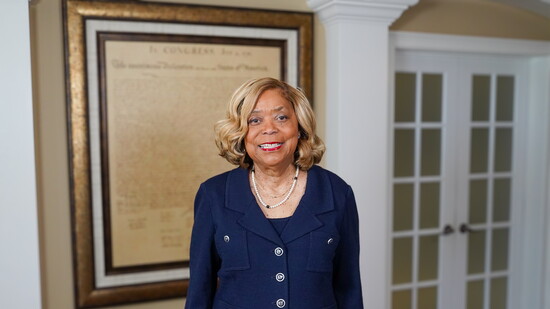
In 2000, Martha Lynn Sherrod became the first person of African descent to win an at-large partisan election in North Alabama, serving as a Madison County District Court Judge for 14 years. Prior to that she was the first African American Assistant District
Attorney, and parallel to her legal career, she also taught Criminal Justice at Alabama A&M University. Sherrod cites her mother, a woman she describes as “a giver and an activist” who kept the doors of their home “open to those in need,” as a primary influence in her own call to service. Judge, as she is affectionately called by those who know her, lives out this call not only through her vocation, but also through proud membership in Alpha Kappa Alpha Sorority, Incorporated ©, an organization founded on the principal of “service to all mankind.” She took time to reflect on her journey as a celebrated member of the Huntsville legal establishment and devoted citizen of the community:
What does success mean to you personally, and how has that definition evolved over time?
Success means peace of mind while making a positive impact on the people you know and love. Success is making sure my actions reflect my values and goals. This definition has evolved from a desire to accumulate prosperity and all of the trappings of success, i.e. big house, luxury car, travel, etc., to a more cerebral desire for peace and contentment not just for myself but also for others. This evolution now requires making measurable progress while learning from setbacks. My definition is no longer dependent on what others think or say, but rather a personal satisfaction and resilience that allows me to live intentionally while cultivating well-being and meaningful relationships. I care less about what others think and more about how I feel.
What is one accomplishment you are most proud of, either professionally or through your community work?
My proudest personal achievement is producing a happy, independent, responsible, smart and beautiful daughter that shares my passion for helping others. Professionally, I developed the first Family Drug Court in Alabama. Children and families were reunited in safe homes. Drug Courts reduce the cost of incarceration and drastically reduce the number of children in foster care. The Criminal Drug Courts provided an opportunity for participants to rebuild their lives and become contributors in the community rather than a liability. Treatment replaced incarceration, resulting in healthy families and reduction in the cost to the community.
Why do you believe it is important for women to support and uplift one another?
It is especially important for women to support and uplift one another because it helps create stronger individuals, healthier communities and greater equality. Encouragement from similarly situated voices can boost confidence. Standing collectively leads to more effectively addressing challenges such as inequality, discrimination, and the lack of effective representation and helps create a fairer and more supportive world for future generations.
What advice would you give to young women who want to make a difference in their communities?
The needs in the community are great. Focus on what appeals to you and align with others that share your interest.
What legacy do you hope to leave in your community?
I hope to be remembered as a competent and fair judge. A judge that was courteous to everyone, regardless of their status in life, with an unwavering commitment to justice and a model of integrity.
Another legal treasure in North Alabama is local attorney Teri Mastando. Currently a partner at Mastando and Artrip, LLC, Teri’s legal practice focuses on the areas of employment law as well as civil rights injuries in schools and prisons. When speaking about a high-profile appeal Teri won on behalf of a disabled student in North Alabama, she cites success as being able to resolve the case for her client “in a way that made a difference. Just getting the message out about that case made a difference.” Mastando is aware that the stakes are sometimes higher than either she or her client realizes, yet she still measures success “one client at a time. Even if we are not always as successful as we want to be, just by speaking out through the legal system we have already had a measure of success.”
Teri shared more about her client-centered approach and her own evolution as a woman and lawyer with Huntsville City Lifestyle:
What do you find most satisfying about being an advocate for justice in our community?
When clients arrive in my office, they are in a difficult place, just coming out of very bad experiences at work, school, or in jail. By the end of our attorney/client experience, I am often so honored to see a changed person, back on his or her feet and moving forward
with life.
What inspired or encouraged you to become a lawyer?
When I was 16, I was experiencing embarrassing sexual harassment by a male football player. When I confided in my father, instead of taking care of it all himself, he taught me that I could advocate for myself by advising me to report this boy directly to the principal. He told me that he would not always be around to take care of my problems for me and I needed to learn how strong I was. It was the hardest thing I had done. When I did that, the harassment stopped. I see a direct correlation between that lesson my father taught me and what I do now – representing women and girls who have been
sexually harassed in the workplace, schools and prisons.
I am actually the first person in my family to earn a college degree, so I had no idea what being a lawyer would be like outside of television. I had my first female role models in the legal community in the women I worked with on cases through the years. When I started practicing law in 1994, the profession was still overwhelmingly male although women were certainly making headway.
What hidden superpowers might girls and young women possess that are not always lifted up in our current culture, yet can and will serve them in their careers?
Preparation, empathy, and self-confidence are key. As a young girl, I was often prepared but did not understand how important self-confidence is as a superpower. I had to learn that it wasn’t enough to be prepared when you advocate for others or for yourself, you also must believe in yourself and project that belief to others around you.
What is one thing that you wish all women knew about the law that you’ve learned in your years of practice?
Often, reporting workplace, school, and prison misconduct is protected under the law. Sexual harassment is not about sexual desire; it is about power. You cannot let someone exert that power through sexual harassment, and you are not powerless to stop it. The workplace, the schools, and the prisons all have laws that state they cannot retaliate against you for reporting. Know your legal rights.
What legacy do you hope to leave in your community?
I hope that I helped enough people, including many woman and girls, learn that they have a voice and can speak out for themselves with courage and dignity. I hope enough people that I have helped are able to pass that along to others who need them in the
Even if we are not always as successful as we want to be, just by speaking out through the legal system we have already had a measure of success.