In Switzerland's Valais region, wellness and adventure are always part of the same itinerary. Morning could bring a high-alpine hike, afternoon a soak in mineral-rich springs, and evening a table set with traditional cuisine, always including delicious wine and cheese. For travelers, the best part will be finding the perfect balance between exploring the outdoors and relaxing with wellness-infused activities in the heart of the Swiss Alps.
A Car-Free Alpine Adventure in Aletsch Arena
An easy train ride from Zurich lands visitors in the Aletsch Arena, a high-alpine region on the south side of the Bernese Alps, home to three villages: Riederalp, Bettmeralp, and Fiescheralp. Known for its ski slopes in winter and hiking in summer, the area is entirely car-free, making walking and local buses the main modes of transportation through its quaint chalet-lined streets.
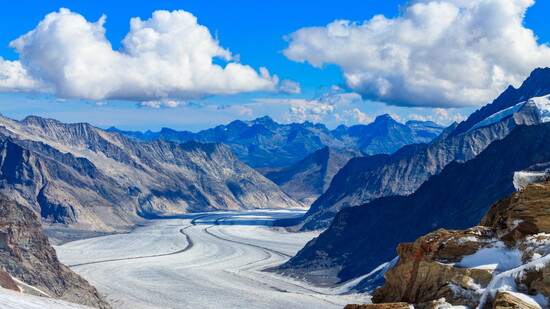
One of the main attractions of the ski-in/ski-out area is the Aletsch Glacier, the longest glacier in the Alps. A UNESCO World Heritage Site, the 12-mile glacier is visible from several vantage points, shaping every experience in the area.
Where to Stay
Located in the heart of Bettmeralp, Hotel Panorama provides no-fuss accommodations steps away from the picturesque Chapel Maria Zum Schnee. The hotel’s restaurant offers delicious regional cuisine, including raclette paired with Swiss wine. A good bottle of Pinot Noir or Gamay is also easy to come by because the Valais region of Switzerland is one of the largest wine-producing areas in the country, with vineyards dotting the steep slopes of the Rhône Valley. In addition to wine and cheese, eating cholera, a covered vegetable pie invented in the region during the cholera epidemic, is a must.
What to Do
Begin at Viewpoint Moosfluh, the closest and lowest vantage point of the Aletsch Glacier. From there, trailheads lead to Villa Cassel, once the home of a British financier and now a museum focused on history and conservation. The hike passes through a thousand-year-old forest with views of both the glacier and the Matterhorn.
Walk over Goms Bridge, a nearly 1,000-foot-long suspension bridge that connects two hiking areas over the Rhône River. For a final look at the majestic glacier, take the cable car to Viewpoint Eggishorn. At nearly 10,000 feet above sea level, it offers panoramic views of the Matterhorn, Mont Blanc, Jungfraujoch, or the "Top of Europe," and the most comprehensive view of the Aletsch Glacier.
Thermal Waters and Mountain Views in Leukerbad
After miles of hiking in the Aletsch Arena, it is time to relax and recharge in the mountain village of Leukerbad.
Where to Stay
Hotel Restaurant Quellenhof Leukerbad is steps away from many of the area's best thermal pools. The hotel also has a restaurant serving breakfast, lunch, and dinner with several regional specialties.
What to Do
Since the 1500s, the area has been a well-known destination for wellness and healing due to over 65 natural hot springs that flow into the alpine village. Several public bathhouses welcome visitors year-round, including Leukerbad Therme, the largest thermal wellness resort in Europe. The family-friendly wellness center includes ten pools and a range of hot and cold plunge options. Walliser Alpentherme & Spa and Therme 51 also offer public access to the mineral-rich waters.
A hike through Dala Gorge provides beautiful mountain views while traversing a 2,000-foot suspension bridge over the Dala River. Hikers can also experience a 100-foot waterfall before the forested hiking trail leads back to Leukerbad.
The village is considered one of the most traditional and beautiful alpine settings in the country. It lacks the pretentiousness of Switzerland’s larger metropolitan areas and offers a storybook atmosphere with a friendly small-town feel. Walking through Leukerbad reveals gorgeous chalets, small shops, bakeries, and restaurants worth exploring.
Where to Eat
No trip to Switzerland is complete without fondue. Dating back to the 17th and 18th centuries, fondue, which translates to “melt” in French, is a national dish consisting of a blend of Gruyere and Emmental cheeses. One of the oldest family-owned restaurants in Leukerbad, Restaurant Sternen offers traditional fondue along with a variety of mix-ins and dipping options. Pair the fondue with Valais wine for a celebratory meal. Restaurant Waldhaus is one of the most elevated restaurants in the village and is another family-run establishment offering a seasonal menu and over 70 different grappas to choose from.
History and Alps meet in Martigny
A short train ride takes visitors to one of the largest cities in the Valais region of Switzerland. The city is a crossroads between Italy and France, with a history dating back to Roman times. Visitors can tour Roman ruins, including a well-preserved amphitheater, ancient settlements, and Roman baths.
Where to Stay
Martigny Boutique Hotel is minutes from the train station and is one of the few establishments in the city employing people with disabilities. The light and bright hotel provides a comfortable base for exploring the city.
What to Do
Take the steepest funicular in the world, the Mont-Blanc Express, on a scenic ascent through the Alps. The funicular connects to a smaller train that leads to the Trient Valley on the French-Swiss border, where, at the top, a full day of activity begins. Hiking, biking, zip-lining, or traversing the Emosson Dam, which straddles France and Switzerland, are all options. The crystal clear blue waters of Emosson Lake are perfect for a picnic or a break between adventures.
Back in Martigny, Barryland, the only theme park in the world dedicated to St. Bernard dogs, offers a look at the history of the dog, bred by monks in the 17th century for alpine rescue work. The Barry Foundation, founded in 2005, continues to preserve the breed and educate visitors about it. Guests can watch the dogs train, play, and interact as they learn about their role in the region.
Roman influence remains visible across the city, including at Les Bains Publics at Hotel Borsari, where visitors can soak in cement wine barrels located in the hotel’s spa. The baths sit on the site of a former wine tank factory and offer a circuit of hot and cold pools in a historically inspired, wine-colored setting.