In this issue, leaders across lending, estate planning, education, aviation and AI share where smart capital is moving and how strategic planning today protects tomorrow.
INVESTING IN STRATEGIC FINANCING
Ryan Lehrman
Senior Mortgage Banker | Specializing in niche portfolio lending such as Jumbo, Super Jumbo, Physician, One-Time Close Construction, and Investment/Second Home Loans
NMLS #235295
With more than 20 years in mortgage lending, what shifts are you seeing in today’s luxury and custom home market?
Buyers are more strategic and focused on equity building. Many leverage equity from prior sales and approach purchases with a long-term wealth mindset. Even in a higher rate environment, demand at the top end remains resilient because these clients buy based on lifestyle, tax strategy, and portfolio diversification, not just rate.
Construction loans can feel complex. What should buyers understand about One-Time Close Construction financing before they break ground?
Work with someone who understands this loan type. Educate yourself on fees, terms, and qualification parameters before meeting with builders or purchasing land. Our One-Time Close Construction product converts to permanent financing without a second close, which simplifies the process, eliminates additional closing costs, and removes the need to re-qualify later.
Physician Loan programs are often misunderstood. How do they uniquely benefit doctors?
Physician Loan programs are designed for MD, DO, DDS, and DMD professionals, including residents and fellows with signed contracts. The biggest benefit is flexible debt-to-income ratios, especially for student loans. Many allow high loan-to-value financing with little to no down payment and no PMI, which creates meaningful cost savings.
In a market where Jumbo and Super Jumbo Loans are common, how important is structuring the loan correctly from the outset?
The earlier the better. Proper upfront structuring ensures smooth underwriting and strong closings. Real estate agents, builders, and wealth advisors expect clean execution. If a Jumbo or Super Jumbo Loan is not structured correctly from the beginning, it can create delays or complications later.
Many buyers focus heavily on interest rates. What are they overlooking in today’s market?
Rate is only one piece of the strategy. Structure matters just as much. The right utilization of Conventional, Jumbo, Super Jumbo, Investment, Second Home, Refinance, or One-Time Close Construction Loans can significantly impact liquidity, tax positioning, and long-term portfolio growth. Sophisticated buyers understand that financing is not just about securing a home, it is about preserving capital and creating flexibility.
RyanLehrman.com
INVESTING IN ESTATE STRUCTURE
Elisabeth Pickle
Founder, Mindful Counsel® | Estate Planning and Trademark Attorney
Why is estate planning one of the most important investments while actively building wealth?
Estate planning is not something you get around to. It is financial architecture. While you are building wealth, you are also building complexity and risk. The most successful people I work with understand that growth without structure creates vulnerability. A thoughtful estate plan aligns titling, beneficiary designations, business interests, and liquidity so that what you are building actually transfers the way you intend. It protects your time, your relationships, and your legacy. Wealth is not just about accumulation. It is about intentional preservation.
What gaps do you commonly see with high net worth individuals and business owners?
How protected someone feels and how protected they actually are. Many assume an LLC shields everything, or that a revocable trust protects assets from creditors. Others have excellent documents that no longer match the size of their estate or the growth of their business. We also see liquidity blind spots, significant wealth tied up in real estate or closely held companies, with no coordinated strategy for taxes, equalization among heirs, or business succession. Structure must evolve as success evolves.
How does thoughtful planning protect more than assets?
Clear planning prevents ambiguity, and ambiguity is where conflict begins. Defined roles, succession terms, and distribution standards protect family harmony before tensions arise. For business owners, continuity planning safeguards employees and enterprise value. For families, it creates guardrails so wealth becomes a catalyst for opportunity rather than division. Generational wealth does not happen by accident. It is built with intention.
themindfulcounsel.com
INVESTING IN EDUCATION
Steve Moses
Founder, Swysh Den Academy
Swysh Den Academy is set to launch in Fall 2026. Explain what it is and who it's designed for?
Swysh Den Academy is a purpose driven academic program designed for student athletes who want more than a traditional school experience. It's built for families who value structure, accountability, mentorship, and high standards, both on the court and in the classroom.
Basketball is the entry point, but not the end goal. How does sport translate into academic focus and personal growth?
Students learn that preparation drives performance, details matter, and accountability is non negotiable. Just as athletes review film and refine skills through repetition, students are taught to reflect, adjust, and take ownership of their learning. The structure of training schedules reinforces time management. Team culture reinforces communication and leadership. Adversity in sport becomes a model for overcoming academic challenges.
When parents think of education as an investment, what long term returns do you believe a smaller, more intentional environment can offer?
Students are known, supported, and challenged. The long term return is a confident, disciplined young adult who can manage time, handle pressure, communicate effectively, and lead with integrity, building skills that extend far beyond high school and into college, careers, and life.
swyshden.com/swyshdenacademy
INVESTING IN AVIATION
Andrew Hopkinson
President, Hopkinson Aircraft Sales
At what point does owning an aircraft become more intelligent than chartering?
If you charter over 100 hours per year, you need to analyze your specific missions and determine if ownership makes more sense. Once you hit 150 to 200 hours of charter, ownership will most certainly be more effective long term.
When clients are initially exploring, what shifts their mindset from curiosity to serious consideration?
It is based on their usage, family and business preferences, and privacy. Once they are a sophisticated charter client, they already understand different aircraft types. When we conduct a mission analysis and break down both cost and time savings, that usually begins the process of acquiring an aircraft.
What do most first time buyers realize only after owning an aircraft?
You will not be able to buy an aircraft for 100 hours of personal use and completely offset your cost by renting it out. It is possible, but the more common scenario is 150 plus hours of personal or business use and an additional 150 hours rented out to offset fixed costs annually.
hopkinson.aero
INVESTING IN INTELLIGENCE
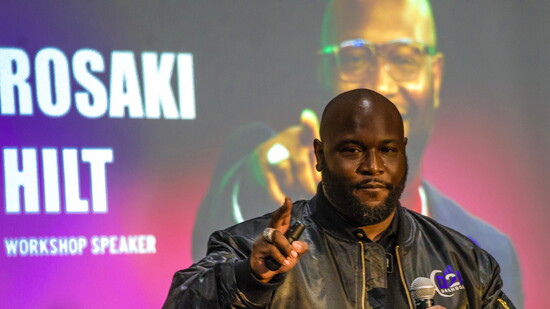
Rosaki Hilt
AI Strategy Consultant
You work with individuals and companies who didn’t grow up with AI. How do you explain what AI actually is?
When I speak to business owners and leadership teams who didn’t grow up with AI, I don’t start with technical language. I start with leverage. AI processes massive amounts of information, recognizes patterns, and produces outputs at a speed and scale humans cannot match. It isn’t magic. It’s accelerated cognition applied to real business problems.
This isn’t about technology. It’s about relevance. Like the early internet era, early adopters gain advantage. AI doesn’t replace leadership. It replaces inefficiency. And inefficiency is expensive.
When you consult with business owners and leadership teams, where do you see the biggest gap between what they think AI can do and how it can realistically be applied today?
The biggest gap is between hype and implementation. Some leaders assume AI requires massive capital investment and engineers. Others reduce it to a content tool that writes captions and emails. Both perspectives miss where AI is most powerful today.
AI’s true value is operational. It improves how a business thinks, decides, and executes, automating workflows, strengthening forecasting, sharpening customer insights, and scaling internal expertise.
Most companies do not need to build custom AI. They need strategic implementation. When AI is embedded into daily workflows instead of treated as a marketing add-on, it transforms the company’s operating system.
For those considering whether learning AI is worth the investment, what tangible returns do you see first?
The first return is time. High-level executives and investors understand leverage, and AI immediately creates it by handling high-volume cognitive tasks that traditionally consume executive hours. Drafted communications, research summaries, planning documents, reporting systems, and workflow optimization are often the earliest gains.
The second return is clarity. AI allows leaders to evaluate more scenarios, pressure test decisions, and analyze more variables before deploying capital. That leads to stronger decision-making and fewer costly errors.
Cost efficiency follows, particularly in operations and automation. But the most powerful return is long-term strategic advantage. Leaders who understand AI operate leaner, move faster, adapt quicker, and scale with fewer structural bottlenecks.
Sophisticated investors don’t buy tools. They buy positioning. AI is positioning. The risk isn’t moderate gains. It’s hesitation while competitors integrate it first.
risewith.ai