Today, St. George has become a city with over 100,000 people, and with the sun shining year round it is a hot spot for tourists, as well as retirees. However, the city had a humble beginning of hard working settlers doing their best to tame the desert. One of its early settlements was known as Atkinville, and was located where the community of Sun River is today.
Atkinville was settled by William and Rachel Atkin in 1877. The couple left Liverpool, England in 1855 for the U.S. after joining the LDS church, and continued on to Salt Lake City in 1859. In 1868 Brigham Young called 155 men and their families to settle in Southern Utah, including William and Rachel. After years of serving their community and church through work on the LDS Tabernacle and Temple, the Atkins moved eight miles south of St. George onto 160 acres.
Once William and Rachel reached their new desert land they went to work building a home. William, being a skilled stone mason, built a two story home made of limestone. The ground floor consisted of a living room, kitchen, another room called the little kitchen, and the Wilford Woodruff room. Nicknamed for the LDS church leader who often stayed with the Atkin family. The 2nd floor had 3 bedrooms and a deck with a railing across the front of the home. Three family homes were built on their land, which became known as Atkinville.
After their home was built William continued working the land. He dammed a stream from the Virgin River to create an 8 foot deep 15 acre pond. Carp were placed in the pond and chub from the river became a source of food for the family. Drinking water was hauled from St. George in barrels and water for the home was brought from the Virgin River about a mile from their home. Swings were placed between the cottonwood trees for entertainment. To the people of St. George, Atkinville would become “Dixie’s Oasis”. A favored spot for St. George residents to have parties and picnics.
William created an ice cache at “Dixie’s Oasis” by carving a cave in a cliff by the pond where he stored blocks of ice that he cut from his pond. A description of the ice house from William and Rachel’s grandson in Sagebrush and Wildflowers A Legacy of William Atkin and Lula Palmer Atkin, states: “The ice house was made of straw and willows. The walls were big cedar posts and about three feet apart between the little walls, then tamped in straw. The ice was put in there in big solid chunks, then covered up with straw. Then when we got it, we’d just open it up and take a bar and pry them chunks of ice out just like we put them in.”
St. George residents bought the Atkin ice to make ice cream and ice cold lemonade, which would become a favorite at the 4th and 24th of July celebrations.
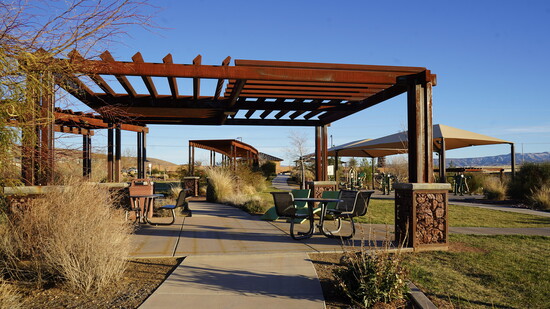
In 1890 Rachel and William moved back to St. George, and in 1906 a flood destroyed most of what was once Atkinville- today nothing remains of the settlement. However, there is a replica of Rachel and William’s Atkinville home at This is the Place Heritage Park in Salt Lake and a historical marker has been placed near the current Sun River Community Clubhouse. Recently, a new park named Atkinville Wash Park in the Sun River community has been constructed in memory of the early settlement.
Atkinville was a vacation spot for many in the early years of St. George where families would gather. Therefore, it is fitting that a park now stands where family and friends can gather, play games, picnic, eat ice cream, and make memories almost 150 years later. Historic Atkinville is still a place where all can take refuge from the world, just as the Atkin family provided for so many, long ago.
...Atkinville would become “Dixie’s Oasis”. A favored spot for St. George residents to have parties and picnics.