The Charlotte Museum of Nature is entering a new era after an ambitious project more than four years in the making.
When plans for the new museum were unveiled in 2022, the original 1951 structure was visibly dated and struggled to keep up with the city’s growing population. The beloved Freedom Park institution closed in January 2024 to make way for a complete demolition and reconstruction into an entirely new museum.
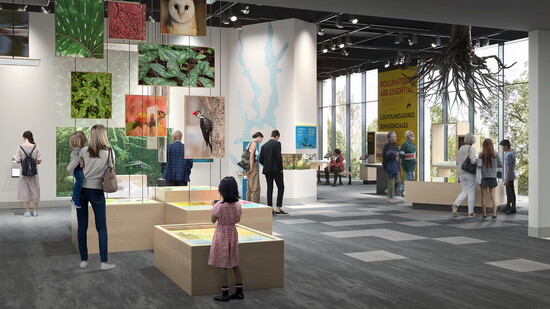
The redesigned destination features a more immersive outdoor experience with forest trails, a treetop canopy walk, and habitat-focused animal exhibits featuring North American river otters. Inside, visitors will find updated galleries, a state-of-the-art naturalist lab, and expanded spaces highlighting plants and animals native to the Piedmont region.
“This new museum is physically larger, it’s bright, has more open space, and a lot of bird-safe glass,” says Alyssa Mulliger, senior director of communications for Discovery Place’s network of museums, which includes the Charlotte Museum of Nature. “It’s more intentional with how the land is being used, and it will have different access points to enjoy the outdoors.”
Crews have planted thousands of trees and shrubs across the 11-acre site, which will have better access to Freedom Park and the Little Sugar Creek Greenway.
“(The museum) wasn’t accessible from the park before,” Mulliger says. “A lot of people didn’t know what that building was, so we’re activating that connection.”
The project represents a major financial investment in the city’s cultural infrastructure. The Charlotte Museum of Nature carries an estimated $65 million price tag, funded through a public-private partnership between Mecklenburg County and Discovery Place, the nonprofit organization serving Charlotte’s network of science museums. Additional fundraising from private donors continues as construction wraps up.
“Charlotte does a nice job with green spaces, parks, greenways and trails, and this is another one of those special destinations and assets,” Mulliger says. “Our goal is to be more intentional about conservation and being good stewards. We’re teaching future generations what’s in our own backyard.”
That includes the museum’s breakout stars.
“People are really excited to see the North American river otters, which are native to the Piedmont,” she says. “There’s no other place to see otters in Charlotte.”
Another priority is multi-generational learning.
“The prior museum skewed to families with younger kids and school groups,” Mulliger says. “We want to encourage lifelong learning about the natural world.”
As opening day approaches, museum leaders are planning preview days, guided canopy walks, animal introductions, and family-focused events that echo the institution’s long history of school trips and weekend visits.
“It’s still rooted in our mission of education and sustainability,” Mulliger says. “While the new visual identity is different, with a modern tree logo, it still reflects back to the earliest days of this museum. This is still Charlotte’s museum.”
“We want to encourage lifelong learning about the natural world.”