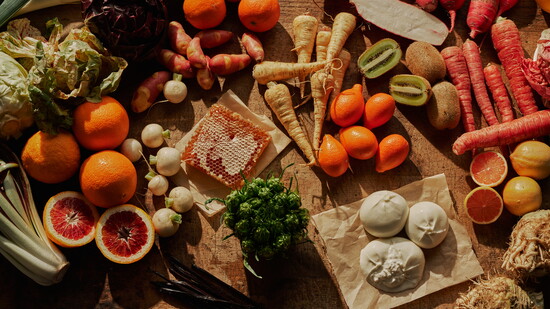
The morning I was scheduled to speak to Knox Fanelli, we had to switch our call from video to phone. As the owner of Larder Foods, Fanelli was out and about, grabbing heirloom tomatoes for clients in the restaurant industry. “We’ve reached a point in the season where everyone else is out of them, but our Amish and Mennonite friends still have them,” he explains. “The supply rush always hits when you least expect it!”
Headquartered in Birmingham and now covering Nashville, Huntsville, Atlanta and Chattanooga, Larder Foods is a distributor working with regional and national farms. At its inception, the company specialized in truffles, something Fanelli didn’t often find around the Magic City. He already knew how to source ingredients and bring them into the market, thanks to a former career in wine distribution.
“Wine is the most branded and marketed agricultural product when you think about it,” he says. “Vineyards go into great detail about grape growth, processes–even taking care of the land. I wanted to find goods for restaurants using that same attention to detail.”
The goal at Larder Foods, Fanelli says, is to become indispensable to the chefs they work with by offering something other distributors cannot match. “The South has great food history, but when you think about access to ingredients, some come from elsewhere,” he says.
Today, the company has grown from offering just truffles to almost any produce and dairy item, maintaining a variety of agricultural connections to find the best sources. In fact, quality is more important to Fanelli than locality. He brings up melons as an example. Because of the rain in the Southeast over the summer, most recent melons have come from California. As for farms in the state of Alabama, the Amish and Mennonites are at the top of the list.
“They’re our preference because they do so little to the product,” Fanelli says. “There’s no spray and no real fertilizer except compost. At the end of the day, that makes for a more delicious crop.”
Though the company sources from all over the United States, working with top-tier farms smaller than 30 acres means everything is limited–and thus tastier and more precious. The season of a fruit or veggie doesn’t perfectly match with the timing of consumer expectations, either. “August always has a lull in produce, and for local farms, tomato numbers are dwindling,” Fanelli comments. “But the demand is there, because restaurants still want a tomato salad on the menu for as long as possible.”
Fortunately, the team has the ability to “chase” the seasons for a longer period. “If you think about ramps, the wild onion, they grow between the first warm-up to leaf coverage, and that’s a window of about 30 to 45 days,” Fanelli explains. “So we might start sourcing them in Georgia and then bounce up to West Virginia and Ohio.”
At home in his kitchen, Fanelli uses fresh ingredients to prepare dishes for his family and says he particularly loves the vegetables of spring, like peas and wild onions. And though Larder Foods continues to grow, he’s committed to Birmingham.
“It’s a cool city with a lot of potential. We’re focused on being here and making Birmingham a better place.”