Long before the first ski lifts start running and guests start making their turns down our beloved local mountain resort, Mt. Bachelor’s operation teams are already at work to ensure guests have the best possible experience on the mountain—from keeping lift operations running smoothly to offering delicious food and beverages—and of course, making sure all visitors stay safe. Every great day on the mountain starts with preparation. At Mt. Bachelor, that preparation is a full-time, year-round job, one that focuses on safety, incident response and preparedness.
Bend Lifestyle magazine was excited to catch up with key members of the Mt. Bachelor team to learn more about their carefully coordinated work behind the scenes to keep guests safe—from their safety awareness education resources to the dedicated ski patrol team to the famous avalanche dogs. A great day on the mountain does not happen by accident but instead is a carefully coordinated collaboration based on a shared commitment to care for everyone who visits the mountain.
Mt. Bachelor Ski Patrol
The Mt. Bachelor Pro Ski Patrol provides both first aid and rescue services for snow sports and provides outdoor safety training for local community organizations.
Each Pro Ski Patrol member maintains, at a minimum, Outdoor Emergency Care and professional level CPR/AED certifications. They must also complete annual training to review updates to medical protocols and other patrol procedures like lift evacuation, hazard assessment, and end of day sweep. Mt. Bachelor’s Pro Ski Patrol is supported by a team of volunteer patrollers from the National Ski Patrol.
Answers from Dave Thomas, Mt. Bachelor Ski Patrol Director
What does a typical day look like for the Ski Patrol team?
Patrol coordinates with other departments to prepare the mountain for operations. Their tasks include hill setup, guest service, snow safety work and emergency response.
What is the biggest challenge for Ski Patrol?
The weather presents a daily challenge to ski patrol and other operations teams.
How are they trained and what qualifications are required?
Each patroller is required to carry a valid medical certificate and participate in department specific training throughout the season. Over the course of their career, a patroller will complete training with outside organizations in various subjects, such as avalanche awareness, rope rescue, and medical response.
Avalanche Dogs
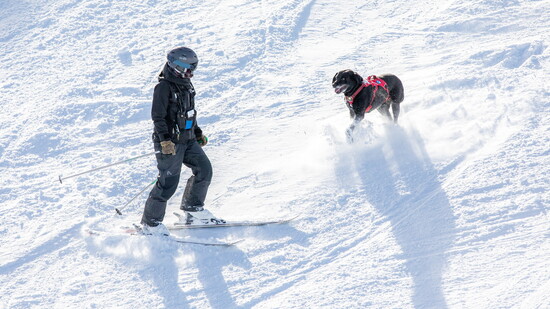
The Mt. Bachelor Avalanche Dogs are specially trained and skilled in locating victims beneath the snow after an avalanche. They have tremendous advantages of being able to travel at higher speeds over uneven terrain and steep slopes. Using their heightened sense of smell and sense of urgency to support rescue efforts led by Mt. Bachelor’s Ski Patrol, the canines are a vital part of the team. The Mt. Bachelor dogs join their handlers, who are members of Mt. Bachelor’s Pro Patrol team, on the mountain every day for exercise, training and conditioning to promote safety on the mountain.
Answers by Betsy Norsen, Sr. Mountain Operations Manager
What is the avalanche forecasting process and how does your team evaluate daily snowpack stability?
Our operations teams have detailed protocols and procedures for evaluating and monitoring the snowpack, conditions, and weather. Working in a high alpine environment is dynamic and their approach changes based on the circumstances of each day.
What role do avalanche dogs play in your safety program?
Avalanche dogs work alongside our patrollers and are valuable because of their keen sense of smell. We rely on their tracking abilities to supplement rescue efforts in the case of an emergency. Beyond their operational role, our avalanche dogs contribute to guest education and safety awareness by serving as beloved ambassadors of our Pro Patrol team through community demonstrations and interactions throughout the season.
How are the dogs selected and trained?
The best avalanche dogs are athletic, able to travel in snow across the mountain, have a strong sense of smell and are play/fetch motivated. They also must be family-friendly dogs. Some common breeds found on the mountain working as avalanche dogs include Labrador Retrievers, Golden Retrievers, and Border Collies. Once a breeder and litter have been selected, tests are performed to determine which dogs from a litter are most likely to be successful in the program.
How often do dogs and handlers train together and what skills do they work on throughout the season?
Most of the dogs come to work with their handlers 4-5 days per week. The first year of an avalanche dog’s career is focused on basic obedience and mountain travel skills. They learn to ride the chairlifts, snowmobiles, and travel alongside their handler while the handler is skiing or snowboarding. Search and rescue skills are developed through hide and seek games where the dog is given a high value reward for a successful search. It can take up to two years to fully train and certify an avalanche rescue dog.
What do you want guests to know about avalanche dogs and interacting with them?
Please remember that avalanche dogs are always on duty. If you approach a handler and dog, ask permission before petting or engaging with the dogs.
Safe Turns All Season Long
Answers from Presley Quon, Communications & Community Relations Manager
What are the core goals behind Mt. Bachelor's Take Care, Be 360 Aware?
Take Care Be 360 Aware is all about practicing vigilance and careful consideration of yourself and others while recreating or working on the mountain.
What does Mt. Bachelor hope guests will take away from the program?
Outdoor recreation presents inherent risks that can be minimized by understanding potential dangers, following rules and policies, obeying signage, skiing or riding with a buddy or group, and knowing your limits.
What safety messages or behaviors are they most focused on this season?
There is no single safety message or behavior on which we are most focused. However, we often emphasize the importance of the National Ski Areas Association’s responsibility code, tree well and snow immersion safety and terrain park safety.
Are there any new safety initiatives, signage or technologies for this ski season?
Although not new, the Mt. Bachelor App has a tracking feature as well as emergency resources that are helpful should a skier or rider need to contact ski patrol and report their location. Mt. Bachelor also provides safety education resources on its website and in-person at guest service touch points across the resort.
MtBachelor.com
"Mt. Bachelor Pro Ski Patrol tasks include hill setup, guest service, snow safety work and emergency response."
—Dave Thomas, Mt. Bachelor Ski Patrol Director
"Take Care Be 360 Aware is all about practicing vigilance and careful consideration of yourself and others while recreating or working on the mountain."
—Presley Quon, Communications & Community Relations Manager