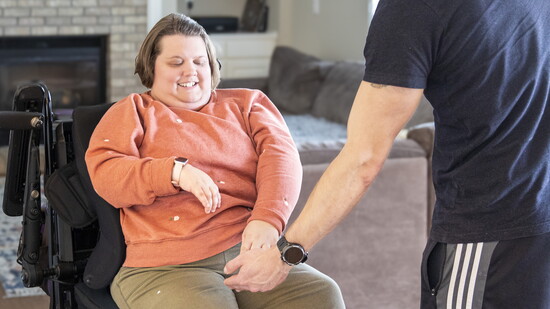
Small actions repeated consistently until they become habits. That’s where James Anderson believes real change begins. Working closely with individuals with disabilities and neurodivergence, he has seen firsthand how steady effort from both clients and parents leads to lasting transformation. For James, progress isn’t defined by dramatic breakthroughs but by intentional investment, showing up day after day in ways that quietly build resilience, confidence and independence.
That mindset traces back to middle school, where James volunteered to coach students with special needs through the City of Boulder program known as EXPAND, as part of his school curriculum. What began as a way to earn credit became something more after a teacher told him he had a natural ability to connect with the kids. The comment stayed with him, and a passion grew.
Years later, while working at an adult day program and earning a certification as a registered behavior technician, that passion resurfaced in a defining moment. One afternoon, a teenage boy was struggling with anger, and James took him outside to throw rocks into a lake. The boy’s mood shifted immediately as the tension eased. It became clear that movement regulates emotions.
From that moment, James saw a future that blended his love of sports with working with special needs individuals. As an NSCA Certified Strength & Conditioning Specialist, James began designing individualized fitness programs for the clients and tracking improvements in mood, behavior and physical health. After seeing the undeniable results, James saw that this underserved population needed more attention in the health and fitness space, and Better Everyday was born.
Today, James focuses on building resilience as much as strength, believing lasting change begins with the family. “As parents, you are the number one role model in your kid’s life,” he says. “They observe your actions more than your words.” Even small choices, like a 10-minute walk instead of screen time, compound over time.
That philosophy comes to life in his work with Erin Conroy, who has cerebral palsy and uses a powerchair. After COVID disrupted her community activities, such as swimming, it was difficult to regain momentum. At home, online fitness videos weren’t designed for Erin’s specific physical limitations, including limited use of one arm and her legs. Local gyms proved inaccessible, reinforcing what her mom, Melinda, calls a difficult truth: “The disability community is one of the most underserved groups in the fitness business.”
While searching for alternatives, Melinda found James on social media. Nearly two years later, their partnership has reshaped Erin’s routine. James created a plan tailored to Erin’s abilities, building strength that supports everyday independence. For example, she can now lift her legs high enough to help with pants and shoes—a small victory that makes her feel more independent and helps Melinda out too. Erin’s stamina in the pool has also improved, so the gains extend well beyond their sessions.
“She feels more relaxed and less anxious after exercising, and she sleeps well,” Melinda shared. Erin also sees James in a group setting at FRIENDS of Broomfield (her day program), which adds to the social benefit. Her best friend works out with James, too, so they can compare notes, like who has the bigger biceps.”
Erin’s competitive streak now shows up at home. She challenges her family to get their steps in. “She roasts her stepdad and me if we don’t keep up with her,” Melinda laughed. “Fitness doesn’t feel like something we each do on our own; it’s part of our weekly routine.” Erin also proudly invites arm-wrestling matches. “She can beat me. James is still out of reach, but not for long!”
Consistency isn’t always easy. “Erin has a busy life, and some days she’s tired,” Melinda said. “But showing up is half the battle.” James is good at reading how the day is going, so he uses what motivates Erin, like music, to switch it up a bit.”
Melinda encourages other parents to take that first step. Families of children with special needs spend countless hours in therapies. These are vital services that support development, but siblings and peers often experience sports and fitness in community settings. Now, Erin can share stories about her workouts with her sister and friends, strengthening those social bonds. “And she has fun,” Melinda added.
For James, stories like Erin’s affirm what he’s always believed: meaningful change doesn’t happen all at once. It happens through steady, intentional investment, one step at a time.