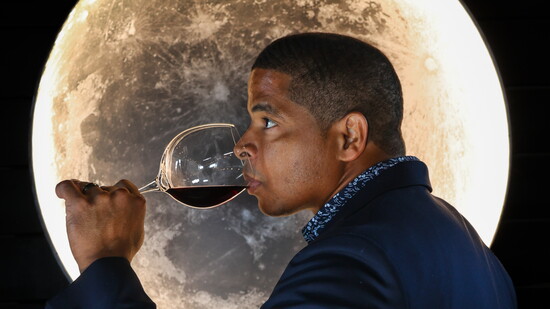
Three years into our annual check-in with Winston McQuitery, one thing is clear: wine is changing, but not necessarily in the way people think.
Consumption may be softer, especially among younger drinkers, but Winston sees something more interesting happening locally. Millennials and Gen Z may be drinking less, yet many are becoming more intentional about what they do choose to pour. They want to know where it came from, how it was grown, what went into it and whether the bottle tells a story beyond a familiar label.
For Winston, that curiosity is pulling drinkers toward the Old World.
In wine language, “Old World” generally refers to Europe — countries such as France, Italy, Spain and Germany — while “New World” covers places including the United States, Australia, New Zealand, South Africa and much of South America. The distinction is not simply geography. It also points to different histories, traditions and regulatory systems.
European wine regions have long tied wine to place. Within the European Union, geographical indication systems protect wines associated with particular regions and production standards. Protected Designation of Origin, or PDO, carries especially strong geographic requirements, while Protected Geographical Indication, or PGI, allows somewhat broader regional ties.
That means a place name on a bottle can tell you far more than where the winery is located.
Take Sancerre. It is not a grape; it is a place in France’s Loire Valley. Burgundy is another region where place, grape varieties and production traditions are deeply connected. Those rules help explain why Winston keeps coming back to Old World wine when talking about today’s more curious consumer.
“You’re getting a story,” he says. “The vintage should tell a story every year.”
That idea runs counter to the expectation that every bottle of a favorite wine should taste exactly the same, year after year. Agriculture does not work that way. Rainfall changes. Temperatures shift. Soil conditions evolve. A vineyard is alive, and Winston believes some of the most interesting wines allow those differences to show rather than trying to erase them.
That conversation naturally leads us back to a subject Winston and I have discussed during previous Food & Wine issues: farming.
Terms such as organic, biodynamic, sustainable and regenerative are increasingly visible to consumers, but Winston cautions against treating any single word on a label as the whole story. Certification can be costly, and some multigenerational producers use thoughtful farming practices without pursuing every official designation.
The broader movement matters more: paying attention to soil health, reducing unnecessary chemical inputs and working with nature rather than constantly trying to overpower it.
That does not mean rejecting technology.
One of the most interesting shifts Winston sees is the possibility of combining old agricultural knowledge with modern tools. Technology can help growers identify problems more precisely, monitor vineyard conditions and potentially respond to pests without treating an entire property indiscriminately. The goal is not to replace farming knowledge. It is to make better decisions with it.
“We can take old practices and still look at new technology,” Winston says. “New technology is not a bad thing. It’s the shortcuts that hurt us.”
And climate is making that balance increasingly important. Wine regions around the world are dealing with changing weather patterns, heat, drought, rainfall and storms that affect when grapes ripen and what growers can produce. Wine, after all, begins as agriculture long before it becomes something poured into a glass.
For the person standing in a wine shop wondering what any of this has to do with dinner tonight, Winston has a much simpler lesson: stop choosing wine by outdated rules.
White meat does not automatically mean white wine. Red meat does not automatically mean red.
“The protein is just a vehicle,” he explains.
What matters is how the dish is prepared.
Take chicken. Put it in a rich cream sauce and Winston might reach for a fuller-bodied Chardonnay from Burgundy, perhaps something from the Mâcon, with enough body and texture to stand beside the sauce. Roast that same chicken with herbs and a Burgundy Pinot Noir could suddenly make perfect sense, with earthy characteristics that complement the herbs.
Then there are moments when complementing a dish is exactly the wrong move.
Imagine a plate of seriously hot buffalo wings. Pairing heat with more heat will not do your palate any favors. Winston would rather create contrast with a late-harvest Riesling. A touch of sweetness plays against the spice, while bright acidity refreshes the palate.
That is the kind of wine education Winston makes fun: less memorizing, more experimenting.
Sauvignon Blanc, he says, remains a powerhouse with consumers, whether it comes from New Zealand, California or France’s Loire Valley. But rather than simply grabbing the same recognizable bottle, he encourages drinkers to compare regions. Taste a New Zealand Sauvignon Blanc beside one from the Loire. Try Pinot Noir from different climates. Notice what changes.
The point is not to become a wine expert overnight.
It is to become a more curious drinker.
After three years of conversations with Winston, that may be the thread connecting everything we have discussed — changing trends, biodynamic farming, Old World traditions, food pairings and the future of wine itself.
Drink a little slower. Ask another question. Read the label. Learn where the bottle came from. Try the wine you cannot pronounce.
Because drinking “better” does not have to mean spending more money or becoming a wine snob. Sometimes it simply means paying closer attention to what is in the glass — and enjoying the story that came with it.
“Drink slower. Ask another question. Read the label. Learn where the bottle came from. Try the wine you cannot pronounce.”
“We can take old practices and still use new technology. The future of wine is not about replacing tradition, but understanding it well enough to make smarter choices.”