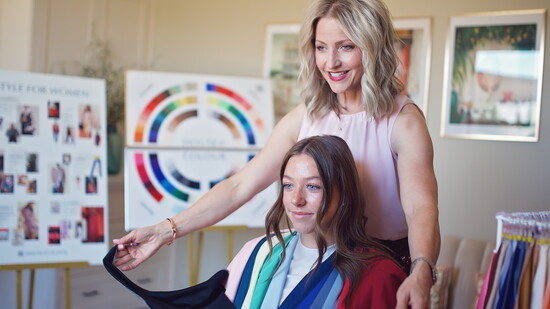
Scroll through social media, and chances are you’ll come across a color analysis transformation. A client sits beneath natural light while colorful drapes are placed one by one beneath their face. One shade makes their complexion appear dull, another brightens their eyes, smooths their skin, and suddenly the difference is impossible to ignore.
What looks like another viral fashion trend is rooted in something much deeper, according to Southern Arizona color analyst Abby Welker, owner of House of Colour Gila Valley. Rather than chasing seasonal styles or expensive labels, Welker says color analysis is about understanding the unique combination of undertones, contrast, and personal style that helps someone look—and often feel—their best.
“It’s total science,” Welker said. “It’s not bogus.”
Unlike online quizzes or apps that attempt to guess someone’s season from a photo, professional color analysis relies on natural daylight and a series of carefully selected fabric drapes. As different shades are placed beneath a client’s face, the skin responds in noticeable ways. The right colors can make the complexion appear brighter and more even, while the wrong ones may emphasize shadows or create a tired appearance.
The goal isn’t to determine whether someone simply looks good in blue or green. Instead, Welker identifies whether a person has warm or cool undertones before narrowing their palette based on the amount of contrast their natural features require. From there, every season has its own collection of colors—from reds and blues to yellows, neutrals, and even whites.
“Everybody has a power red,” she said. “Everybody has a yellow. Everybody has a blue.”
That personalized approach is one reason color analysis has exploded in popularity. Rather than encouraging people to wear whatever is trending, it gives them a framework for choosing colors that naturally complement their features.
Welker believes that’s where the fashion industry often gets it wrong.
“We don’t follow trends,” she said. “Give yourself permission to stop dressing like your friends.”
Instead of building wardrobes around what’s popular each season, she encourages clients to build them around their own lives. Someone who works from home doesn’t need a closet full of business attire, just as someone who rarely exercises doesn’t need drawers packed with athletic wear simply because it’s fashionable.
“If it was full price, would you still buy it?” she asks clients considering another sale rack purchase.
That mindset often results in fewer impulse buys, less closet clutter, and a wardrobe where nearly every piece works together.
It’s also why Welker challenges many of fashion’s long-standing “rules.”
Don’t wear white after Labor Day? She calls it a myth. Everyone should own a black blazer? Not necessarily. Even black—often considered fashion’s most universally flattering color—isn’t the best choice for everyone.
Instead, she offers what has become her personal philosophy: “Tools, not rules.”
The right tools help people understand proportions, silhouettes, colors, and fabrics that suit their individual features instead of following one-size-fits-all advice.
The conversation extends beyond appearance and into psychology.
Welker points to the concept of “enclothed cognition,” a term used by researchers to describe how clothing can influence the way people think and behave. While she says clothing won’t change who someone is, she believes dressing intentionally can help people approach the day with greater confidence and purpose.
“How do you want to feel today?” she asks clients. “Do you want to feel powerful? Do you want to feel cozy? Find something in your closet that helps direct that mindset.”
That idea resonates with many people because clothing often communicates before we say a single word. Whether walking into a job interview, meeting clients, or attending a social event, what we wear contributes to the first impression we make—and the confidence we bring into the room.
For Welker, however, the greatest transformation isn’t someone discovering a flattering shade of blue or finally embracing the right red lipstick. It’s watching clients stop trying to disappear.
Many people, she says, fill their closets with safe neutrals because they don’t want to stand out. But after discovering colors that truly suit them, something shifts. They stop dressing to blend into the background and start dressing in a way that feels authentic.
“You’re not here to hide,” Welker said. “You’re here to be unique and to be remembered.”
In a world driven by fast fashion, endless trends, and overflowing closets, perhaps that’s the real appeal of color analysis. It’s less about buying more clothes and more about buying the right ones—pieces that reflect who you are, fit the life you actually live, and help you step into every room feeling a little more like yourself.