There is luxury, and then there is the machinery required to maintain the illusion of effortless luxury at sea.
On Bravo’s Below Deck, viewers see champagne towers, impossible preference sheets, late-night crew drama, and some of the most extravagant charter guests on earth. What they do not always see is the operational precision underneath it all: the psychological management, the maritime calculations, the relentless coordination, and the pressure of ensuring that nothing ever appears difficult to the guests on board.
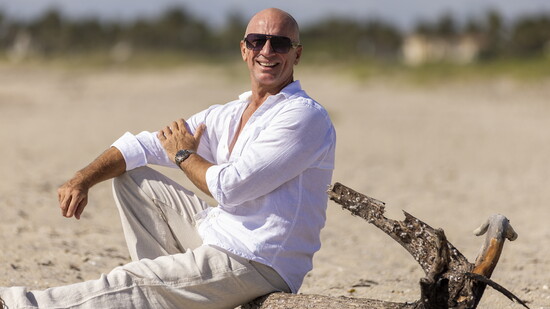
At the center of that balancing act is Kerry Titheradge.
The Australian-born superyacht captain, who first appeared on Below Deck Adventure before taking over the helm of the flagship Below Deck franchise, has become known for a leadership style that feels notably different from the archetypal television captain. Firm without theatrics. Calm without passivity. Direct without intimidation.
And perhaps that demeanor is precisely why he works so well in the increasingly rarefied world he inhabits.
Titheradge spent decades working his way through nearly every position aboard a vessel before ever sitting in the captain’s chair himself — experience that still shapes the way he leads today.
That background also informs the way he speaks about luxury itself.
One of the more fascinating tensions inside ultra-luxury travel is the widespread belief that extreme wealth buys ease. In reality, it often creates the opposite. The higher the level of service, the more invisible labor is required to sustain it.
“People see the perfectly folded napkins, the jet skis launched at a moment's notice, their cocktail appearing before they even realized they wanted one, but they don’t always realize the level of precision that goes into that,” he says.
“Our goal is to make everything feel effortless for the guest,” he continues. “My crew isn’t just executing a service checklist. They’re reading body language, adjusting the energy of a space, managing the emotional temperature of a group of people while constantly coordinating behind the scenes.”
For Titheradge, luxury yachting is ultimately less about extravagance than anticipation.
“What money really changes is access and expectation,” he says. “People who are used to a very high level of service often expect things to happen quickly and seamlessly, so the pressure on the crew can definitely increase.”
Still, he says most onboard tension stems less from demanding personalities and more from communication breakdowns.
“From the bridge, a ‘difficult’ guest usually points to a breakdown in communication,” he explains. “If a guest is frustrated, it’s almost always because an expectation wasn't articulated or wasn't met.”
That balancing act extends far beyond guests alone. On a yacht, crews are living and working together in extremely close quarters under intense pressure for weeks at a time.
“Psychology is a massive part of the job,” Titheradge says. “Over my 28 years running some of the biggest yachts in the world, I’d say seventy/thirty in favor of psychology and I mean that seriously.”
Navigation, he explains, is only one part of managing a vessel. The rest involves personalities, stress, fatigue, communication styles, and maintaining morale in an environment where exhaustion can quickly affect performance.
Fans of Below Deck often focus on the visible drama among crew, but at sea, internal dysfunction can escalate quickly. One missed communication during docking. One exhausted crew member. One interpersonal conflict left unchecked.
“Crew looks to the captain for stability, especially in stressful moments,” he explains. “If I lose my cool, that energy spreads very quickly onboard.”
That leadership philosophy has become increasingly important as luxury travel itself evolves.
Today’s ultra-high-net-worth travelers appear less interested in overt displays of excess and more focused on exclusivity, privacy, customization, and experiences that feel deeply personal. The old model of conspicuous luxury has gradually given way to experiential luxury: remote anchorages, hyper-personalized itineraries, and adventure paired with comfort.
“Privacy has also become a huge luxury,” Titheradge says. “A lot of guests simply want the freedom to disconnect, spend quality time, and experience something memorable without the crowds or noise of everyday life.”
Asked whether true hidden gems still exist at this level of travel, Titheradge pauses before answering carefully.
“I’m protective of the ones I love most, which is probably an answer in itself,” he says. “But I’ll say this: the destinations that still move me are the ones where the infrastructure hasn’t caught up to the beauty yet. Where you anchor and there’s nothing man-made in your sightline.”
That perspective, he says, has also made him think differently about the responsibility that comes with access.
“Those places still exist,” he says. “They’re getting rarer, which is why I think the responsibility that comes with access to them matters. How we move through those places, what we take and what we leave, something I think about more than I used to.”
Beyond the glamour surrounding Below Deck, Titheradge ultimately speaks about yachting less as fantasy and more as a study in human nature.
“There’s nowhere to hide out here, not really,” he says. “What I’ve learned is to lead with patience before judgment, because what you’re seeing on the surface is rarely the whole story.”
Television compresses an entire charter season into episodic drama, but the reality behind the scenes is considerably more disciplined than audiences often realize.
Yet competence is exactly what keeps the entire illusion afloat.
And perhaps that is the real fascination of Kerry Titheradge: not simply the celebrity of it all, but the glimpse he offers into the extraordinary amount of structure, psychology, discipline, and invisible labor required to make extreme luxury appear effortless.
“Crew looks to the captain for stability, especially in stressful moments. If I lose my cool, that energy spreads very quickly onboard.”
Destinations that still move me are the ones where the infrastructure hasn’t caught up to the beauty yet. Where you anchor and there’s nothing man-made in your sightline.