For readers who haven’t heard of Bottleless Nation, what is your mission?
“Our mission is to deliver purified water and ice through advanced, sustainable filtration systems. We remove the contaminants commonly found in municipal water, substituting outdated hydration habits with cleaner, healthier, and more environmentally responsible solutions that support both people and the planet.”
When you tested tap water for us in Middleton, the findings were surprising. What do you typically find in local tap water?
“Middleton’s water meets federal guidelines but carries a higher mix of dissolved content than many residents expect. The aquifers here naturally contain elevated calcium and magnesium. As the water travels through local infrastructure, it can also pick up iron, manganese, copper, and small amounts of pipe sediment. The city adds chlorine for disinfection, which influences taste and aroma. Like most communities in the country today, trace levels of PFAS and microplastics are also present.
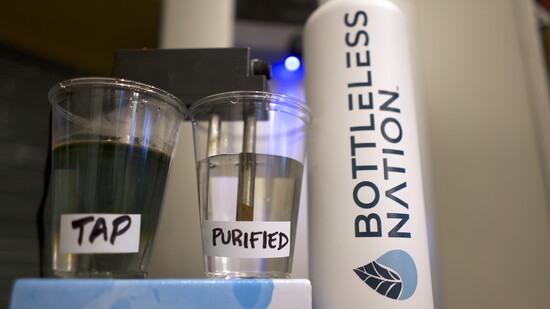
The contamination of water is not visible to the naked eye; however, when people notice a strong taste, a film on faucets, or residue in appliances, it means water contains a mix of minerals, disinfectants, and dissolved particles. During our demonstration we ran a mild electric current between metal rods to show the difference between untreated tap water and purified water. When the electricity reacts with dissolved solids, it causes them to re-solidify and become visible. Nothing is added in this process. The color and material which appear are simply the dissolved contaminants that were already present in tap water.”
What are the most significant health-related issues with unfiltered tap water?
“Chlorine prevents harmful bacteria and viruses, but it has a major effect on taste and smell and offers no health benefit upon consumption. Research continues to evolve regarding PFAS, microplastics, pharmaceuticals, and trace metals present in water supplies nationwide. While naturally occurring minerals are present, many come through at levels higher than what our bodies actually need, and they often arrive alongside metals that can be harmful with long-term exposure.”
What types of improvements do people generally first notice when switching to purified water?
“The taste improves immediately… water is smoother, cleaner, and totally free from chlorine aftertaste or mineral heaviness. Coffee and tea taste better. Ice is crystal clear. People drink more water because it’s more enjoyable. Workplaces also see fewer equipment problems because purified water doesn’t leave any scale or sediment behind. The overall hydration experience becomes something people look forward to.”
What kind of filtration systems do you commonly recommend for workplaces, and how easy is it to implement?
“We use multi-stage that include a combination of sediment filtration, carbon filtration, reverse osmosis, mineral enhancement, and final polishing. They reduce over 99% of the chemicals, metals, PFAS, microplastics, chlorine, and the minerals that create scale buildup.
Installation is easy. Our units connect directly to an existing water line, and all maintenance and service are performed by our technicians. We offer systems that provide hot and cold water, ice, sparkling water, and even naturally flavored water without artificial ingredients, sugar, or calories.”
For Middleton families reading this at home, what’s one easy way to improve the quality of the water they drink every day?
“The best first step is to understand what’s in your water. A quick look at Middleton’s water reports or a simple at-home test can clarify the levels of minerals, disinfectants, and trace contaminants. From there, even a basic filter pitcher can noticeably improve taste by reducing chlorine and odor. Families who want deeper purification can explore multi-stage systems through qualified residential providers.”