Vince Rende didn't leave General Motors because he hated engineering. In fact, he still loves the attention to detail and problem solving that it takes to be a good engineer.
He just sensed there was a better path for him—one that brings him closer not just to the work, but to the people he serves.
For years, he guided multi-million-dollar automotive projects from design to production, managing the kind of precision where a miscalculation could ripple through thousands of vehicles. He was good at it. Top marks. High performer. The kind of success that looks unshakeable from the outside.
But somewhere between the spreadsheets and the corporate checkpoints, he'd started asking himself a question he couldn't ignore: What if the problems worth solving for me aren't in factories at all? What if they’re in homes, where the blueprint is the "why" behind the project?
So in 2023, he walked away. Took his builder's exam. Launched ROHO Building Company.
His first project wasn't glamorous: just replacing sagging wire shelves in his mother's closet with something sturdy enough for her shoes and colorful wardrobe. But his mom still talks about those closets. And for Vince, that vote of confidence meant more than he expected.
"It was family," he says. "It was like, 'Hey, we know you're doing something new. Here's an opportunity for us to support you.'"
That experience became the foundation for what ROHO stands for: support.
Vince says people renovate because something in their life isn't working yet. Vince supports them in figuring out what that something is.
Most contractors walk into your home with a clipboard and a pricing sheet. Vince walks in with a question: "Why is now the right time for you to be reaching out?"
In other words, he doesn't walk in with his tape measure out and a list of things to sell you.
“Small talk usually leads to something I can connect the project to,” Vince says. “And it's an opportunity to let my clients know I'm a real person, not just some random guy they're paying to do the work.”
Vince wants to know why your project would make your life better. Because if you can't articulate why you want that kitchen island—not what you want, but why—then he can't build you the right thing.
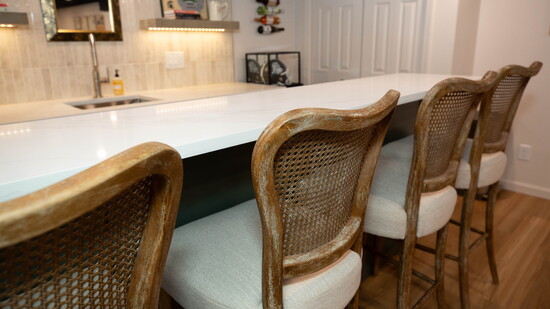
Maybe you don't actually need an island; maybe you need a peninsula with bar seating, because what you're really after is a place where your kids will sit and talk to you while you cook.
Maybe you're not frustrated by the lack of counter space; you're frustrated that your family scatters after dinner, and you want a hub that makes them linger.
"I'm not just going to take your budget and spend the whole thing," Vince explains. "I'm going to keep asking why. Keep asking why. That helps me guide your decision-making, so we're not spending time and money and resources on the wrong thing."
This is where his GM training becomes invisible magic. The same discipline that managed cascading timelines and cost thresholds across sprawling automotive programs now makes sure your basement remodel doesn't just add square footage; it adds the life you're trying to live.
He's not managing parts anymore. He's managing priorities. And the tool he uses most isn't a saw. It's listening.
The Work Before the Work
Here's where ROHO diverges from the pack: Vince charges for pre-construction. And he makes it clear why too: 20 percent of the work happens before the first wall comes down.
During pre-construction, he's not just measuring your kitchen. He's scanning the space, drafting remodel-worthy drawings, sitting with you for hours to understand what finishes speak to you, coordinating with designers and trade partners to figure out if your vision has hidden complications.
"It's not enough time to just come shake your hand, walk the space, type some numbers into a spreadsheet, and give it back to you," he says. "There's more than money invested in these projects."
That last part matters. Because Vince knows something most builders forget: even if you had infinite money, you're still doing this because you want something. The budget is just the frame. The why is the picture in it.
His ideal client? Mid-30s to 60, solid income, $500K–$1M home—and they've hit a pain point. Maybe they hosted Thanksgiving and realized their dining room can't breathe. Maybe they've got mobility issues and a bathtub that's become a barrier. Maybe they just want their home to stop fighting them and start fitting them.
"If you feel like something's missing when you're living in it," Vince says, "then it's not built for you yet."
The Trust Is In The Details
The projects that mean the most to Vince are the ones where the way he approaches his work made a difference.
There was the Royal Oak bathroom he gutted to the studs. Gorgeous tile to the ceiling, intricate floor work. It was the kind of renovation that photographs beautifully.
But what the homeowner couldn't stop talking about? The window trim. Vince had matched it to the casing in the adjacent rooms, a small choice that made the whole house feel coherent.
"It's the first thing you see when you walk in," he says. "And when clients are talking about that random thing, it probably means they're not unhappy with anything else."
Then there was the older couple who needed their bathtub replaced with a low-threshold shower for mobility. It wasn't the most profitable job Vince has taken. But it was a reminder that the right projects are about more than aesthetics; they've got a deeper purpose
"It felt like more than just a job," he says reflectively.
When you're building for someone's pain point, you're doing more than renovating. You're removing an obstacle between them and the life they're trying to live. That's the work Vince does. Not luxury for luxury's sake. Not cosmetic fixes that look good in photos. He builds the thing that makes you stop feeling like something's missing.
Along the way, sometimes the unexpected happens. You can't see mold behind a wall until the wall comes down. You can't predict a rotting subfloor until you pull up the tile.
That’s why, if you ask Vince what matters most in a project, he doesn't say craftsmanship or timeline. He says trust, because trust pays off when things go sideways. Those surprises become problems he and his clients solve together.
“My best clients are the ones who see me as a partner, who helps them make decisions based on what matters most to them,” Vince shares. I want them to talk about how comfortable they were with us being in their home and how much trust there was throughout the process.”
And how does he build trust? He asks why. And then he listens more than he talks.
So if you're the kind of homeowner who wants a builder to tell you what to do, he might not be your guy. But if you want someone who treats your 'why' like his blueprint, Vince is building for you.
Vince and ROHO Building are at rohobuilding.com or (586) 610-7551
"I'm going to keep asking why. That helps me guide your decision-making, so we're not spending time and money and resources on the wrong thing."