Legacy is often thought of in terms of what we leave behind—but in communities like ours, it’s just as much about what we pass on.
Today, learning is no longer confined to a single path or phase of life. It’s dynamic, hands-on, and deeply rooted in connection. Across Lincolnway, organizations are creating opportunities for people of all ages to build practical skills, explore meaningful careers, and share knowledge across generations. From teens discovering their confidence, to students preparing for the workforce, to adults reinventing their futures, community-based learning is shaping a legacy that extends far beyond the classroom.
For younger members of the community, that journey often begins with connection at the The Bridge Teen Center. Aaron Heldt, Director of Marketing at The Bridge Teen Center, says the goal is simple: give teens the chance to actively participate, not just observe.
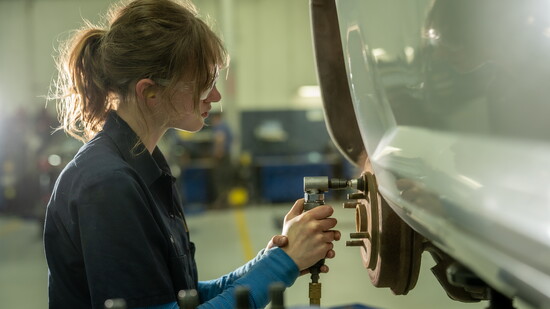
Through hands-on programming in carpentry, automotive basics, welding, and electrical work, students are introduced to skills that are both practical and increasingly rare in traditional education. Aaron explains that many of these trades-based experiences have been scaled back in schools and are no longer commonly taught at home, making early exposure even more critical. But at The Bridge, the impact goes far beyond technical ability.
In programs like “Thriftastic,” students gain real-world experience working in a fast-paced retail environment, building both hard and soft skills while learning to collaborate across generations. Volunteers from the community play a vital role, mentoring teens while passing down not only technical knowledge, but also work ethic and life experience. Aaron notes that this intergenerational exchange is where some of the most meaningful learning happens.
The transformation can be immediate. One student, initially hesitant to try welding, left her first session with a new sense of confidence after stepping up to the torch. Others discover long-term passions. Aaron shares the story of a student who first explored culinary arts at The Bridge as a seventh grader and now returns to lead programs, mentoring younger students and continuing the cycle of learning.
These experiences reflect a larger purpose: building a community of contributors, not just consumers. By helping teens realize “I can do this,” The Bridge is laying the foundation for confidence, independence, and future success.
As students grow, so do their opportunities to turn interests into tangible career paths. At Lincoln-Way Community High School District 210, Career and Technical Education programs are being reimagined to better align with today’s workforce needs and tomorrow’s opportunities.
Jen Vujosevic, Director of Community Relations for the district, explains that Lincoln-Way has restructured its CTE offerings into clearly defined career pathways. These programs reflect priorities set by the Illinois State Board of Education, focusing on high-wage, high-skill, and in-demand careers while helping students build technical expertise and transition successfully into college or the workforce.
Courses are intentionally designed in a progression, allowing students to move from exploration into mastery. By the time they reach advanced coursework, many students are prepared to earn industry-recognized credentials or step directly into professional environments.
But some of the most impactful learning happens outside the classroom. Through job shadowing, internships, and work-based learning experiences, students engage directly with local businesses and industry professionals. Organizations like SkillsUSA and Future Business Leaders of America provide leadership opportunities, while programs such as welding competitions, apprenticeship pathways, and research partnerships with Argonne National Laboratory expand students’ horizons.
In culinary programs, students take their skills into real-world settings—planning and executing full meals, catering events, and serving at community gatherings. These experiences build not only technical ability, but also confidence, teamwork, and professionalism.
Lincoln-Way’s commitment to skill-building extends beyond its students. Adult community education programs in welding and woodworking offer beginners the chance to explore new interests, with classes that are consistently in high demand. Jen notes that these opportunities reflect a growing desire for hands-on learning at every stage of life.
For many, that lifelong learning journey continues at Joliet Junior College, where education meets workforce development in powerful ways.
Katie Smith, Communications and Media Manager at Joliet Junior College, emphasizes that the college’s programs are designed with both students and the broader community in mind. From automotive technology and welding to HVAC, electrical systems, and precision machining, JJC offers a wide range of hands-on training aligned with real workforce needs.
Katie explains that preserving skilled trades is central to the college’s mission. By working closely with regional employers, JJC ensures its programs remain relevant while helping to strengthen the local economy. Many pathways offer stackable credentials, allowing students to enter the workforce quickly while continuing to build their skills over time.
These opportunities often carry forward across generations. Katie shares the story of Olivia Arias, a graduate who was inspired by her family’s work in refinery operations. After shifting her career path, Olivia earned multiple industry certifications, gained hands-on experience through an internship with ExxonMobil, and continues to build her career in the field—demonstrating how exposure and mentorship can shape a lasting legacy.
JJC’s programs are led by faculty with real-world experience, and strong industry partnerships provide direct access to internships, mentorships, and employment opportunities. At the same time, the college serves a growing number of adult learners seeking to change careers, re-enter the workforce, or gain new skills in emerging industries. With affordable tuition, scholarship support, and workforce initiatives that reduce barriers, these programs offer accessible pathways to meaningful, sustainable careers.
Across all of these institutions, a common thread emerges: learning is not just about acquiring knowledge—it’s about connection, opportunity, and impact.
Whether it begins with a teen discovering their confidence, a student building a career-ready skillset, or an adult pursuing a new path, community-based learning is shaping something far greater than individual success. It is creating a shared legacy—one where skills are passed down, opportunities are expanded, and each generation is better equipped to build, contribute, and thrive.