For more than five decades, People’s Community Clinic has quietly served as a medical home for Central Texans who might otherwise fall through the cracks of the health care system.
As Austin's cost of living rises, the federally qualified health center has doubled down on its mission: improving the health of underserved and uninsured neighbors through comprehensive, dignified care that spans generations.
That commitment is especially evident in the clinic’s pediatrics and women’s health services — two areas leadership views as foundational to long-term community health.
“Healthy pregnancies lead to healthy births, which lead to healthy kiddos,” said CEO Matt Balthazar. “And ongoing pediatric care leads to family stability and a thriving community from there on out.”
As an FQHC, People’s serves anyone regardless of ability to pay, offering care on a sliding-scale basis. Roughly 95% of patients live at or below 200% of the federal poverty line, according to clinic leadership. Balthazar said that reality requires a broader definition of health — one that looks beyond exam rooms.
“All of a patient’s health is informed by everything outside the four walls of this building,” he said. “Food, housing, transportation — those are drivers of health outcomes.”
That philosophy is embedded throughout the clinic, from a teaching kitchen and food pantry to medical-legal partnerships and community health workers who help patients navigate nonmedical challenges.
Women’s health care has taken a significant step forward with the recent opening of the People's Center for Women’s Health at St. David’s Hospital Pavilion. The new location increased capacity from 19 to 27 exam rooms and strengthened coordination with hospital-based delivery teams.
“Being on the hospital campus tightens continuity of care,” Balthazar said. “Our teams work closely with St. David’s to ensure seamless scheduling of deliveries and postpartum follow-up.”
The expanded center offers full-scope OB-GYN care, prenatal and postnatal services, cancer screenings, contraception counseling, and surgical partnerships — all designed to provide the same standard of care patients might expect elsewhere, regardless of insurance status.
“My goal is for our patients to have the same opportunities and access to care that anyone else would have,” said Dr. Nicole Moretti, women’s health lead and OB-GYN. “That need is now being met for many uninsured or underinsured women.”
Dr. Nilanjana DasGupta, the clinic’s chief medical officer, emphasized prevention and trust as cornerstones of women’s health care.
“Preventive care helps save lives,” she said, noting that People’s cervical cancer screening rate stands at 81% — an unusually high figure for an FQHC serving a low-resource population.
She credited consistent patient education and relationship-based care across departments for those outcomes.
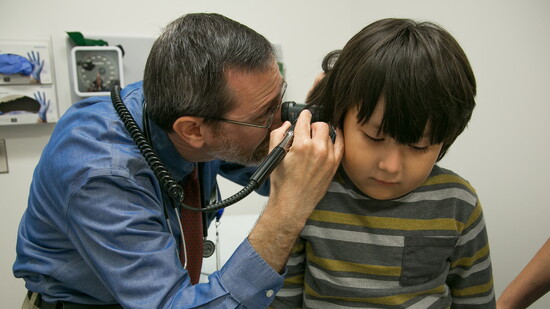
Pediatric care at People’s follows the same holistic approach. Dr. Louis Appel, who has served patients there for more than two decades, said the focus goes beyond treating illness.
“A lot of our work is about setting children on a trajectory for lifetime health and well-being,” he said, pointing to the clinic’s emphasis on preventive care, early childhood support, and family education.
That strategy has produced measurable results. Immunization rates for clinic patients exceed state and national averages, including a 97% measles vaccination rate among 2-year-olds, Appel said.
Parents who participate in early childhood behavior support programs also report reduced stress and increased confidence.
Together, the services reflect what People’s Community Clinic calls an ecosystem of care — one designed not just to treat patients today, but to strengthen Austin’s future.
As Balthazar put it, “By providing access to women and children, we’re addressing health inequities that have existed for decades — and working to ensure they don’t persist into the next generation.”
“What makes People’s different is creating a true medical home, so patients aren’t forced to navigate fragmented care on their own.” - Dr. Moretti
Six Ways to Show Love
- Make a financial donation to support essential pediatric and women’s health services.
- Become a monthly donor to provide dependable, year-round funding that People’s relies on to plan and sustain care.
- Donate a vehicle through the Car Donation Program to turn unused cars into critical health care funding.
- Give new or gently used books to support literacy, learning, and comfort for pediatric patients and families.
- Use employer matching gifts to double your impact at no additional cost.
- Support clinic events that strengthen community connections and fund vital programs.
Visit https://www.austinpcc.org/ to learn more.