From candlelight to community, generosity to joy, December’s global celebrations remind us that the spirit of the season shines brightest when we share with others. December becomes a tapestry of traditions that span cultures, continents, and faiths. While each holiday tells its own story, they all share the common threads of history and heritage. Whether lighting candles for Hanukkah, gathering for Kwanzaa, exchanging gifts on Boxing Day, or counting down to the New Year, people everywhere find ways to rejoice.
Hanukkah: The Festival of Lights
For Jewish families around the world, Hanukkah, also known as the Festival of Lights, is a time of joy, resilience, and remembrance. The eight-day celebration commemorates the miracle that occurred over 2,000 years ago when a single vial of oil, enough for one night, kept the menorah burning for eight days in Jerusalem’s Holy Temple.
Beginning on the 25th day of Kislev on the Hebrew calendar, usually falling in December, Hanukkah traditions include lighting the menorah each night, saying blessings, and singing festive songs. Families gather around tables filled with challah and delicious fried foods like latkes (potato pancakes) and sufganiyot (jelly-filled doughnuts), symbolic of the oil that sustained the ancient flame.
While rooted in faith, Hanukkah also celebrates perseverance and hope. Across the globe, menorahs glow in windows as symbols of unity and spiritual endurance, connecting Jewish communities through shared joy and remembrance.
Kwanzaa: A Celebration of Heritage and Unity
Created in 1966 by Dr. Maulana Karenga, Kwanzaa is a seven-day celebration honoring African heritage, community, and culture. Observed from December 26 through January 1, Kwanzaa draws inspiration from traditional African harvest festivals, blending principles that encourage reflection, pride, and togetherness.
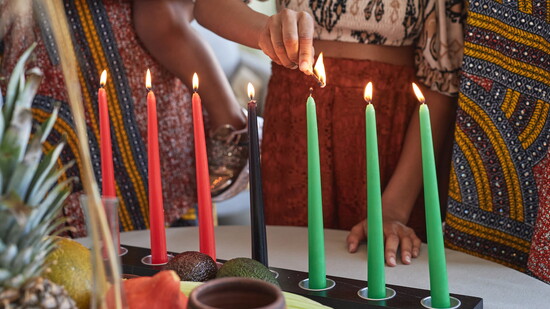
Each day centers on one of the Nguzo Saba, the Seven Principles, beginning with Umoja (Unity) and ending with Imani (Faith). Families light candles on the kinara, discuss the day’s principle, and celebrate through storytelling, music, and shared meals. Signature dishes often include collard greens, yams, and black-eyed peas.
The culmination of Kwanzaa, the Karamu feast on December 31, is a vibrant gathering of family and community, filled with rhythm, color, and gratitude. Though it is not a religious holiday, Kwanzaa is deeply spiritual in its affirmation of identity and purpose.
Christmas: Joy and Generosity Around the Globe
No discussion of December holidays would be complete without Christmas, celebrated by billions of people worldwide. While its origins honor the birth of Jesus Christ, Christmas has evolved into a global celebration of generosity, family, and joy, oftentimes blending religious, cultural, and local traditions.
In the United States, homes sparkle with lights, stockings hang by the fireplace, and families gather to exchange gifts and share hearty meals. Across Europe, Christmas markets fill historic town squares with handmade ornaments, mulled wine, and the scent of roasted chestnuts. In the Philippines, festivities begin as early as September, with vibrant parades, midnight masses, and the famous parol, a star-shaped lantern symbolizing hope and faith.
From snowy Christmas mornings in Canada to sun-soaked beach barbecues in Australia, the essence remains the same. Whether through carols, candlelight services, or acts of kindness, the message of goodwill transcends borders.
Boxing Day: A Spirit of Giving
Observed on December 26 in countries such as the United Kingdom, Canada, and Australia, Boxing Day traces its roots to Victorian England. Traditionally, it was the day when employers gave “Christmas boxes” containing gifts or food to their household staff and tradespeople as a gesture of appreciation and charity.
Today, Boxing Day remains a day of giving and gratitude, but it has also become known for another kind of tradition: shopping. Major sales and sporting events mark the day in many countries, blending philanthropy with festivity. In South Africa, it’s called the Day of Goodwill, emphasizing community service and generosity toward those in need.
Whether spent volunteering, gathering with family, or hunting for post-holiday deals, Boxing Day is a gentle reminder that kindness and giving extend beyond Christmas morning.
Las Posadas: Faith and Festivity in Latin America
In Mexico and parts of Central America, Las Posadas, translated as “The Inns,” is a cherished tradition that reenacts Mary and Joseph’s search for shelter before the birth of Jesus. Celebrated from December 16 to 24, the nightly processions feature candles, songs, and vibrant community gatherings.
Children dressed as angels or shepherds lead the way as participants knock on doors, singing carols that tell the story of the nativity. After the symbolic “innkeepers” open their doors, festivities unfold with food, music, and the breaking of star-shaped piñatas filled with sweets.
Las Posadas captures the heart of hospitality and faith, reminding participants that the season is not just about receiving, but about welcoming others in love and celebration.
Ōmisoka: Japan’s New Year’s Eve Tradition
In Japan, December’s most important celebration isn’t Christmas. It’s Ōmisoka, or New Year’s Eve. Marking the end of the old year and the beginning of the new, Ōmisoka is a time for reflection, renewal, and preparation.
Families clean their homes thoroughly, a custom known as ōsōji, to welcome good fortune in the coming year. Traditional foods like toshikoshi soba (buckwheat noodles) are eaten to symbolize long life and resilience. As midnight approaches, Buddhist temples ring their bells 108 times, representing the cleansing of earthly desires and the welcoming of a fresh start.
Ōmisoka is a moment of gratitude and hope, capturing the universal desire to leave behind what no longer serves and step into the new year with clarity and purpose.
No matter how you celebrate, December reminds us that joy is universal and that the true beauty of the season lies in the ways we share it. Across faiths, languages, and time zones, the message endures that even in the coldest months, warmth always finds a way.