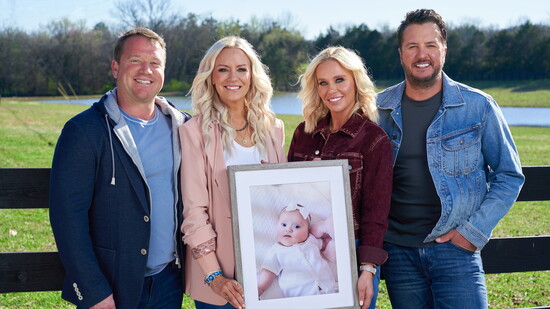
In honor of National Heart Month, Ellen Boyer and Caroline Bryan—founders of The Brett Boyer Foundation—sit down for a candid conversation discussing their why behind the foundation, along with their passion for raising awareness and helping other families who have a CHD diagnosis. Driven by their commitment and hard work, the Brett Boyer Foundation partners with 11 hospitals nationwide for inpatient care and family support. They are also proud to have funded the research that led to the world's first partial heart transplant. Last year alone, they funded over one million dollars in research!
For anyone who does not know your story, can you share the inspiration and heart behind the Brett Boyer Foundation?
Ellen Boyer: “When we found out our daughter, Brett, would be born with CHD and Down syndrome, we weren’t lucky enough to know someone with Down syndrome. We feared what we didn’t understand and completely feared the wrong diagnosis—we thought we could ‘fix’ her heart defect. What we hope people feel from our mission is that we celebrate Brett’s Down syndrome diagnosis because it only brought cures to our lives… we fight for more options for kids born with congenital heart disease. We want people to know how common it is and that they aren’t alone.”
Caroline Bryan: “The heart and soul is Brett—their daughter, my niece. We had never experienced CHD before [so] this was new to us. We hadn’t experienced Down syndrome either, and didn’t know the joy it brings. We experienced [CHD] firsthand—the loss and the struggle—and wanted to make sure it wouldn’t affect other families in the same way it did ours.”
The foundation champions both Congenital Heart Disease and Down syndrome advocacy. How do these two pillars intertwine in your work?
Ellen Boyer: “[From] our perspective, CHD needs a cure, Down syndrome does not. Brett’s Down syndrome diagnosis only brought goodness to our whole family… it was one of my favorite things about her, but it was just one part of her. About 50% of children born with Down syndrome will also have a congenital heart defect. Brett’s particular heart defect—AVSD—has a 97% success rate after open heart surgery; we just happened to be in the 3%. There are more children with CHD who don’t have Down syndrome. 1 in every 100 babies will be born with CHD… the cause for most CHD’s are unknown.”
Caroline Bryan: “Our tagline that Ellen came up with is ‘we support and celebrate’ Down syndrome—I just love that. We, of course, support families with family members with CHD, but we celebrate Down syndrome! The joy it can bring is amazing, and we want to make sure that more people are aware of that.”
What are some of the biggest challenges families face when navigating congenital heart defects, and how does your work aim to bridge those gaps?
Ellen Boyer: “When we received Brett’s CHD diagnosis and heard [that our] baby would have to have open heart surgery to survive, we felt like the only people in the world who must have ever heard those words before. When you are in the thick of that fear, it can feel very isolating and infuriating when you find out how common it really is and how underfunded CHD research is—despite being the most common birth defect. We want, first and foremost, for parents and families to know they aren’t alone… that we are committed to funding research that can help all kids and adults with CHD. Receiving a CHD diagnosis definitely brings emotional and financial strain, [so] we’ve taken our lived experiences to proactively fill the gaps families will be feeling both while inpatient and at home—both from mine and Bo’s experience as Brett’s parents, but also Caroline and Luke’s as her aunt and uncle doing everything they could to support us. We assist the cardiac social workers with meeting families’ needs while in the thick of it all—from bill assistance, to date night gift cards near the hospital, to feeding the unit so they can stay close to their heart warriors, even to providing final outfits for kids who, like Brett, might run out of options. It's the first act of kindness we hope to offer in their deepest time of need.”
Caroline Bryan: “The biggest challenge was the emotional toll it took—emotionally, it is so hard. A lot of these families don’t know or aren’t prepared, even if it’s expected… even if they are told when the baby is in the mother’s belly. There are so many unknowns. With Brett, it was supposed to be an easy fix—one surgery. Obviously, it wasn’t, and that is a grief we share. Other than the primary mission, raising funds for research to provide better outcomes for children with CHD, we also offer resources and funding for mental health support. We also understand that it can be financially detrimental to families, and we have tried to bridge that gap as much as possible.”
Brett continues to leave a legacy and inspire so many people every day. What does it mean to you to know you have formed a community and have helped so many other families along the way?
Caroline Bryan: “This is all Ellen… I have to give credit where it’s due. I’m here to support and help her however she needs. We always knew that Brett changed our family for the better, and now, is changing the community for the better. We have people reaching out to us—big brands, high-end designers, huge companies—wanting to be a part of what we’re doing. I think that’s the most amazing thing—that now we are able to give back to families who are struggling the same way Ellen and Bo have.”
Ellen Boyer: “Each day, I am more proud to be Brett’s mom. I am so proud of the way [we] have all used our strengths to keep Brett’s legacy alive and give back in a way I believe we were each created to do. Don’t let Caroline fool you—she’s constantly making miracles happen. She’s a doer, and she fights for what’s right… she’s the one who keeps us going. Together, we’re proud to meet needs we each had through Brett’s life—it is the most positive way we can all continue on with what we continue to learn from Brett and each other. I’m so proud of the way we continue to seek ways to meet the needs of CHD families as we’ve grown. People have been so generous and supportive of our mission and passion behind it—we know we’re on to something, and it feels so good to be able to take our hurt and use it for good.”
Your initiatives have captured the hearts of many—can you tell us about Code Queen Bee?
Caroline Bryan: “Code Queen Bee started, unfortunately, through the tragic passing of Brett. I watched Ellen and Bo in the hospital and, obviously, they were in shock. Ellen wanted to have some fresh clothes for Brett, so her sister, her cousin, and I went to a local store [called] Plaid Rabbit. We were walking around like zombies. The sales girl was so sweet—she recognized the situation and gave us 5-6 outfits. She wouldn’t charge us, and told us to take the outfits to Ellen and have her choose what she wanted and return what she didn’t. That act of kindness stuck with me, and I went back to the shop a few weeks later and told her I wanted to help other families. I started Code Queen Bee, where we donate a certain amount of money and if the social worker sees a need for the family, they can utilize this fund for a burial outfit. It’s in place to help them so that they can have one less thing to think about at that time in their life. No parent should have to pick out what their child is buried in.”
Ellen Boyer: “Caroline completely spearheaded this… we saw it was really meeting an unfortunate great need within the CHD community. We decided to bring even more options to families [and] started this at Vanderbilt. We now have this program at 11 partner hospitals. Our partners keep items in-house, giving families the option to choose from what we keep on hand if they don’t want to go to a store.”
The foundation has a strong presence in events and fundraising. What makes a Brett Boyer Foundation event unique?
Ellen Boyer: “We work really hard to make CHD digestible for the guests at our events who have possibly never heard of it before. CHD is very complex, and it’s not the easiest to share all of the variables that come with that diagnosis in a short event. We sprinkle in awareness at every turn, followed by something fun to keep people engaged. We want them to have the time of their lives, but learn what we’re doing and really feel our passion behind it.”
Caroline Bryan: “Something I think is wonderful [is that] we started something that hadn’t been done, and now I see people mimicking it—-which is great! Every cause is worthy. When we started talking about our first big event, we realized we wanted to break out from the same ‘gala’ feel that so many other events we attended had—there’s nothing wrong with that, but we wanted to do something new… we wanted something that was fun and more casual. We created this all-day event with everything from skeet shooting, putting, and fishing with Bill Dance—among other things. At the end of the night, we have celebrities come on stage to sing and play. I think we’ve changed how a lot of people are doing charity events now, at least in this area, which is awesome.”
With February being American Heart Month, how do you plan to raise more awareness and continue to share the mission of the foundation?
Ellen Boyer: “Heart month is our Super Bowl! We will be all over the country this February, visiting our partner hospitals and spreading as much awareness as possible. We love sending heart families signs for their yards to help celebrate their heart warrior, feeding families while inpatient, honoring staff who dedicate their lives to the whole family touched by CHD, and host events like Hockey Has Heart with the Nashville Predators—which is on February 4th this year. We have a pregame reception for heart families and their heart healthcare providers to get together to celebrate our wins together, and just be with people who have been on this journey together. It’s great to have the support of the Preds to help us raise awareness… and [it’s] always so nice to have Luke sing the anthem with a couple of our favorite heart warriors.”
Caroline Bryan: “Hockey Has Heart is one of my favorite nights! Luke sings the anthem with heart warriors, and we get [them] and their care teams back together—possibly for the first time since they went home from their surgeries. It’s really amazing to see how it encourages the healthcare workers to see the kids they fought to save running around and enjoying a hockey game with their family.”
What do you hope families take away from your mission and work?
Ellen Boyer: “I hope people see that they aren’t alone, and that we have a place for them to join us in making a difference. I hope they see that we’ve dedicated our lives to make things better for everyone both now and in the future with CHD.”
Caroline Bryan: “I think anytime anyone sees Ellen speak, there’s no doubt it’s not rehearsed or fake or curated—it comes straight from her heart. People leave going, ‘wow, I didn’t know this,’ or really feeling the impact of her words. Often, [people will] come up and say [their] daughter or niece or cousin has CHD, which is a testament to her word, but also the fact that this is so much more common that many realize. If people keep talking about it, it’s going to be better known and the impact will reach farther. I hope at the end of the day, people leave realizing how much this really means to our family.”
Looking ahead, what dreams do you have for the foundation’s next chapter?
Ellen Boyer: “My goal is to fund more CHD research each year… to have more projects make it to the bedside, so that we can see lasting progress for each family that is to come. If 1 in 100 babies are born with CHD, and 100 people are moving to the greater Nashville area each day—most of which are having families here—we have to grow to meet those needs. I hope to expand to more partner hospitals to help financially, mentally, and emotionally support families through their CHD diagnosis, no matter where they are in the U.S.”
Caroline Bryan: “I’m enjoying starting to do events more regularly—now we’re [expanding] to California… we’ve been in Florida, Georgia, and Tennessee. I think this is huge—our charity is only 8 years old! I don’t think it’s that common to have that kind of reach so soon. I’m excited about going to multiple states and highlighting what we do and spreading the mission further.”
For individuals who want to get involved, what’s the most meaningful way they can support your mission?
Ellen Boyer: “Please check our website for opportunities to support our events, see what projects we are doing, help us fill hospital wish lists, and how you could help support locally and nationwide. We would love to share all the ways we are supporting families in the hospital and at home. Whether bringing warm meals to families, supplying gas cards for their many appointments, or lifting up heart warrior families in prayer, we would be so proud to have you in our corner.”
Caroline Bryan: “Check out the website and our socials… see how you can help your local community. CHD is in every single city, every single state. This is not a local issue, it's worldwide. Get involved however you can on a local level—even if it’s not with us.”
For more information on The Brett Boyer Foundation, visit their website or follow them on social media.
@brightforbrett
“I hope people see that they aren’t alone, and that we have a place for them to join us in making a difference."