It’s time to rethink our perspective on diet and the foods we choose to consume. So says Kimberly Verbeke, a naturopathic practitioner, health coach, and founder of Avita Wellness & Aesthetics, who’s ready to share her insights on superfoods.
First off, Verbeke takes a pragmatic perspective on superfoods. “I look at everything through the lens of quality of life,” she says. “I started out working in geriatrics, and I always tell people when you start out in geriatrics, you know exactly what you don't want.” She admits that may sound counterintuitive, but she continues, “My thought is, ‘how can we keep people healthy? How can we be proactive instead of reactive about our health?’ And I think certain foods absolutely are game changers in that respect.”
Superfoods, she says, can make a big difference in our diets. But what exactly are they? “I think of superfoods as foods that have qualities beyond what we would normally think of. Whether it's a really high nutrient density per calorie or protective compounds, protein quality, there’s going to be human data that says, ‘Hey, this isn't hype. They actually do these things.’” There’s also the practical. “I also consider accessibility and sustainability; will you actually eat this? It doesn't matter how good it is if you won't.”
As a believer that food is medicine, Verbeke says, “What we put in our body is the biggest control factor we have over our health because we're doing it multiple times a day every single day. It's what we do often that matters, and so you have to do it with enough consistency to see a benefit.”
Sifting through the hype, what really makes a difference? Verbeke says her three favorite superfoods deserve the buzz: amino acids, berries, and sweet potatoes.
“For longevity, for metabolism, for strength, my hands-down number one superfood is essential amino acids,” she says. Verbeke believes that adequate intake of amino acids in protein can reduce vulnerability to sarcopenia, the loss of lean body mass that is common in aging adults.
“I always describe it like we have a checking account and we have a savings account,” Verbeke explains. “The checking account is that we need one gram of protein per ideal pound of body weight to maintain our lean body mass. The other side of it, the savings account, is that you need an amino acid reserve to heal and repair if you get sick or injured.” And that’s where she says people run into problems. “Most people have a deficit in their checking account, so they don't even have a savings account.”
Verbeke likens essential amino acids to construction workers for your body. “They do so much for us,” she says, “and making sure you hit those numbers is really important for healthy aging.” She adds that supplements are available—both vegetarian and vegan—to help you reach your recommended intake.
Organ meats, beef, mussels, sardines, and oysters are great sources of protein, Verbeke says. “Quality protein is critical for metabolism, for strength, to age well, supports red blood cells, oxygen delivery, nerve function, thyroid, immunity, brain health, methylation—all these things that are so important to be healthy.”
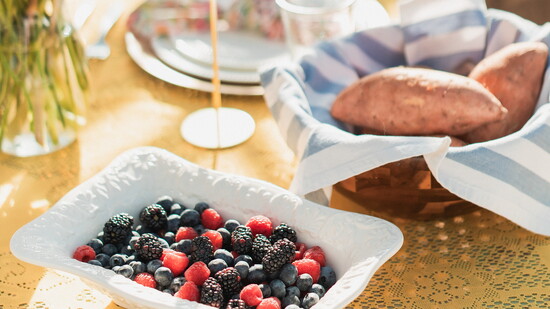
Next up: Verbeke shares a love for berries as a superfood. “Black currants, wild blueberries, elderberries, blackberries, and raspberries have a lot of nutrient density in them,” she says. A strong believer that one diet doesn’t fit all, Verbeke notes that this low-sugar superfood is tolerable by most and is rich in polyphenols.
Polyphenols, Verbeke explains, “are what make the colorful part of fruits and vegetables.” She adds that they help regulate inflammation and vital functions, produce energy, and support our gut microbiome. Verbeke also includes purple cabbage because it’s the pigments themselves that have beneficial qualities for our bodies. She says the advice to “eat the rainbow” is worth following.
Finally, Verbeke says sweet potatoes don’t get the respect they deserve. “One of the things I love about sweet potatoes is they're high in fiber,” she says. But that’s not all. Verbeke also loves that they support your microbiome and improve satiety, or the feeling of being full, which helps stop overeating. They also contain beta-carotene, potassium, magnesium, vitamin C, vitamin B6, and polyphenols.
Leafy greens get a lot of love, but Verbeke admits, “I personally don't see kale as a superfood. It can be very, very hard for people to digest, very hard on the digestive tract.” She explains, “It doesn't matter how many nutrients are in a food if it's not easy for your body to absorb and utilize those nutrients.” She recommends microgreens and berries as alternatives to leafy greens.
“There are quite a few superfoods that are easier to digest if they're cooked or fermented,” she shares. Kimchi is a good example, she says, and some problems with nuts, seeds, and beans can be overcome by soaking them. “We need to cook them a little bit so we can get to the nutrients and the food.”
Stay diligent, Verbeke cautions. “There's a lot of trickery around food.” She points out that while chocolate can be beneficial for stem cells, its processing often results in the consumption of heavy metals. Instead, she recommends a handful of goji berries every day. She says they support stem cell growth and eye health, and are also rich in antioxidants and polyphenols.
When choosing smoothie bowls, salads, and yogurt, she advises considering the other ingredients before presuming that a superfood ingredient makes it a healthy option. “Superfoods are not magic capes that we put on, but they have higher potential than a lot of other things; so when you utilize them consistently, you can see really good benefits over time.”
“What we put in our body is the biggest control factor we have over our health, because we're doing it multiple times a day, every single day.”
“They're not magic capes that we put on, but they have higher potential… when you utilize them consistently, you can see really good benefits over time.”
One Diet Does Not Fit All
This lesson is central to wellness, Verbeke says. “The more you know about your own body and how it functions, the more educated you are around your own health and the healthier you'll be.” She continues, “It's having the self-awareness to check in and go, ‘Yeah, you know what? I feel really good when I eat these things.’” Verbeke says you can adhere to a diet while allowing yourself flexibility with the foods that make you feel good. She affirms, “nothing ever will be one size fits all.”
When adjusting your diet, you should consult a healthcare professional. Verbeke says, “It's my job to dig into the nitty-gritty, because I want to help people understand why things work, how they work, what can make your body work optimally, and what can keep you healthy for a long time.”
Avita Wellness & Aesthetics provides consultations that review health history and lab work to help people understand where there are opportunities in their diet. “If you can get people to adjust and sprinkle some moderation into their life,” she says, “I feel like that's when people win.”
avitabydrv.com | 830-443-0098 | 104 Medical Dr.