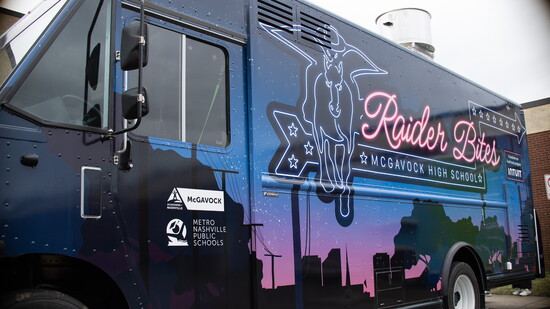
At Metro Nashville’s McGavock High School, learning doesn’t stop at the classroom door. Raider Bites, the school’s student-run food truck, is giving aspiring young chefs a hands-on education in culinary arts, teamwork, and entrepreneurship, all while serving up crowd-pleasing dishes. At the heart of the program is Chef and teacher Jeannine Nava, whose passion for mentoring students is matched only by her commitment to real-world and lifelong learning. We sat down with Chef Nava to talk about how Raider Bites came to be and how this innovative program is preparing the next generation for careers in the culinary industry and beyond.
What inspired you to start/lead the Raider Bites culinary truck program and how did it come together?
The Raider Bites culinary food truck program was a concept that existed prior to my hiring. Intuit partnered with Metro Nashville Public Schools through a program that donates a fully equipped food truck and the necessary tools to operate a successful small business. When I joined the program in December 2024, the process moved quickly to bring that vision to life.
One of the first steps was engaging students in the ownership of the program. We held a student-led voting process within the culinary program to select the food truck’s name, which ultimately became Raider Bites. This approach helped students feel invested from the beginning and reinforced the idea that this was their business.
My inspiration to lead the Raider Bites program comes from nearly 20 years of experience in the culinary industry. Teaching allows me to combine my passion for food, business operations, and mentorship. Through this program, I have the opportunity not only to teach culinary and entrepreneurial skills, but also to positively impact students’ lives by helping change their trajectory toward productive, meaningful careers
How do you balance teaching culinary skills with running a functioning food truck that serves real customers?
Balancing culinary instruction with operating a functioning food truck comes down to intentional structure and student ownership. In the McGavock High School culinary program, I’ve developed clearly defined roles within both the classroom and the food truck operation.
At the beginning of the school year, students complete an application process to be placed into specific positions such as cooking, prep, cashiering, dishwashing, marketing, event setup, and front-of-house operations. This system mirrors real-world restaurant and food truck environments and allows students to work in roles that align with their interests and career goals.
By placing students in authentic positions of responsibility, they gain hands-on experience making real decisions they would face in the industry. Students in leadership roles are held to higher expectations and are trained to manage operations effectively, which allows me to focus on targeted classroom instruction while trusting the team to execute service.
This model creates a balance where students are learning industry skills in real time while operating a professional food truck that serves real customers—making the experience both educational and authentic.
What are some of the most important lessons that you hope your students take away from their time with Raider Bites?
One of the most important lessons I hope students take away from their time with Raider Bites is confidence—confidence in their ability to face challenges, think critically, and complete tasks efficiently in real-world settings.
I want students to leave the program without the fear of running an operation. Understanding that leadership, responsibility, and decision-making are all within their reach. Through hands-on experience, they learn that success comes from preparation, accountability, and problem-solving.
Equally important is the ability to work as part of a team. Raider Bites teaches students that strong teams are built through clear communication, mutual respect, and integrity. These skills extend far beyond the kitchen and will serve them in any career path they choose.
How do the students contribute to the menu creation and daily operations of Raider Bites, and can you share an example of a student-inspired dish that became a favorite?
Students play an active role in both menu creation and daily operations at Raider Bites. The process typically begins with identifying the event and its needs. From there, students collaborate as a team to brainstorm menu ideas, discuss feasibility, and decide what they can realistically execute at a high level.
Once a concept is chosen, students meet with me to refine the menu by reviewing ingredients, recipes, and execution strategies. Together, we develop detailed pull lists to ensure service runs smoothly. All prep work is completed by students, with my role focused on supervision and support when questions arise.
One of our most popular menu items—macaroni and cheese paired with smoked pork ribs—was entirely student inspired. The recipes were developed by the students themselves, and those dishes have become customer favorites.
Watching students collaborate, problem-solve, and take pride in the food they create has been one of the most rewarding aspects of the Raider Bites program and a true reflection of their growth and teamwork.
What challenges have you and your students faced while operating Raider Bites, and how have you worked together to overcome them?
One of the biggest challenges my students and I have faced while operating Raider Bites is time management—specifically balancing the demands of running a food truck with academic responsibilities and other classes.
Time management is a challenge students will face throughout their lives, so we approach it as a teachable skill. Students learn how to organize their schedules, plan ahead, and prioritize responsibilities. A key expectation within the Raider Bites program is accountability, particularly when it comes to grades and attendance.
When a student is unable to participate in an event, it is always tied to academic standing rather than punishment. This reinforces the understanding that participation in Raider Bites is earned through responsibility and commitment. Students who want to be involved quickly learn the importance of balancing what they enjoy with what must be completed.
Through this process, students develop discipline, accountability, and lifelong time-management skills—lessons that extend far beyond the food truck.
How does Raider Bites connect with the Franklin and greater Nashville community, and how has that community support shaped the program?
Raider Bites is deeply connected to the Franklin and greater Nashville community, and the enthusiasm and support we’ve received has been incredibly encouraging. The community has been just as eager as our students to see the program grow and to experience the food they are creating.
While we are currently serving primarily at in-house events as we finalize a few remaining requirements needed to fully operate off campus, we are very close to expanding our reach. In the coming weeks, Raider Bites will be able to open to the public and serve the broader community.
Community organizations and partners have already reached out on a regular basis with opportunities for events and service, demonstrating strong interest in supporting and showcasing our students. This consistent encouragement has helped shape the program by reinforcing the value of real-world experience and motivating students to take pride in their work.
The excitement and anticipation from the community continue to drive the program forward—bringing Raider Bites to a location near you soon.
What advice would you give to other schools or educators who are considering developing a similar program?
My best advice is be patient. We know how to teach, getting a business up and going is a different skill set. It will be a learning curve for everyone: teachers, students, administration, and district support.
It is also critical to understand local laws, health regulations, and operational requirements, and to confirm that your kitchen facilities are properly equipped before launching.
Despite those challenges, the work is absolutely worth it. Seeing students who were once quiet, disengaged, skipping classes, or struggling academically begin to take pride, show up, and invest in something meaningful is incredibly powerful. Programs like this have the ability to change student trajectories, and that impact makes every obstacle worthwhile.
What goals or new developments are you most excited about for Raider Bites in the coming year—whether menu changes, partnerships, or student initiatives?
Looking ahead, I’m most excited about expanding Raider Bites in ways that deepen student learning and strengthen our connection to the local community. One of our primary goals is to develop a seasonal menu that reflects availability and quality, including the opportunity to grow some of our own produce and teach students about farm-to-table practices.
We are also eager to build partnerships with local businesses, farms, and chefs from the Middle Tennessee area. Bringing industry professionals into the program allows students to learn directly from those working in the field, while sponsorships help highlight the incredible local products available in our region.
Fundraising will continue to play a key role in the growth of Raider Bites, as it allows us to provide hands-on classroom experiences and access to the ingredients and equipment needed to expand students’ skills and palates.
Ultimately, my hope is to see more students choosing the culinary program because they are excited to learn, create, and be part of something meaningful. I want Raider Bites to leave a lasting legacy—one that inspires future students to take pride in their work and see the value in the effort and payoff this program provides.
@mcgavock.nashville.raiderbites
MNPS.org
"Through this process, students develop discipline, accountability, and lifelong time-management skills—lessons that extend far beyond the food truck." - Jeannine Nava