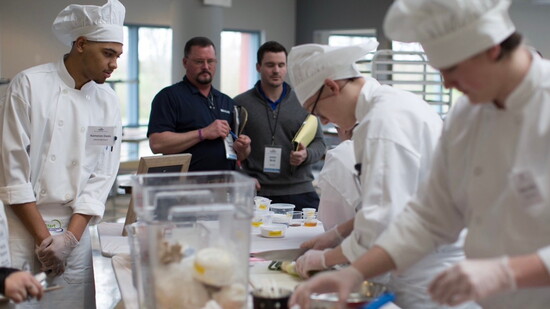
However it is enjoyed, food is a source of connection. It is also an expression of creativity for the ones who make it. At Lebanon High School, educators at the heart of the Culinary Arts program know that food and kitchen skills make a difference.
The program was founded in the early 2000s, and Lindsay Morgan joined the team in 2005 as a Culinary Arts Educator as the program grew. From her perspective, the Culinary Arts program is not only a space where students learn to cook. They also learn important skills that will serve them beyond their time in the high school program.
Morgan says, “I wanted to bring not only the hospitality industry into the classroom, but also the skills students need to be successful in today's workforce. I saw a need to teach professionalism, ethics, and 21st-century skills. I know that not all 400 students will pursue a career in the food service industry, but I would like to instill in them a sense of work ethic. If you can work hard and be dependable, you can succeed in any field.”
In Morgan’s upper-level classes, a typical day starts early. Three times a week, students arrive by 6:45 a.m. to set up the on-campus restaurant. They prepare the food, set the tables and pack away inventory that gets delivered. Then, they open for breakfast at 8:05 a.m. to serve the school’s faculty and students.
On the other two days of the week, students spend time in the classroom learning new skills, recipes or working on group projects.
The hands-on learning experience has made a measurable impact on students. They leave the program with industry certifications that often save them money in their higher education, assist them with finding jobs or advance them in their current positions.
Beyond skills, Morgan creates a space where any student can flourish with the support of a good teacher and team. “The best part of my job is having the students in my class for multiple years. I get to see their growth and hear their goals, dreams, and challenges. I believe that hands-on classes reach all types of learners—students who do not typically do well in a group or socially feel successful in my class. I build a team, and we encourage each other to work hard, celebrate wins, and grow.”
Even students who initially stepped into the kitchen with hesitation have experienced success in Morgan’s classroom. She says that just recently, a ninth-grade student who had only cooked food in the microwave had completely transformed by the end of the semester. He went from microwaved food to cooking for his family, leading the team in class and asking to join the competition team.
The hands-on learning takes students beyond the school and into the broader community. Students showcase their new skills through local competitions like the Taste of Wilson County, participate in organizations like SkillsUSA and cater local events.
By the time they graduate, Morgan and the other program educators aim to leave students with a solid foundation that will serve them whether they stay in the food industry or pursue another path.
For Morgan, that foundation begins with the encouragement she often shares with her students: “Just show up and let food do the rest. Food is a common ground. We all have to eat. We all bring new ideas to the table. We all like different food. We can learn so much through food.”
Pull Quote: Just show up and let food do the rest. Food is a common ground. We all have to eat. We all bring new ideas to the table.