Stepping onto Aimee’s Farm Animal Sanctuary, you might be greeted by a three-legged baby goat. Nearby, you’ll meet founder Aimee Takaha, beaming like a proud mother at the kid’s impressive dexterity and speed.
“Would you like to feed her?” she might offer, extending a bottle. “Her name is Clover.”
Clover will hungrily (and happily) agree to the arrangement.
On this 5-acre nonprofit farm in the heart of Queen Creek, covered in mesquite-shaded areas, grassy stretches and large arenas and pens ideal for roaming, bottle-feeding a three-legged baby goat is only one of many opportunities to interact with rescued animals. Give belly rubs to a pig. Pet a miniature zebu. Brush a rescued pony. Feed the animals a smashed watermelon or pumpkin, depending on the season.
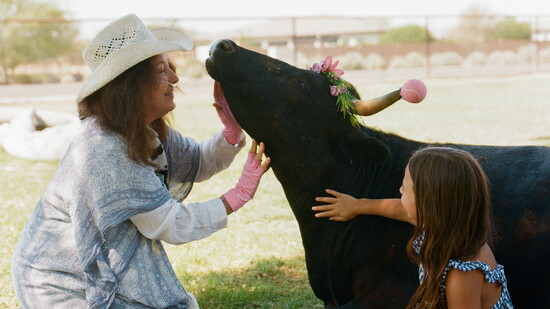
But perhaps the most enticing draw of all: participate in a cow-hugging therapy session, where children and adults alike are welcome to snuggle Moona Lisa, a gentle Spanish Corriente cow whom Takaha affectionately refers to as a “big grass puppy.”
Visitors can sit on a blanket beside Moona Lisa and lean against her while she relaxes on the ground. Takaha says guests sometimes arrive skeptical, but more often than not, visibly settle into the experience.
“There’s actual science behind snuggling next to a cow,” she says, including lowering blood pressure. “It’s like her head is a warm weighted blanket and she’ll make these deep sighs, and she’ll purr like a cat, and it’s just so good. You can’t help but feel happy.”
The sessions can be emotional, too.
"I would say the majority of people cry," Takaha says. "It's so good."
The main mission of Aimee’s Farm Animal Sanctuary is to “rescue, rehabilitate, re-home and spread awareness of farm animals in need while creating a healing environment for differently abled humans.” Every rescue, tour and volunteer shift helps bring that mission to life.
On Mondays, Takaha welcomes groups from facilities across the Valley for free tours. Many visitors have autism, Down syndrome, post-traumatic stress disorder (PTSD) or other physical, developmental and emotional challenges. The tours give them an opportunity to experience the farm firsthand. Takaha notices how the animals have a way of centering and calming those who visit.
The sanctuary also visits a local senior living community each month, bringing chickens and other gentle animals to residents who may no longer be able to visit the farm themselves.
"The seniors love to snuggle the chickens," Takaha says.
Members of the general public are also welcome to visit the farm. Guests can book a one-hour private tour through aimeesfarmanimalsanctuary.org, with proceeds going directly toward feeding and caring for the animals. Children 18 and under are free with a minimum of two adults. During the summer months, tours are limited to one per day because of the heat, but availability increases as temperatures cool.
Many of the animals here are friendly and engaging because Takaha and her volunteers have nurtured them to trust and interact with humans.
“When they’re raised with love and kindness, this is what you get. They are healing. Just being in their presence is healing,” says Takaha.
Some of the animals are a bit more skittish or unsure due to years of neglect, abuse or special needs. Takaha and her team provide safety guidelines for interacting with the animals and remain vigilant during visits.
On the tour, you’ll meet Mootilda, a cow rescued from a slaughterhouse after her 3-mile escape went viral online; Jennyvieve the donkey, who made a miraculous recovery after a terrible facial injury; and a steer named Adorabull, who was found in a ditch.
Each animal has a story. Some arrived frightened and wary of people. Others required extensive medical care. Today, many of those same animals approach visitors looking for treats, attention or a good scratch behind the ears. Their transformations are a testament to the dedication of the sanctuary.
“We make them better. And that’s everything—to see them better,” says Takaha.
She believes it’s also important for children to understand how animals can overcome challenges. It reminds them that difficult circumstances do not have to define a life. Children, too, might start a visit feeling overwhelmed by the animals, especially the larger ones, but within an hour, they’re usually comfortable and enjoying the experience.
Many families return again and again, Takaha says, often developing favorite animals and lasting connections to the sanctuary.
And for those who can follow directions—typically ages 8 and up—volunteering around the farm is a great way to get more involved. They can help with simple chores like making salads for the chickens, walking horses and assisting with daily routines.
It teaches them empathy, patience and responsibility, says Takaha, along with basic animal facts and husbandry skills. For many children, those lessons begin with a chore and end with a lifelong love of animals.
When they’re raised with love and kindness, this is what you get...Just being in their presence is healing.
Takaha believes it’s also important for children to understand how animals can overcome challenges. It reminds them that difficult circumstances do not have to define a life.