Social media is an endless stream of wellness checklists, quick fixes and strong opinions. For anyone without a medical background, separating real guidance from conflicting, oversimplified or trend-driven information has become almost impossible. Hormone balance and gut health seem to be everywhere online, yet the conversations are often simplified or contradictory. It leaves many people wondering what is actually helpful and what might do more harm than good.
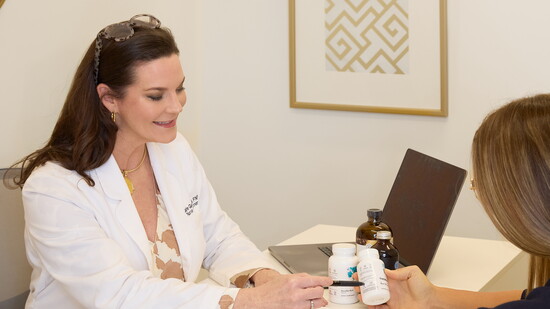
At Solutions Medical Center, nurse practitioner and founder Kate Gassaway has built her career on helping people cut through that noise. Since 2008, she has become known for translating complex symptoms into clear, relatable explanations and creating plans that feel doable rather than daunting. Her approach is grounded in curiosity, compassion and the belief that gut health and hormone health are inseparable. And for Kate, healing begins long before lab work or prescriptions.
"Hormonal imbalances show up so differently for everyone," she says. "But the most common things I see are feeling overwhelmed or wired-but-tired, brain fog, irritability, mood swings, poor stress tolerance, weight changes that don't make sense, insomnia or waking up at 2–3 AM, irregular cycles or heavy or painful periods, skin changes—acne, dryness, or breakouts around the jawline, fatigue that caffeine doesn't fix, bloating and gut issues."
Many of the women who walk into her clinic arrive discouraged. "A lot of patients come in thinking something is 'wrong with them,' when really their body is just waving a flag saying, 'please look deeper.'"
That deeper look begins with conversation rather than a series of tests. "My process always starts the same way: listen to the story. Symptoms tell me far more than a lab alone ever will." From there, she evaluates the foundational pieces for hormone balance: sleep, stress patterns, gut health, inflammation and blood sugar stability. Kate notes, "Hormones don't just randomly go out of balance; something pushed them. I show my patients how to ask smarter questions. Instead of asking, 'Is this supplement good or bad?' I want them to ask, 'What is my body trying to tell me, and does this actually support the root cause?'"
When testing is needed, she relies on comprehensive tools—full thyroid panels, cortisol rhythm mapping, insulin labs, nutrient markers, and the DUTCH test—to complete the picture. But what distinguishes her approach is the interpretation. "I'm not treating a lab number; I'm treating why it got that way."
Once she understands the root cause, she builds a simple, personalized plan. "My goal is always to help people feel like themselves again; not just manage symptoms, but truly understand what their body is trying to communicate."
For women who feel overwhelmed about where to begin, Kate reassures them that the first steps are surprisingly accessible. "We don't start with a 15-step protocol or a pile of supplements. Hormone regulation begins with building the foundation, and, honestly, these are the steps that move the needle the fastest." Those first steps include stabilizing blood sugar, prioritizing sleep, lowering inflammation, supporting gut health and managing stress. "If your body thinks it's running from a tiger, your hormones will never feel safe enough to balance."
Kate teaches her patients how closely the gut and hormones interact. "Your hormones don't live on an island. They're responding to whatever is happening in your gut, your stress levels, your blood sugar, your sleep and even your nervous system."
Gut dysfunction, in particular, is widely misunderstood. "Gut dysfunction is one of the most common things I see, and what's wild is how many people think their symptoms are 'normal.'" Early signs include bloating, reflux, slow digestion, food sensitivities, anxiety, irritability, sugar cravings and fatigue after meals. "I tell them: 'Common doesn't equal normal.'"
Gut healing starts with stabilizing blood sugar, slowing down at meals and adding more fiber so the body can actually absorb and use what it needs. From there, small shifts like choosing less inflammatory foods, staying hydrated with minerals, walking regularly and supporting the nervous system create the conditions for digestion and hormones to level out. Kate’s approach is simple: clarity, consistency and habits that make the body feel safe enough to heal.
And for those overwhelmed by restrictive diets? Kate offers a grounded perspective: "You don't need a 40-step plan to start healing your gut. My philosophy is simple: make it doable and make it make sense. The basics done consistently will move you farther than the perfect protocol done for two weeks."
At the heart of her work is empowerment. "Your body just needs clarity, not chaos," Kate says. "When you truly understand why your hormones are acting the way they are, everything becomes so much clearer, and so much more manageable."
When we support the foundations and use testing when appropriate, the gut finally has the environment it needs to calm inflammation and heal for the long term.