Most people brush off dry, irritated, or watery eyes as a minor annoyance. They grab a bottle of over-the-counter eye drops, assume it's part of getting older, and move on. But according to Dr. Kathryn Beckman of Beckman Dry Eye Institute, those symptoms can be early warning signs of a chronic disease that deserves attention long before it begins affecting daily life.
Dr. Beckman's passion for treating dry eye disease (DED) began decades ago while caring for LASIK patients. "I started treating dry eye disease in the late 90’s when I noticed my LASIK patients had much better outcomes if they did not have dry eyes. I started to give patients a pre-treatment protocol to eliminate any signs of dry eyes before surgery and the outcomes were significantly better." Her interest was also personal. "I had LASIK early on and personally suffered from dry eyes myself. So I was really motivated to look into managing DED decades ago for both personal and professional reasons."
Today, she says helping patients find answers is what continues to inspire her. "I love the forensic part of finding the root cause of the disease and the fact that I can really make a positive impact on people’s lives." She adds, "My passion for people who suffer from DED stems from many experiences over the years in meeting someone who thinks there is no hope for their disease, and giving them relief and their life back. I feel so blessed to be part of their journey."
Many patients are surprised to learn that dry eye disease is often hiding behind symptoms they never associated with the condition. "If someone has symptoms like excessive watering, redness, gritty feeling, burning, having to blink to clear vision, pain, and sensitivity to light, we need to address it or it will continue until it becomes severe." One of the biggest misconceptions, she says, is that watery eyes mean your eyes are producing enough tears. In reality, the eyes may be overproducing tears because they are lacking the oil needed to keep them from evaporating.
Rather than simply recommending eye drops, Dr. Beckman takes time to understand the complete picture. "I ask a lot of questions and really listen to my patient’s story." She explores everything from screen time and sleep habits to medications, previous eye injuries, and overall health. "DED usually has more than one underlying diagnosis. It’s the forensic part of this that I really enjoy. No two patients are the same, and I know that I can give them hope and relief with a personalized treatment plan."
That detective work has changed lives. One patient had been treated for years with antibiotics for what was believed to be chronic conjunctivitis. Dr. Beckman discovered she actually had two severe autoimmune diseases contributing to her dry eye disease. Another patient, a truck driver, had lost his job after failing his vision exam because his fluctuating vision made it unsafe to drive. After identifying and treating the root cause of his dry eye disease, he was able to return to work. She also recalls a patient who started to develop severe pain whenever she opened her eye in the morning. The pain caused her to miss work on and off, and over time she became anxious and depressed. Dr. Beckman discovered the problem was not just dry eye disease, but also a previous eye injury that had never properly healed, combined with the fact that she did not fully close her eyes while sleeping. Together, those factors created a chronic and painful condition often associated with dry eye disease. After developing a personalized treatment plan, the painful episodes stopped recurring, allowing her to return to work consistently while her anxiety and depression improved.
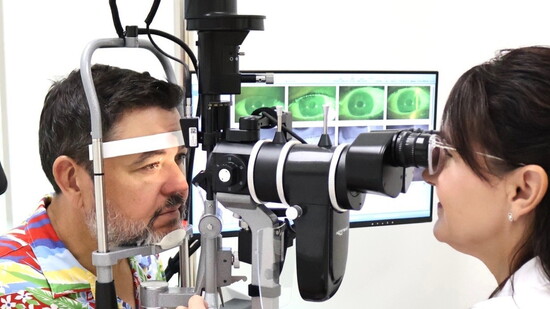
Fortunately, advances in technology have transformed how dry eye disease is diagnosed and treated. Using advanced imaging and video, Dr. Beckman can evaluate every layer of the tear film, the ocular surface, eyelids, and blinking patterns while reviewing the results directly with patients. "Patients often express validation at finally understanding why they have DED, and relief that there is hope and treatment available."
Every treatment plan at Beckman Dry Eye Institute is tailored to the individual, whether patients are seeking faster relief, natural therapies, prescription medications, or budget-conscious options.
For anyone who has accepted burning, watery or irritated eyes as simply part of life, Dr. Beckman has an encouraging message. "Our focus is solely dedicated to the treatment of DED and intervening before the disease impacts people’s lives. The earlier we can diagnose and initiate treatment, the easier it is to prevent damage to the eyes."
Sometimes the smallest symptoms tell the biggest story. By seeking answers early, patients can protect not only their vision, but also their quality of life for years to come.
BeckmanDryEyeInstitute.com
"DED usually has more than one underlying diagnosis. It’s the forensic part of this that I really enjoy. No two patients are the same, and I know that I can give them hope and relief with a personalized treatment plan."