More than a decade ago, beneath the hush of a low-lit bar, Charles Joly and Matt Lindner closed the night at The Drawing Room as many bartenders often do: with a quiet drink and a long conversation. That spot was an intimate cocktail den where Joly, then head mixologist, tested balance and texture while Lindner, co-owner, thought about how service and setting shaped a guest’s experience.
It was late 2013. Those after-hours exchanges stirred a question that would grow into a company: Could a cocktail, made with the same care as one crafted behind the bar, travel beyond it and still feel made for the moment?
That question became the seed of Crafthouse Cocktails. At a time when pre-mixed drinks were often syrupy or artificial, Joly and Lindner insisted on real ingredients and barroom technique. They developed recipes the way they did behind their own bar: taste, adjust, taste again. One early result was the Moonlighter, a Joly original built on vodka infused with chamomile and lavender. It became a signature—proof that a bottled cocktail could still carry depth and nuance.
The pair faced skepticism. Critics said the category couldn’t support true craft; suppliers warned that fresh juice and small-batch spirits would ruin margins and logistics. Joly and Lindner persisted, spending years on research and development, testing packaging and processes until they found partners who could handle real juice and spirits without compromise. They moved beyond glass to aluminum for durability and distribution—but not at the cost of flavor.
“If it tastes artificial, that comes from shortcuts,” Lindner says. “We were never willing to take those.”
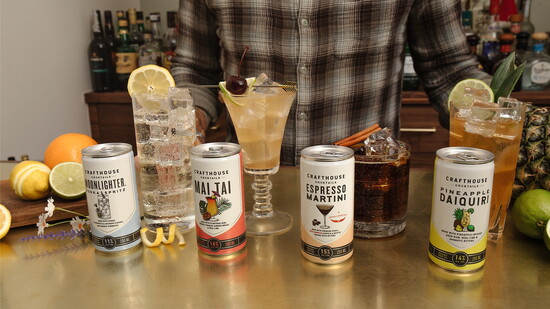
Crafthouse did more than survive; it helped shape a new shelf category. The line includes barroom classics and seasonal staples: the Moscow Mule with house-made ginger beer and small-batch vodka, a crisp Paloma, a velvety Pineapple Daiquiri, the crowd-favorite Spicy Margarita, and the rich Espresso Martini. Each reflects the same guiding idea—real juice, real spirits and the same attention Joly once gave every pour at The Drawing Room.
Today the brand is carried by national retailers and appears in hotels, theaters and travel venues where speed once trumped quality. Their cocktails show up at intermissions and tailgates, parties and quiet dinners—a reminder that convenience need not mean compromise.
Yet the founders insist the product is only half the story. To them, hospitality drives everything. “It’s not about the bottle,” Lindner says. “It’s about how it brings people together. You can’t fake hospitality.”
That emphasis on the human side of serving carries into how Crafthouse recommends people use its drinks. Rather than encourage a conveyor belt of pours, Joly suggests a small ritual: pour over ice, add a thoughtful garnish, and hand it to someone as you would a plate of food. A cinnamon stick, a sprig of rosemary, a flamed orange peel—small gestures that move a drink from casual to deliberate. They also cut the stress of hosting.
“You shouldn’t have to spend the night behind the bar,” Joly says. “You should be with your people.”
The seasonal utility of the lineup is one reason the brand fits the holidays. Bright, citrusy cocktails cut through rich food; spirit-forward numbers counter winter desserts. The Moonlighter, with its warm spice and measured strength, sits comfortably beside a roast. The Paloma or Grapefruit Paloma offers a citrus lift before heavier courses. And because the drinks are pre-made, a host can focus more on food, ambiance and conversation.
Crafthouse’s growth didn’t come without pivots. The brand had early plans to launch through hospitality partners and cruise lines. When the pandemic hit, those channels paused, and the founders pivoted hard to retail. The move broadened their audience and, paradoxically, proved the idea: people wanted something better at home. It also reinforced the founders’ ethos that product and people are intertwined.
“We make drinks for moments,” Lindner says. “If those moments happen at a living room table or in a hotel lobby, that’s fine. It’s still hospitality.”
When asked what they are thankful for this season, both founders point to the same thing: family and community. Lindner cites partners and customers who believed in the project when many did not. Joly is more succinct and elemental. After a brief pause he says, “Life is too short for mediocre company or mediocre cocktails.” Adding, “The real focus should be appreciating those who are around us.”
At their best, Crafthouse cocktails are tools for that very work—small acts of generosity that let hosts do less and enjoy more. For anyone planning a holiday table or a last-minute gathering, that may be the most useful cocktail of all.
“Life is too short for mediocre company or mediocre cocktails," Joly says. “The real focus should be appreciating those who are around us.”
“It’s not about the bottle,” Lindner says. “It’s about how it brings people together. You can’t fake hospitality.”