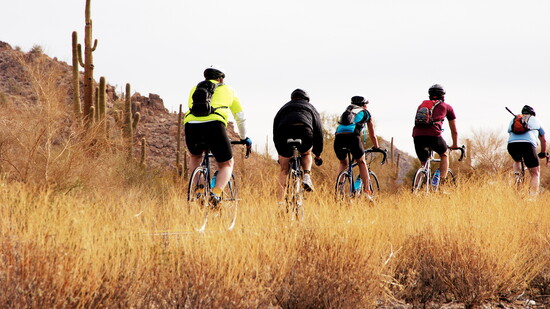
There is a particular rhythm to Tucson on a bicycle. The mountains frame the horizon, desert vegetation lines the roads and the morning light seems to stretch across the landscape. On most days, cyclists experience that scenery at their own pace. On one Saturday each November, thousands of riders experience it together.
On November 21, 2026, El Tour de Tucson will return for its 43rd year. Nearly 11,000 cyclists are expected to participate, making the event a major annual gathering for Tucson’s cycling community. Whether you are an experienced distance rider or considering your first organized ride, here is what to know before taking to the road.
How It Started
El Tour de Tucson began in 1983, when Richard DeBernardis, then president of the Greater Arizona Bicycling Association, helped establish the event. The first ride attracted fewer than 200 cyclists and raised $4,500 for charity. Over the decades, it grew into the signature event of Perimeter Bicycling Association of America, the Tucson-based nonprofit that organizes El Tour.
The event’s growth paralleled Tucson’s development as a cycling community. Regional bicycle planning dates to the 1970s, when the Pima Association of Governments developed an early bicycle route network. Tucson and Eastern Pima County eventually became a designated Bicycle Friendly Community through the League of American Bicyclists, first receiving Silver status in 2004 and advancing to Gold in 2006. The League has also described El Tour as a catalyst for bicycle-friendly investments throughout the region.
That history is still visible today. Tucson’s cycling network includes city streets, designated bikeways and the Chuck Huckelberry Loop, a regional shared-use path extending throughout the metropolitan area.
So, What Exactly Is El Tour?
Despite its name, El Tour is not one single-distance race. The 2026 event offers several ways to participate.
The centerpiece is the 102-mile Century, beginning at 7 a.m. Riders looking for a shorter challenge can choose the 62-mile Metric Century, which starts at 9 a.m., or the 32-mile Half Metric Century, beginning at 10 a.m. There are also one- and three-mile Fun Rides for those who want a much shorter introduction to the event.
All cycling events begin and finish in downtown Tucson near the Tucson Convention Center. The longer routes extend beyond the city center, taking riders through Southern Arizona landscapes and communities beyond downtown.
The 2026 event also includes a 5K Run/Walk, which starts at 7:15 a.m., making Ride Day a larger community event rather than a cycling-only affair.
What Will the Ride Feel Like?
For first-time participants, the scale of El Tour may be the biggest surprise. Riders line up in waves according to their event and start time, and the morning begins with the atmosphere of a major community celebration.
The longer routes offer something distinctly Southern Arizona: miles of open road, mountain views and desert scenery. But cyclists should remember that this is a substantial physical undertaking. Training beforehand, knowing your distance and understanding the route are important parts of preparing for the day.
The event provides support along the routes, including aid stations, while organizers publish detailed route information and encourage participants to familiarize themselves with the course before Ride Day. Routes can change as final permits, construction and other logistical considerations are addressed, so riders should consult the official 2026 information before heading out.
More Than Miles
One of El Tour’s defining features is its charitable mission. Riders can participate on behalf of nonprofit organizations, turning individual miles into fundraising opportunities. According to Perimeter Bicycling, the organization’s events have raised nearly $140 million for charitable organizations since 1983.
After the final miles, riders return to the Tucson Convention Center for the El Tour Expo & Fiesta, where the celebration continues with food, drinks, entertainment, awards and the Finish Line Beer Garden.
Why Tucson?
Perhaps the best way to understand El Tour is to understand the place where it happens.
Tucson has spent decades building a culture around bicycling, from early regional bike planning to modern advocacy, education and infrastructure. The city’s geography helps, too. Four mountain ranges surround the metropolitan area, while the Sonoran Desert provides a landscape unlike that of most major American cycling destinations.
El Tour brings those elements together for one remarkable day. The route becomes a moving cross-section of Tucson: experienced riders and beginners, longtime residents and visitors, competitive cyclists and families, all sharing the same roads and the same destination.
Forty-three years after fewer than 200 riders showed up for the first event, El Tour de Tucson has become part of the fabric of Southern Arizona. For some participants, November 21 will be about completing 102 miles. For others, it might be 62, 32, three or even one.
Either way, El Tour offers the same basic invitation: get on a bicycle, head into the desert and experience Tucson from the road.
"The longer routes offer something distinctly Southern Arizona: miles of open road, mountain views and desert scenery."
"Four mountain ranges surround the metropolitan area, while the Sonoran Desert provides a landscape unlike that of most major American cycling destinations."