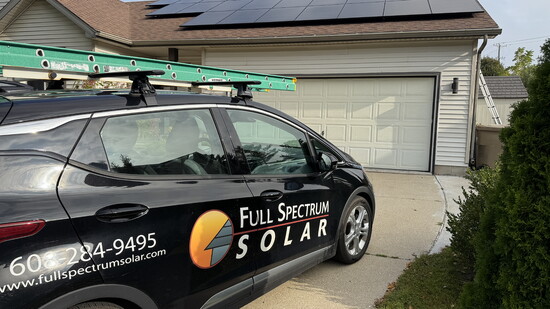
Brief history of Full Spectrum Solar:
“Founded in 2002 by brothers Burke and Mark O’Neal, Full Spectrum Solar is a family-run company that has completed more than 1,300 residential and commercial solar projects over the past 24 years.”
How would you describe the core mission?
“Our mission is centered around education. We want homeowners and businesses to understand renewable energy and help them determine whether solar and battery backup solutions are the right fit for their needs.
Rather than taking a one-size-fits-all sales approach, the company focuses on each customer’s property, energy usage, and long-term goals to design practical, cost-effective systems. We want people to understand both the benefits and the limitations so they can make informed decisions with confidence.”
What is battery backup technology, and how does it work alongside solar?
“Battery backup systems store electricity for later use, allowing homes to continue operating during power outages. When paired with solar, excess energy generated during the day can be stored and used at night, during peak-demand periods, or when the grid goes down.
During an outage, the system automatically disconnects from the utility grid and powers essential household circuits or the entire home, depending on battery size and system design. Modern systems transition quickly to keep lights, internet, refrigeration, and other essentials running uninterrupted.”
What is the difference between partial home and full home backup?
“Partial-home backup focuses on powering essential circuits during an outage, such as refrigeration, lighting, internet equipment, sump pumps, or garage doors. This helps extend backup duration while keeping costs lower.
Full-home backup is designed to support nearly everything in the house, including larger electrical loads like air conditioning systems or EV chargers. This provides maximum convenience but requires more battery storage and investment.
For many homeowners, it comes down to balancing comfort, outage expectations, and budget.”
How long can a backup system provide power?
“Backup duration depends on battery size, household energy use, and whether solar production is available during the outage.
During daytime outages, solar panels can continue generating electricity to power the home and recharge the batteries. Most modern systems include app-based monitoring that allows homeowners to track battery levels, solar production, and energy consumption in real time.
Backup duration can range from several hours to multiple days, depending on system size, weather conditions, and how energy is managed during the outage.”
What maintenance is required?
“Compared to traditional generators, battery systems require very little maintenance. There are no oil changes, fuel storage requirements, or routine servicing needs.
Most systems include online monitoring platforms and mobile apps that continuously track performance and battery health.”
The phrase “energy independence” has become much more common recently. What do you think is driving that shift?
“The growing interest is being driven by rising utility costs, concerns about grid reliability, and a desire for greater long-term control over energy expenses.
Many homeowners are looking for ways to stabilize or partially fix the cost of electricity over time. Severe weather events and grid outages have also made people more aware of how dependent modern homes are on reliable power.
For some, energy independence is about financial predictability. For others, it’s about resilience and peace of mind.”
What role does education play in your approach with homeowners who are just starting to explore these options?
"Education is our primary mission. In 24 years, we’ve earned the reputation as a trusted installer focused on honest conversations about what’s possible for a home or business and what that investment looks like.
We understand investments take time to consider and come with many questions. We are here to talk through them on the customer’s timeline."
Are there any incentives or tax credits available that people should know about?
"Wisconsin homeowners may qualify for incentives through the Focus on Energy program, including solar grants up to $2,400 in 2026. Additional incentives may also be available for electrical upgrades and energy-efficiency improvements, depending on household eligibility."
"Excess energy generated during the day is stored and used at night, during peak-demand, or when the grid goes down."