How can we make a bouquet last?
A few simple steps can make a big difference.
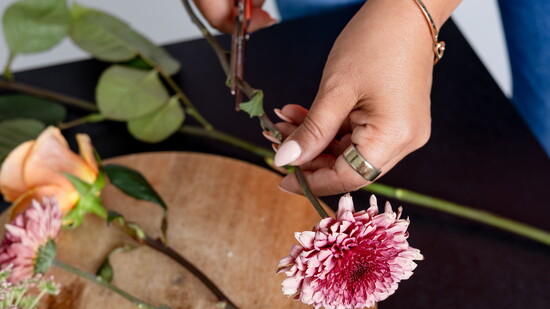
Trim the stems as soon as you bring your flowers home—about an inch off the bottom at a slight angle using sharp scissors or clippers. This helps the stems absorb water more easily and prevents them from sealing at the base.
Use a clean vase filled with fresh, cool water. Bacteria is the main reason flowers fade quickly, so washing your vase first is key. If your bouquet comes with flower food, use it—it provides nutrients and helps keep bacteria at bay. If not, change the water daily.
Remove any leaves below the water line, since they rot quickly and create bacteria. Keep your flowers out of direct sunlight, away from heat sources, and away from fruit, which releases ethylene gas that speeds up aging.
Every couple of days, change the water, clean the vase if needed, and give the stems another quick trim.
How do I keep the stems straight or where I want them in a vase?
There are a few easy tricks that really work.
Start with stem length and strength. Taller, heavier blooms need shorter stems for support. If flowers are flopping, trim them a bit shorter so the vase helps hold them upright.
A vase with a narrower neck naturally keeps stems closer together and more upright. If you’re using a wider vase, create a simple grid across the top with clear floral or painter’s tape to guide placement and keep stems in place.
Layer greenery or sturdier stems first to create a base, then place more delicate flowers into that structure.
Re‑trim the stems every day or two if needed.
Can you revive drooping flowers?
Some flowers naturally wilt faster, but drooping flowers can often be revived. Wilting usually means the stems aren’t taking in enough water. Trim about an inch off the stems at an angle, then place them in fresh, cool water, with no leaves below the water line.
If a flower is already breaking down—browning petals, slimy stems, or a strong odor—it’s likely past saving. Remove it so it doesn’t affect the rest.
"For thirsty flowers that are drooping, like hydrangeas, submerge the entire bloom in cool water for 20–30 minutes to help rehydrate it."