There is something different about a meal when you know where it began.
When the tomatoes were growing in the garden just steps away. When the farmer who raised the ingredients is sitting nearby. When the menu changes because of rain, heat, harvest timing—or simply because the land had something unexpected to offer.
Across the Chicagoland area, farm-to-table dining is becoming about much more than a locally sourced menu. It is an invitation to slow down, gather together and reconnect with the people and places responsible for bringing food to our tables.
At The Center in Palos, that connection has been growing for more than a decade through its Sustainable Agriculture and Green Education program. While the organization had occasionally hosted meals featuring products raised on the farm, a partnership with O.A.K. Farm & Kitchen helped transform the concept into a more intentional dining experience.
Their first formal farm-to-table dinner launched last November, bringing together farmers, chefs and guests around a meal designed to celebrate the harvest. This year, the experience has expanded to include intimate summer suppers and a larger farm feast planned for November.
The menu begins with a simple question: What is growing now?
“We look at what’s available from the farm and our local producers and build the meal around those ingredients,” says Tara Garcia, farm education program manager at The Center.
That means the menu is never entirely predictable. Weather, harvest timing and unexpected challenges all shape what eventually reaches the table. A dish imagined early in the season may change completely by the time dinner arrives.
That uncertainty, Tara says, is part of the beauty: “The unpredictability ensures every dinner reflects the true character of the season.”
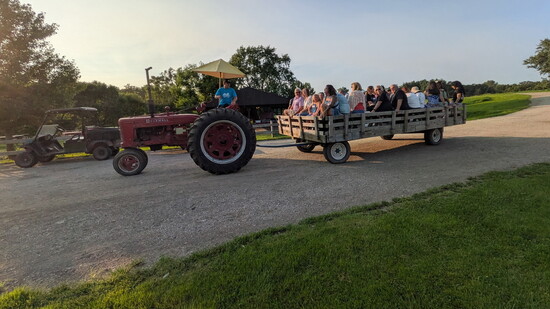
The experience is designed to be just as important as the food itself. Guests gather around family-style appetizers and fresh bread, meet the farmers, ask questions and explore the farm by hayrack before sitting down to dinner.
The goal is for strangers to arrive for a meal and leave feeling like part of the farm community.
Nearly every ingredient tells a story. At The Center's farm-to-table dinner, a significant portion of the meal came directly from the farm, while nearly every other staple ingredient was sourced from producers within 150 miles.
That connection between food and place is at the heart of Locavore Farm, where dining experiences have grown into an immersive celebration of agriculture, hospitality and community.
Locavore Farm began in 2015 on five acres with a desire to grow good food and share it with the community. But as visitors began arriving, the founders realized they could offer something even more meaningful.
“People were hungry for more than food,” Mrs. Farmer Jones explains. “They were hungry to know where their food came from, who grew it, and what it meant to gather around a table connected to the land.”
Today, the original five-acre farm has grown into a 35-acre regenerative property where vegetables, livestock, native prairie, woodlands and conservation efforts coexist. Its signature Dine on the Land experiences invite guests to walk through the landscape before sitting down to enjoy food shaped by it.
Guests arrive in the late afternoon, welcomed with a drink and a first bite. There is time to explore, meet fellow diners and settle into the slower rhythm of the farm. A guided tour follows, introducing guests to the crops, animals, soil and landscape that helped create the meal.
“The tour gives guests the story before they taste it,” she says.
Then comes the ringing of the bell and an invitation to the long table.
Dinner unfolds as daylight gives way to sunset and, eventually, firelight. Chefs share the stories behind their courses. Farmers and growers talk about the ingredients. Guests linger over warm bread, seasonal vegetables and food harvested only hours or days before.
At Locavore, the menu is not imposed upon the farm. It responds to it.
“A seasonal menu is not about forcing the land to match an idea,” Mrs. Farmer Jones says. “It is about allowing the idea to respond to the land.”
That philosophy feels especially fitting in the fall, when the harvest becomes richer and more grounding. Winter squash, pumpkins, sweet potatoes, apples, pears, hearty greens and root vegetables make their way into dishes alongside slow-cooked meats, fresh bread, and food prepared over fire.
The flavors may be memorable, but guests often remember something else.
The sun setting over the field. A tomato picked that morning. The sound of conversation around a long table. The realization that the meal is not simply happening on the farm; the farm is part of every bite.
For both The Center and Locavore Farm, farm-to-table dining is ultimately about restoring a relationship that modern life has made increasingly easy to overlook.
When we see the soil, meet the farmers and understand the work required to grow a crop, food becomes more personal. A carrot is no longer just something pulled from a grocery store shelf. It represents seed, soil, weather, labor, risk and care.
And perhaps that is what makes these meals so meaningful.
Guests may arrive expecting dinner. But they leave with something more: a deeper appreciation for the hands that grow their food, the land that sustains it and the community created when people gather around the table.
Because sometimes the most memorable part of a meal is not what is on the plate.
It is knowing where the story began.
N/A
“People were hungry for more than food. They were hungry to know where their food came from, who grew it, and what it meant to gather around a table connected to the land.” - Mrs. Farmer Jones