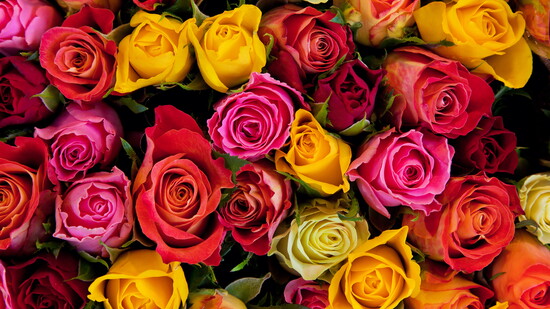
Did you know that before emojis, GIFs, or text messages, roses were quietly doing the same job? For centuries, roses were cryptic messengers, sending messages without a single word. Their color, number, and arrangement could express everything from love to friendship, admiration to gratitude. Think of them as the original emojis before phones existed.
Floriography, the practice of assigning meaning to flowers, became popular during the Victorian era. At a time when public expressions of emotion were often restrained, flowers became a socially acceptable way to convey feelings. A carefully selected bouquet could speak volumes, with each color and quantity carrying a specific message, much like sending an emoji in a text today.
Red roses, the most familiar of the bunch, symbolize deep love and devotion. They are the ultimate "heart" emoji in flower form. Pink roses express admiration, gratitude, or gentle affection, much like a "smile" emoji. White roses, associated with purity and new beginnings, communicate sincerity, unity, and lasting commitment. They are like a "white heart" emoji, representing unconditional love. Yellow roses evolved to signify friendship, joy, and warmth, similar to a "bright sun" emoji for relationships that celebrate love in their most supportive and cheerful form. Peach roses convey appreciation and heartfelt thanks, like “folded hands” expressing gratitude, while lavender roses, rare and romantic, suggest enchantment or love at first sight, like a little "sparkle" in flower form.
Even the number of roses carries meaning. A single rose could express love at first sight, like sending a "love letter" emoji. A dozen signifies complete devotion, comparable to the "100" emoji representing total or wholehearted commitment. Larger arrangements promise abundance, lifelong commitment, or love without limits, like the "repeat", "constant", or "infinity" emojis. Every detail mattered, from color to quantity, just as choosing the right emoji can perfectly capture a feeling in a text.
What makes the "emoji language" of roses so timeless is how universally it still resonates. Even if we do not consciously think about it, we recognize the symbolism of a red rose or the gesture of giving a bouquet. While the strict rules of floriography have faded, the meaning of roses remains widely understood. Giving a bouquet today is more than a pretty gesture; it is intentional and meaningful.
This Valentine’s Day, or any day you want to show someone you care, take a closer look at a bouquet. Much like the perfect emoji in a message, the color, number, and type of roses can express intention, meaning, and emotion without a single word. Roses remind us that thoughtful expression matters, and sometimes the right symbol, whether in petals or pixels, can carry a message more powerfully than words alone. And that is pretty remarkable.